
Quick answer: Good quail housing is fully enclosed with ½-inch hardware cloth (not chicken wire), has a solid roof, gives about 1 square foot per coturnix, and has either a low ceiling under about 12 inches or a walk-in height with a soft net. Keep it dry, ventilated without drafts, and add a dust bath and somewhere to hide.
Quail housing looks simple, but it is where most backyard flocks succeed or fail. Coturnix are small enough for a weasel or rat to kill, they rocket straight up when startled, and they cannot be let out to free-range and called back like chickens. This guide compares the four main setups (cages, hutches, coops with runs and aviaries), gives honest space numbers, and walks through predator-proofing, flooring, ventilation and the mistakes keepers most often make.

What all quail housing needs
- Total enclosure. Domestic coturnix do not return to a coop and cannot survive on their own. Virginia Tech Extension notes that released domestic coturnix will not survive in the wild. Every setup needs walls, a floor or buried apron, and a roof.
- Predator-proof mesh. ½-inch hardware cloth on all sides, with ¼-inch on the lower walls if weasels or snakes are common where you live.
- A safe ceiling. Either low enough that birds cannot build up speed (about 8–12 inches) or tall enough to walk in (6 feet or more) with soft netting under the roof.
- Shelter. A solid roof over at least part of the area, and a wind-blocked corner.
- Dryness and fresh air. Quail droppings are wet and ammonia builds fast in still air.
- Feed and water access all day, placed so it stays clean.
- Enrichment. A dust bath and cover. The SPCA’s quail guidance stresses that quail need to dust bathe, forage and hide.
Quail housing options compared
| Type | Best for | Pros | Cons | Typical flock |
|---|---|---|---|---|
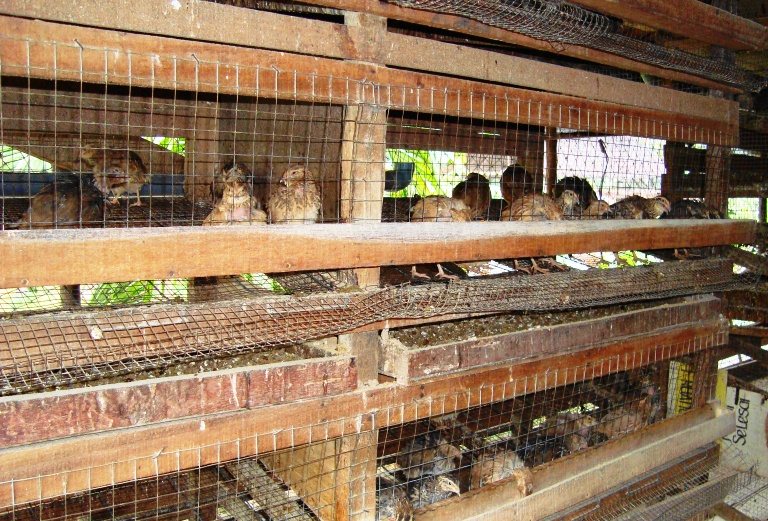
| Wire cage (indoors, garage or shed) | Egg production, small spaces, cold climates | Clean eggs, easy collection, low cost, easy to protect | Little room for natural behavior; wire floors can cause foot problems; needs a dust bath tray | 4–20 birds per unit |
| Raised hutch with run | Most backyard keepers | Outdoor light and air, off the ground, compact | Weather exposure; must be fully meshed; can get hot | 6–15 birds |
| Ground coop or converted shed with run | Larger flocks, mixed uses | Deep litter, room to forage, easier to stand inside | Digging predators, more bedding to manage, eggs hidden in litter | 10–40 birds |
| Walk-in aviary | Pet flocks, planted habitats | Most natural behavior; quietest, calmest birds | Most expensive; must net the ceiling; eggs harder to find | Depends on size; give generous space |
Looking for builds? Our quail coop ideas roundup shows DIY rabbit-hutch conversions, stacked cages and aviaries.
How much space do quail need?
This is where online advice disagrees most, so here are the actual numbers and where they come from:
| Source | Space per adult coturnix | Context |
|---|---|---|
| Virginia Tech Extension (classroom guidance) | About 1 sq ft | Small groups kept as a learning project |
| ICAR-CCARI (research institute) | About 0.25–0.4 sq ft | Commercial laying cages of 120 × 60 cm holding 20–30 birds |
| Common backyard keeper advice | About 1 sq ft in cages and hutches; 2+ sq ft in aviaries | Welfare and behavior focus |
Commercial densities work for egg production in controlled conditions, but backyard keepers widely report less pecking, fighting and stress with more room. We recommend planning on at least 1 square foot per bird in a cage or hutch, and more if you can. Also keep males in check: extra males fight and over-mate hens. Our how many quail per square foot guide works through flock sizes and cage dimensions.
Ceiling height: the rule that prevents head injuries
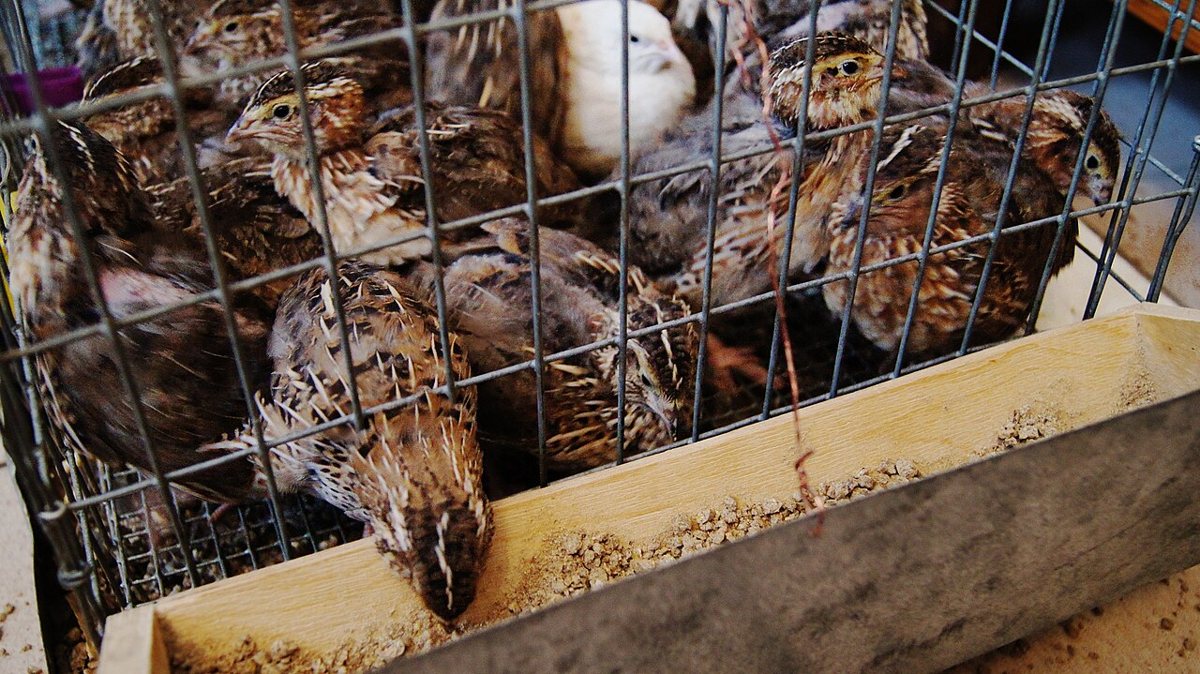
Startled coturnix fly straight up, a habit sometimes called “popcorning.” In a cage of medium height (roughly 18 inches to 5 feet), they hit the roof at full speed and can injure or scalp themselves. You have two safe choices:
- Low ceiling: about 8–12 inches, so birds cannot build up speed. ICAR-CCARI’s commercial cages are 25 cm (about 10 inches) tall.
- Walk-in height: 6 feet or more, where birds settle down once they get used to you. Hang soft netting a few inches below any hard roof as a cushion.
Either way, a soft liner (shade cloth or bird netting) under a wire roof reduces head injuries.

Predator-proofing quail housing
Quail are small, so the list of things that can kill them is long. The Cooperative Extension predator guide lists dogs, coyotes, bobcats, house cats, foxes, raccoons, weasels, skunks, opossums, rat snakes, hawks and owls. Rats are a serious threat to quail too. What that means for your build:
- Use hardware cloth, not chicken wire. Chicken wire keeps chickens in but does not keep predators out. Least weasels can squeeze through holes as small as ¼ inch, according to Extension.
- Use small mesh against raccoons. Raccoons reach through and pull birds’ heads through larger wire openings. ½-inch mesh, or a double layer with a gap, prevents this.
- Stop diggers. Bury hardware cloth at least 12 inches deep, or lay a 12–24 inch apron flat on the ground around ground-level runs. A raised hutch with a meshed floor avoids the problem.
- Fasten properly. Use screws with washers or heavy staples every few inches. Raccoons can open simple hook latches, so use two-step latches or a snap carabiner.
- Cover the top. Hawks and owls are federally protected and cannot be shot or trapped, so a solid or meshed roof is the only real defense.
- Don’t leave food out. Spilled feed draws rats and mice, which then attract snakes.
Our full predator-proof quail coop guide covers latches, materials and identifying which predator struck.
Flooring and bedding
| Floor | Pros | Cons | Tips |
|---|---|---|---|
| Wire floor (½ × 1 inch or ½ inch) | Droppings fall through, eggs roll out on sloped floors, very clean | Hard on feet; no natural foraging | Choose vinyl-coated wire; add a solid resting mat and a dust bath tray |
| Solid floor with deep bedding (pine shavings, straw, hemp) | Comfortable, natural scratching, absorbs droppings | More cleaning; eggs hidden in litter | Keep bedding several inches deep and dry; spot-clean wet areas |
| Sand | Drains well, easy to sift, doubles as a dust bath | Heavy; can get hot or cold; dusty | Use coarse construction sand; sift droppings regularly |
| Ground or grass in a run | Foraging, sunlight, dust bathing | Diggers, parasites, mud | Bury mesh; move or rotate runs; add a dry covered corner |
Whatever you choose, a routine matters more than the material. See how to clean a quail cage for daily, weekly and deep-clean steps.

Ventilation, heat and cold
Cooperative Extension’s ventilation guidance explains that good airflow removes moisture, dust, ammonia and heat. The goal is fresh air above the birds without wind blowing across them.
- Vent high, block low. Openings near the roof let warm, damp air out. Solid lower walls on the windward side stop drafts at bird level.
- Place it right. Extension recommends facing housing away from north winds in cold regions and toward prevailing breezes in hot ones.
- Heat is the bigger danger. Coturnix handle cold reasonably well when dry and out of the wind, but small enclosures in full sun can overheat quickly. Give shade, airflow and plenty of cool water. See quail heat stress for warning signs and cooling tactics.
- In winter, wrap two or three sides with clear plastic or boards, add deep bedding, and keep water from freezing. Don’t seal the housing airtight.
Light, nesting and furnishings
- Light. Japanese quail need 14–18 hours of light a day to keep laying, according to Cooperative Extension. In fall and winter that means a timer and a low-wattage light in a garage or shed.
- Nesting. Coturnix generally do not use nest boxes, and Extension notes they hide eggs in litter instead of building nests. Sloped cage floors that roll eggs to the front are the cleanest solution. In litter, a dark corner or a box on its side helps.
- Cover. Add a hide, a board leaned against a wall, or cut branches. Nervous quail calm down when they can duck out of sight.
- Feeders and waterers. Hang them or mount them on the outside of the cage to reduce spills and keep them free of droppings. Feed and water should be available at all times. For what goes in them, see what do quail eat.
Troubleshooting common quail housing problems
Not veterinary advice. Injuries and illness can have several causes. Contact a veterinarian who treats poultry if birds are hurt or sick.
| Problem | Likely housing cause | Fix |
|---|---|---|
| Scalped heads, bloody crowns | Medium-height ceiling; hard roof | Lower to about 10 inches or raise to walk-in; add a soft net liner |
| Birds killed, heads missing | Raccoon reaching through mesh | Switch to ½-inch hardware cloth or double-layer the walls |
| Birds killed but not eaten, no hole found | Weasel or rat through a small gap | Close every gap over ¼ inch; check the floor edge and door frames |
| Strong ammonia smell, watery eyes | Poor ventilation, wet bedding, too many birds | Add high vents, clean more often, reduce stocking |
| Swollen or sore feet | Bare wire floors, dirty or wet litter | Coated wire, solid resting areas, dry clean bedding |
| Feather pulling and fighting | Crowding, too many males, nowhere to hide | More space, cover, remove extra males |
| Laying stops in fall | Short days | Light on a timer for 14–16 hours total |
| Birds panting, wings held out | Full sun, poor airflow | Shade, airflow, cool water; move the hutch |
Raising quail from day one? Chicks need a separate, heated brooder before they move into adult housing; see our quail chick care guide. For the whole picture, read raising coturnix quail.
Frequently asked questions
Do quail need a coop?
They need secure housing, but not necessarily a traditional coop. Coturnix do not roost or use nest boxes, so a well-built cage, hutch or aviary works as long as it is fully enclosed, roofed and predator-proof.
Do quail need dust baths?
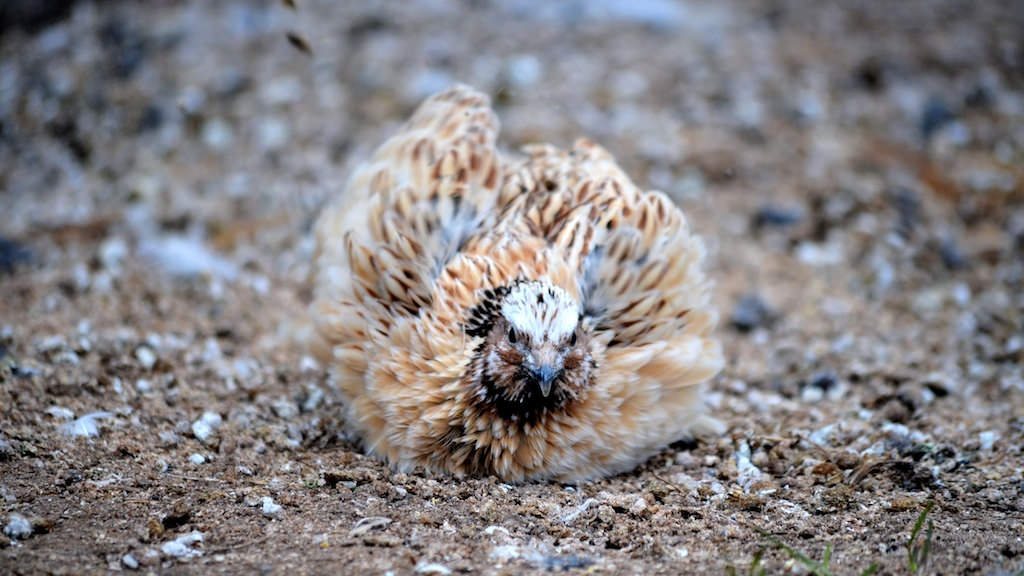
Yes. Dust bathing is a natural behavior that helps keep feathers in good condition, and the SPCA lists it among behaviors quail need to express. A shallow tray of dry sand or soil works in cages; birds on the ground will dig their own.
Do quail need nesting boxes?
No. Coturnix usually lay wherever they are standing or tuck eggs into litter. A sloped cage floor or a dark corner works better than a nest box.
Do quail need bedding?
Birds on solid floors do. Pine shavings, straw, hemp and coarse sand all work. Avoid cedar (aromatic oils) and anything that stays damp. Wire-floored cages do not need bedding, but give a solid resting area and a dust bath tray.
Do quail need sunlight?
Natural light and fresh air are good for quail, and SPCA guidance recommends housing that lets daylight in. Indoor quail do well with good lighting, a dust bath and a balanced diet.
Sources
- Cooperative Extension. Predator Management for Small and Backyard Poultry Flocks.
- Jacob, J. Ventilation in Small and Backyard Poultry Flock Housing. Cooperative Extension.
- Jacob, J. and McCrea, B. Raising Japanese Quail in Small and Backyard Flocks. Cooperative Extension.
- Virginia Cooperative Extension. Beginning of Life, Publication 408-029 (“Raising Coturnix Quail in the Classroom”).
- ICAR-Central Coastal Agricultural Research Institute. Japanese quail: housing and cages.
- SPCA New Zealand. Caring for Quail.