
Quick answer: Quail bumblefoot (pododermatitis) is a bacterial infection of the footpad, usually Staphylococcus, that starts when a small cut or pressure sore lets germs in. Look for a red, shiny or swollen footpad, a dark scab in the center, limping or a bird that sits more than usual. Early cases (no scab, skin intact) often improve with soft, dry footing and clean feet. A hard swelling with a scab or pus needs a vet, because the dead core usually has to be removed surgically. Prevent it with dry litter, smooth floors, the right wire, and a padded resting area, especially for heavy jumbo birds and males.
Quail bumblefoot is easy to miss, because a quail’s feet are tiny and the birds hide pain. By the time a bird limps, the infection is often well established. This guide explains what bumblefoot is, how to grade it, what you can safely do at home, when a vet is the better choice, and how to set up floors so it does not come back.
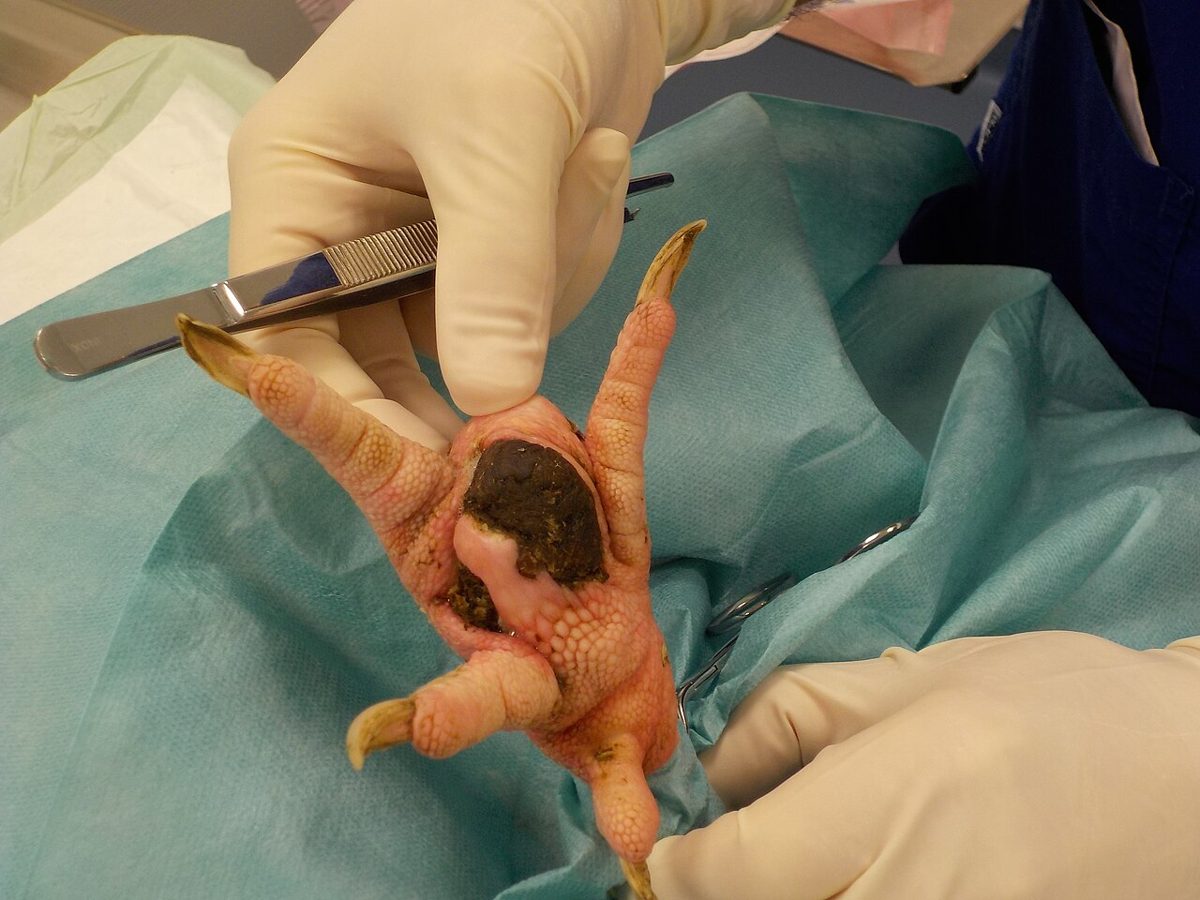

What bumblefoot is
The Merck Veterinary Manual describes bumblefoot, or pododermatitis, as a localized Staphylococcus infection of the footpad. Key points:
- It is more common in heavier birds and in males.
- Signs are swollen footpads and limping.
- It usually starts with an injury that lets bacteria into the tissue under the footpad.
- The infection causes acute inflammation that later turns into a mass of dead tissue, the hard “bumble” core.
Merck also notes that staph bacteria enter mainly through wounds, so removing splinters in litter and protruding wires from cages, and stopping fighting, helps prevent it. Good litter management is listed as important for controlling footpad injuries.
Why quail get it
| Cause | How it injures the foot | Common in |
|---|---|---|
| Hard, rough floors | Pressure sores and abrasions | Bare wire, concrete, plywood without bedding |
| Wrong wire | Sharp cut ends, mesh too wide for the foot, wire that sags | Homemade cages |
| Wet, dirty litter | Softens skin, packs droppings on toes, carries bacteria | Crowded pens, leaking waterers |
| Splinters and sharp edges | Punctures | Rough wood, staples, broken mesh |
| Heavy body weight | More pressure per foot | Jumbo, Texas A&M, overweight birds |
| Fighting and flying up | Cuts on toes and feet | Too many males, low roofs |
| Overgrown claws or dung balls on toes | Changes how weight sits on the pad | Damp brooders, older birds |
The VCA Hospitals guide by Dr. Gregory Rich notes that in poultry and parrots, bumblefoot is often caused by being housed on hard surfaces with no soft or padded areas to stand on.
How to check your quail’s feet
- Catch the bird calmly in low light and hold it upside down against your chest or in a towel, feet up.
- Look at the large central pad and the pads under each toe. Healthy pads are evenly textured, pale pink to grey, and not shiny or hot.
- Compare both feet. Swelling is easier to see side by side.
- Feel for heat or a hard lump.
- Check every few weeks, and any time a bird limps, sits a lot or stands on one foot.
Grades of bumblefoot
Avian vets often use a five-grade scale. This is the version in the VCA Hospitals guide.
| Grade | What you see | Usual approach |
|---|---|---|
| 1 | Early: slight redness or shiny skin, no other signs | Fix footing; recheck in a week |
| 2 | Mild inflammation, skin intact | Fix footing; clean, dry feet; watch closely |
| 3 | Moderate: ulcer or scab may be present | Vet visit advised; some need surgery |
| 4 | Severe: abscess, discharge | Vet treatment, usually surgery and bandaging |
| 5 | Severe infection involving bone or tendons | Vet care; prognosis is guarded |
VCA says grade 4 and 5 lesions, and sometimes grade 3, require surgery. Under anesthesia the vet lances the swelling, removes the abscess material, flushes it, sends a sample to choose the right antibiotic, and bandages the foot. VCA advises that home attempts often do more harm.
What you can do at home (grades 1 and 2)
These steps are safe for early cases with intact skin, and they are also the right first steps while you arrange a vet visit for worse ones.
- Isolate the bird in a small hospital cage with soft, clean footing: a folded towel, rubber mat or deep, dry pine shavings.
- Clean the foot. Soak it in clean lukewarm water for a few minutes to soften dirt and dung balls. Do not pull dung balls off; soften them first.
- Dry thoroughly and keep the bird on dry bedding.
- Fix the cause in the main pen before the bird goes back.
- Recheck every 2 to 3 days. If the swelling grows, a scab forms or the bird stops eating, go to a vet.
Things to avoid
- Do not cut into the foot yourself. Quail feet are tiny, with tendons and blood vessels close to the surface. It is easy to cause bleeding and spread infection.
- Do not give leftover antibiotics. Since June 2023, medically important antibiotics for animals require a veterinarian’s prescription, under FDA Guidance #263. A vet will also give you an egg and meat withdrawal time.
- Handle lesions with gloves and wash your hands. Merck notes that Staphylococcus aureus can cause food poisoning in people, and that MRSA has been found in poultry.
Should you cull?
For a small food bird, many keepers choose humane culling for grades 4 and 5, especially if the bird is in pain and a vet is not available. That is a reasonable welfare choice. If you do, see processing quail at home for humane methods, and do not eat a bird with an active, spreading infection.
Prevention: set up floors that protect feet
| Floor type | Bumblefoot risk | How to make it safe |
|---|---|---|
| Deep, dry litter (pine shavings, hemp) | Low | Replace wet spots daily; see quail bedding |
| Wire floor (1/2 by 1/2 inch or 1/2 by 1 inch welded wire) | Medium | Tight, flat, no sharp ends; add a solid or rubber mat resting area |
| Hardware cloth over a solid floor | Low to medium | Keep clean and dry |
| Sand | Low if dry | Rake and sift often |
| Bare plywood or plastic | High | Always add bedding or mats |
| Concrete | High | Always cover with deep litter |
The Virginia Cooperative Extension leg and foot guide advises soft, absorbent litter that gives birds good footing, notes that bumblefoot can be a problem for birds raised on wire, gravel, concrete or hard-packed ground, and says cutting out the lesion should be left to a veterinarian.
Daily habits that help
- Keep litter dry. Fix leaking waterers first; nipple and cup drinkers spill less.
- Do not crowd birds. Crowding means wetter litter and more fights. See how many quail per square foot.
- Keep male numbers down. Fewer fights mean fewer foot wounds; see why quail fight.
- Give heavy lines extra care. Jumbo and Texas A&M birds put more pressure on each foot; give them soft resting areas.
- Check cages for sharp edges after building or repairs. File or cap cut wire ends.
- Keep the roof low or padded in cages so birds do not injure themselves flying up. See our quail housing guide.
- Offer a dust bath. It keeps feathers and feet in better condition and gives birds a soft surface; see quail dust bath setup.
Bumblefoot or something else?
Not every swollen or sore foot is bumblefoot. Check for these before you treat:
| What you see | Likely problem | What to do |
|---|---|---|
| Hard ball of dried droppings or bedding stuck to the toes | Balled feet | Soak in warm water and gently soften it off; never pull it, which can tear the skin |
| Raised, crusty scales on the legs and feet | Scaly leg mites | Kansas State Extension describes these burrowing mites; treat the flock and clean the housing |
| A toe that is red, bent or caught | Injury from wire or a toe stuck in mesh | Check the cage for gaps; separate the bird until it heals |
| Swollen hock or leg joints, lameness in several birds | Possible joint infection; in chickens, Mycoplasma synoviae causes this kind of joint swelling | Call a vet or your state diagnostic lab |
| Legs splayed out sideways in a young chick | Splayed leg | See our splayed leg guide |
| Round swelling on the pad with a dark scab | Bumblefoot | Grade it with the table above |
If more than one bird is lame at once, think about floors and infections before you think about individual bumblefoot.
Troubleshooting
| What you see | Likely cause | What to do |
|---|---|---|
| Shiny, red footpad, no scab | Grade 1 pressure sore | Soft, dry footing; recheck in a week |
| Small black scab in the center | Grade 3; infection under the skin | Vet visit; keep the bird on soft footing meanwhile |
| Hard, warm swelling, bird limping | Grade 3–4 abscess | Vet; surgery is usually needed |
| Several birds with sore feet | Floor or litter problem | Change the floor setup now |
| Dung balls on toes | Damp litter | Soak to soften; dry the pen |
| Swollen joint, not footpad | Joint infection or injury | See a vet; may be a different disease |
| Problem returns after healing | Cause not fixed | Change floor, wire or litter |
Frequently asked questions
What does bumblefoot look like on a quail?
A red, shiny or swollen footpad, often with a round dark scab in the middle, and a bird that limps or sits a lot.
Can bumblefoot in quail heal on its own?
Very early cases can improve once the bird is on soft, dry footing. Cases with a scab or pus rarely clear without treatment.
Can I treat bumblefoot at home?
You can clean the foot and fix the footing. Removing the core is surgery and is best done by a vet.
Is bumblefoot contagious?
Not directly, but the same bad floors or litter can cause it in several birds. Staph bacteria can infect people, so wear gloves.
Do wire floors cause bumblefoot?
Bad wire can: sharp ends, sagging mesh or bare wire with nowhere soft to rest. Tight, smooth wire plus a solid resting mat is much safer.
Can I eat a quail with bumblefoot?
Do not eat a bird with an active, spreading infection or one that has had antibiotics until its withdrawal time has passed.
Sources
- Merck Veterinary Manual. Staphylococcosis in Poultry.
- Rich, G. VCA Animal Hospitals. Bumblefoot in Avian Species.
- Jacobs, L. and Clauer, P. J. Virginia Cooperative Extension. Leg and Foot Disorders in Domestic Poultry (APSC-193).
- Kansas State Research and Extension. Eliminating Mites in Poultry Flocks (MF2387).
- Cooperative Extension (Jacob, University of Kentucky). Mycoplasmas in Poultry.
- Indiana Board of Animal Health. Frequently Asked Questions About GFI #263.