
Quick answer: A splayed leg quail chick has one or both legs sliding out to the side, so it cannot stand or walk properly. The usual cause after the first day is a slippery brooder floor; at hatch it can come from the chick’s position in the egg or incubator temperature. Treat it early with a soft hobble: a thin strip of self-adhesive bandage (such as Vet Wrap) looped loosely around each leg with a gap about the width of the chick’s body. Change or remove it every 24 hours; most chicks improve in 3–4 days. Prevent it with paper towels or rough paper over the floor for the first week, never newspaper or bare plastic.
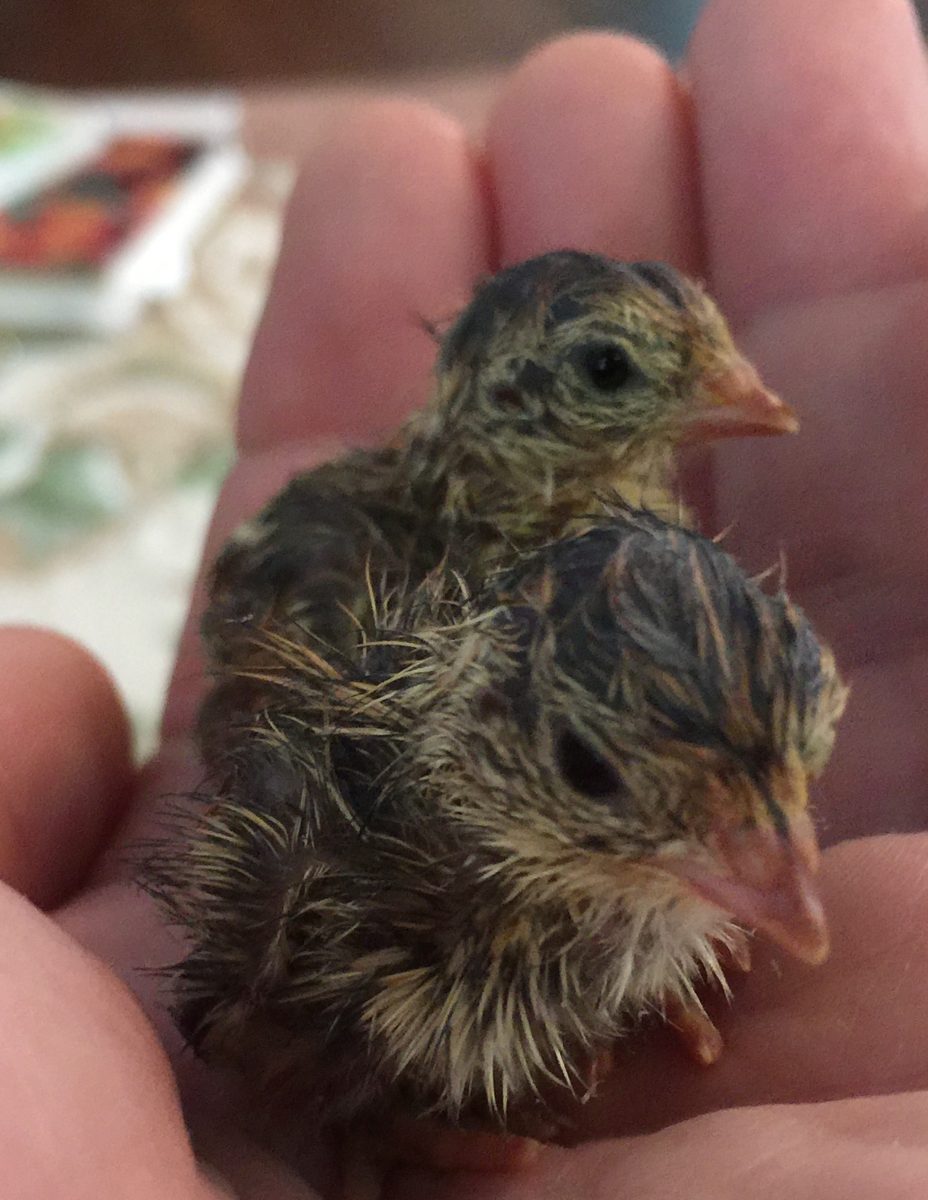
A splayed leg quail chick looks alarming: a tiny bird doing the splits, pushing itself along on its belly. The good news is that it is often fixable if you act in the first day or two, and easy to prevent. Coturnix chicks are smaller than chicks of most other poultry, so the condition is common in quail brooders. This guide explains why it happens, how to make and fit a hobble for a quail-sized chick, and how to set up the brooder so it does not happen again.

What causes splayed leg in quail chicks?
Meyer Hatchery describes spraddle leg (splay leg) as weakness or injury in the tendons of the legs and feet.
| When it appears | Likely cause | Source |
|---|---|---|
| At hatch | Poor position inside the egg or wrong incubator temperature | Meyer Hatchery |
| After the first day | Slippery brooder floor; legs slip and injure tendons | Meyer Hatchery; NSW DPI |
| In the first week, on wire | Leg injuries on bare wire floors | NSW DPI |
Slippery floors are the big one for quail. NSW Department of Primary Industries says chicks tend to spraddle on hard, smooth paper, recommends soft, rough paper (paper towelling is better than old newspaper), and says wire floors must be covered with coarse paper for the first week or so to prevent leg injuries. ICAR’s quail guidance from India goes further, saying floors should preferably be covered with corrugated paper for better foothold “since high mortality occurs initially due to spraddled legs.”
How to tell splay leg from other problems
- Splay leg: legs stick out sideways from the hips; the chick is bright and wants to eat.
- Curled toes: toes bent under rather than legs spread; a different problem that a hobble will not fix, so ask a vet.
- Weak or chilled chick: lies still, eyes closed, not interested in food. Warmth first; see our brooder temperature chart.
- Injury: one leg held up or swollen after being stepped on or caught.
How to fit a hobble on a quail chick
Meyer Hatchery’s method uses Vet Wrap, a self-adhesive bandage that sticks to itself but not to down or skin. Its steps, scaled for coturnix:
- Cut a strip. Meyer uses a strip about 1/4 inch wide and 4 inches long for chicken chicks. For coturnix, a narrower strip is easier to handle; that is our adjustment.
- Loop one leg. Wrap one end loosely around the shank (the lower leg, above the foot).
- Set the gap. Meyer says to leave a gap about the width of the chick’s body between the legs. For a day-old coturnix, that is much less than the 1 inch typical for chicken chicks.
- Loop the other leg and trim the excess.
- Do not stretch the wrap. Meyer warns that stretched Vet Wrap can tighten and cut off circulation, causing permanent damage.
- Check the chick can walk. It should be able to stand and shuffle, with the legs held under its body.
An alternative many keepers use is a short piece of soft tubing or a small band-aid joining the legs; the same rules apply: loose, body-width gap, checked daily.
Aftercare
- Change it every 24 hours. Meyer stresses removing and refitting the hobble daily, because chicks grow quickly and a hobble can become too tight within a day.
- Separate the chick, but not for long. Meyer suggests a separate brooder so others do not peck the hobble and the chick can reach food and water. Quail chicks are very social; a small pen next to the others, or one calm buddy, keeps stress down.
- Make food and water easy. Shallow dishes with marbles or pebbles in the water to prevent drowning, as NSW DPI recommends for all small quail chicks.
- Expect 3–4 days. Meyer says healing typically takes 3 to 4 days in total.
When it does not improve
If a chick is no better after several days of hobbling, cannot reach food and water, or is getting weaker, the tendon damage may be permanent. Keeping it alive in that state is not kind. Talk to a vet if you can, and if not, choose humane euthanasia. If several chicks in one hatch have leg problems, look back at incubation temperature and humidity; our guide to quail hatching problems and the incubation temperature chart cover the settings.
Prevention: the brooder floor
| Floor | Use for quail chicks? | Why |
|---|---|---|
| Paper towels | Yes, first week | Soft and rough; recommended by NSW DPI and Meyer |
| Rough, textured shelf liner | Yes | Grippy and washable |
| Newspaper or smooth paper | No | NSW DPI says chicks spraddle on hard, smooth paper |
| Bare plastic or cardboard | No | Slippery |
| Bare wire | No, first week | NSW DPI: cover with coarse paper to prevent leg injuries |
| Wood shavings | Under paper in week 1, then on their own | NSW DPI covers litter with paper for the first week |
NSW DPI’s approach is litter 5–10 cm (2–4 inches) deep covered with paper for the first week, with feed sprinkled on the paper to encourage eating. Our quail brooder setup guide goes through the whole setup step by step, and quail chick care covers the first weeks.
Frequently asked questions
Can a splayed leg quail chick recover?
Often, if treated early. Meyer Hatchery says many chicks recover quickly with a hobble, typically in 3–4 days.
How long should a hobble stay on a quail chick?
Remove and refit it every 24 hours, and stop when the chick stands and walks normally. Leaving it on without checking can cut off circulation as the chick grows.
What can I use instead of Vet Wrap?
Keepers use soft tubing or small adhesive bandages. Whatever you use, keep it loose, set the gap to body width and check it daily.
Is newspaper bad for quail chicks?
Yes, for the first week. NSW DPI says chicks tend to spraddle on hard, smooth paper; use paper towels or rough paper.
Why did several of my chicks hatch with splayed legs?
Meyer links splay leg at hatch to chick position in the egg or incubator temperature. Check your thermometer and settings before the next hatch.
Sources
- Meyer Hatchery. Spraddle Leg Causes and Treatment.
- Randall, M. and Bolla, G. Raising Japanese Quail. NSW Department of Primary Industries Primefact, republished by The Poultry Site.
- ICAR-Central Coastal Agricultural Research Institute. Japanese Quail.