
Quick answer: Good quail chick care starts with heat of about 95°F at chick level in week one, lowered about 5°F each week until chicks are feathered at 4–6 weeks. Give drown-proof water, finely ground 24–30% protein game bird starter, non-slip flooring, a covered brooder and room to move away from the heat.
Quail chick care is mostly about the first two weeks. Coturnix chicks hatch at about the size of a bumblebee, weigh only about 8–9 grams, cannot control their own body temperature yet and can drown in a bottle cap of water. Get warmth, water, footing and feed right, and they grow astonishingly fast: most are well feathered by 4–5 weeks and laying by 7–8 weeks. This week-by-week guide shows what to set up, what to change each week, and how to fix problems early.
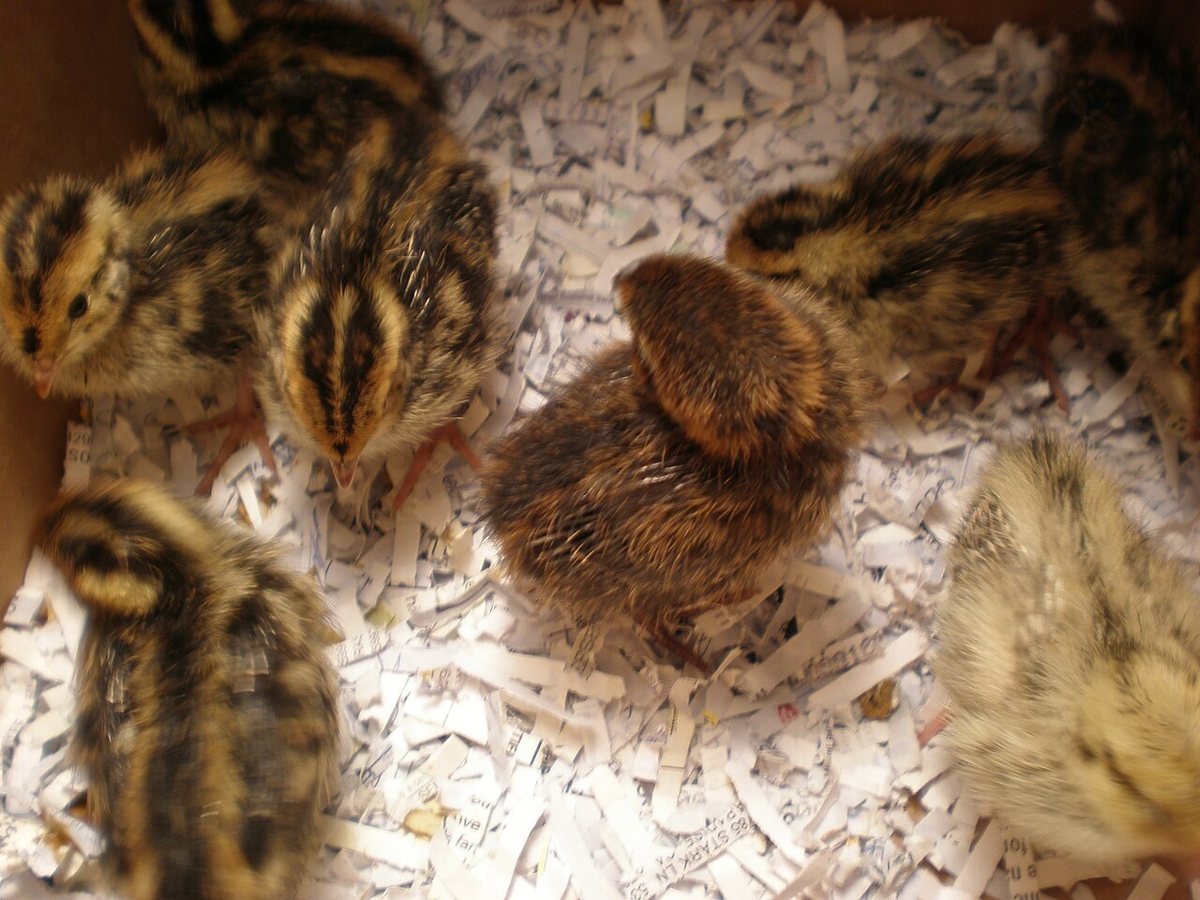

Quail chick care checklist (set up before hatch day)
Turn the brooder on 24–48 hours before chicks arrive so the floor, feed and water are warm. You need:
- A solid-sided brooder with rounded corners. A large plastic tote, stock tank or cardboard ring works. Startled chicks pile into corners and smother each other, so Extension guides recommend rounding the corners or adding a brooder guard.
- A lid of fine mesh. Coturnix chicks can flutter up within the first week or two. Use hardware cloth or window screen, not a solid lid, so heat and moisture can escape.
- A heat source on one side only. A radiant heat plate or panel is the safest choice. A heat lamp works but is a fire risk; clamp it with a chain or second fastener and keep it well away from bedding and walls.
- A thermometer at chick level under the heat, plus a cooler zone at the other end.
- Shallow quail-size waterers with marbles, clean pebbles or a screen in the trough.
- Feed on a flat surface for day one (a paper plate or egg flat), then a chick feeder with small holes.
- Non-slip flooring for the first few days: paper towels or rubber shelf liner, then pine shavings.
If you are hatching your own, chicks move here from the incubator once dry; see how to incubate quail eggs.
Week-by-week quail chick care schedule
| Age | Temp at chick level | Floor space per chick | Feed and water | Key jobs |
|---|---|---|---|---|
| Days 1–3 | About 95°F (some hatcheries start at 96–98°F) | At least 0.17 sq ft (no more than 6 chicks per sq ft) | Starter crumbs ground fine on a flat plate; marbles in water | Dip beaks in water; paper towel or shelf liner floor; watch every few hours |
| Week 1 | 90–95°F | At least 0.17 sq ft (no more than 6 chicks per sq ft) | Fine starter in feeder; refresh water 2–3 times a day | Check for pasty butt and splayed legs; switch to shavings after day 3 |
| Week 2 | About 90°F | About 0.2 sq ft | Starter; marbles can come out late this week | Make sure the lid is secure; chicks start flying up |
| Week 3 | About 85°F | About 0.3 sq ft | Starter, can be less finely ground | Breast feathers begin showing on many color varieties |
| Week 4 | About 80°F | About 0.4 sq ft | Starter or grower | Most chicks well feathered; begin sexing standard-colored birds |
| Week 5 | About 75°F, or off if the room is warm | About 0.5 sq ft | Starter or grower | Prepare adult housing; harden off on mild days |
| Week 6 | 70°F, or no supplemental heat | Move to adult space | Begin switching to a layer or breeder diet about 2 weeks before laying | Move outdoors if nights are mild; separate extra males |
Mississippi State Extension’s poultry brooding guidance is the basis for the temperature column: start at 90–95°F and drop about 5°F a week until you reach about 70°F. Space figures are minimums based on Meyer Hatchery’s limit of 6 chicks per square foot at the start and common breeder guidance after that. More room is always better. For the full temperature chart and what to do in a cold garage, see our quail brooder temperature by week guide.
Read the chicks, not just the thermometer
Thermometers help, but chick behavior is the real test. Mississippi State Extension points out that chicks need 2–4 weeks to develop their own temperature control, and that overheating is one of the most common brooding mistakes.
| What you see | What it means | What to do |
|---|---|---|
| Chicks spread evenly, some sleeping flat, some eating, quiet cheeping | Just right | Nothing |
| Huddled tightly under the heat, loud shrill peeping | Too cold | Lower the lamp or plate a little, or block drafts |
| Crowded against the far wall, panting, wings held out | Too hot | Raise the heat source or reduce wattage; make sure there is a cool zone |
| Bunched on one side, away from one direction | Draft | Find the draft and block it; add a solid guard |
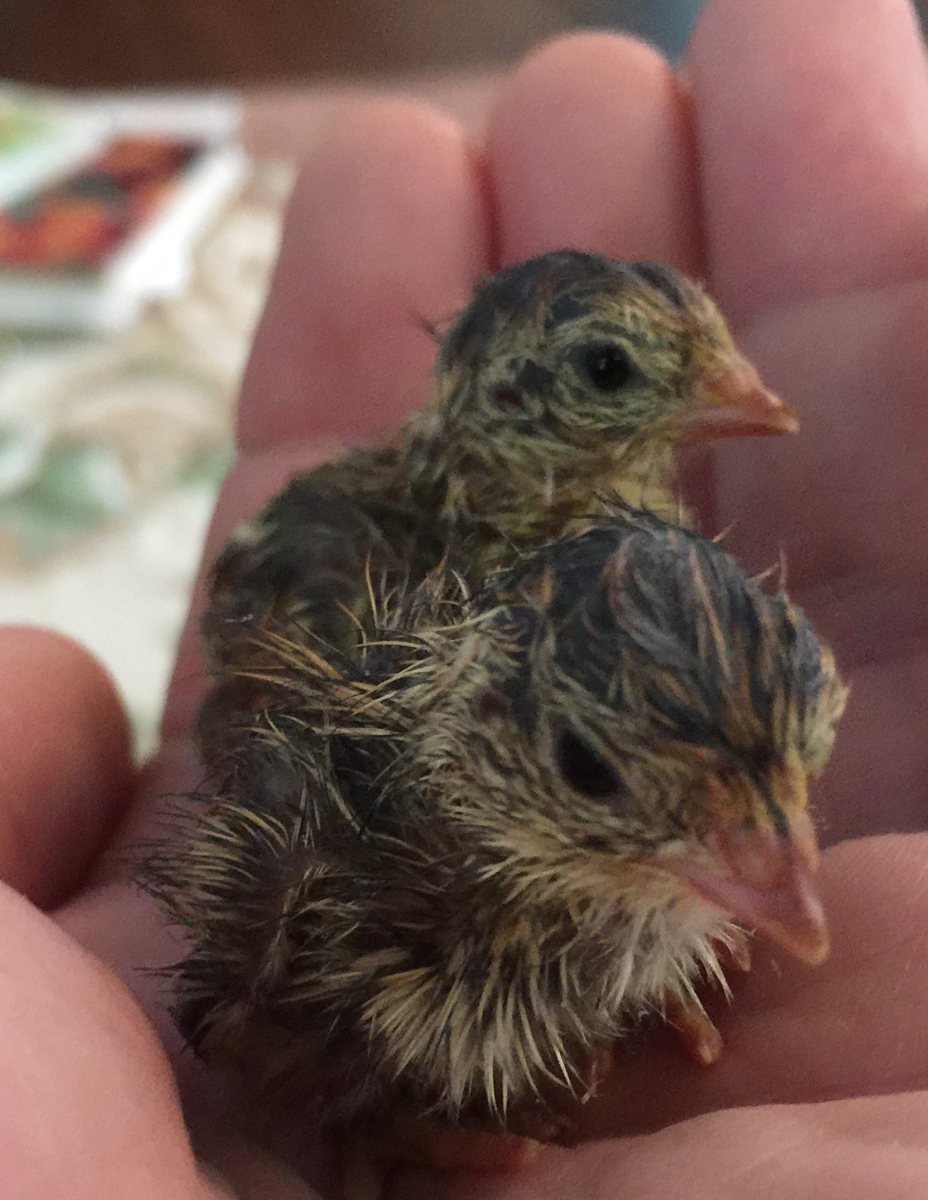

Water: keep it shallow and drown-proof
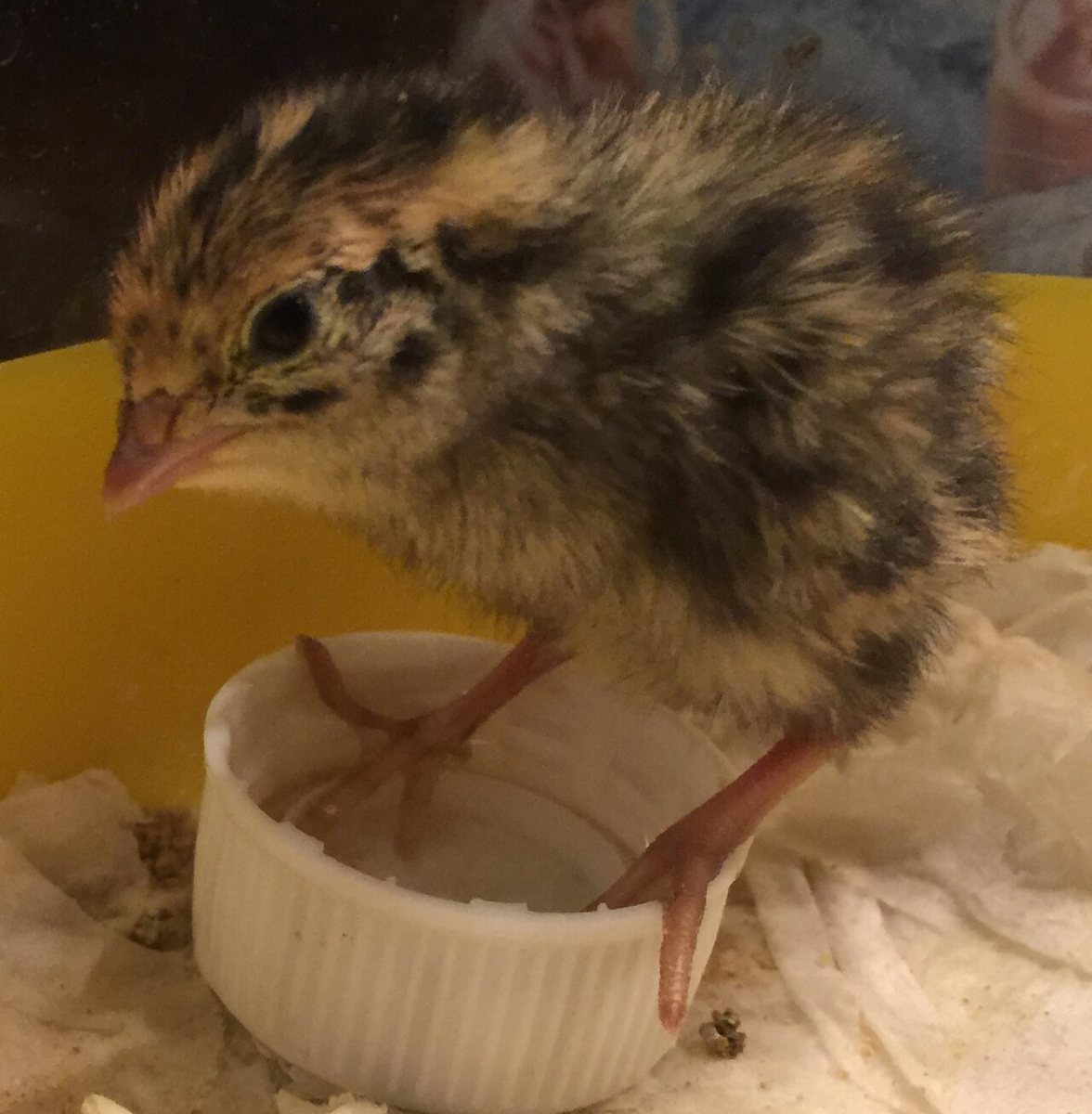
Drowning is one of the most common ways to lose quail chicks. The Cooperative Extension quail guide recommends putting a screen over waterers or placing small marbles in the trays for the first week or two. Marbles or clean pebbles leave water between them for drinking but not enough depth to fall into.
- When chicks first arrive, gently dip each beak in room-temperature water so they find it.
- Keep water away from directly under the heat so it does not get hot or evaporate quickly.
- Clean and refill at least daily; chicks kick shavings into everything.
- Remove the marbles once chicks are about 2 weeks old and clearly bigger than the water channel.

Feed: high protein, finely ground
Quail chicks need far more protein than chicken chicks. Alabama Extension lists 24–26% crude protein for Japanese quail from hatch to 6 weeks, and many breeders feed a 28–30% game bird or turkey starter. Standard chicken starter, usually around 18–20% protein, is not enough on its own.
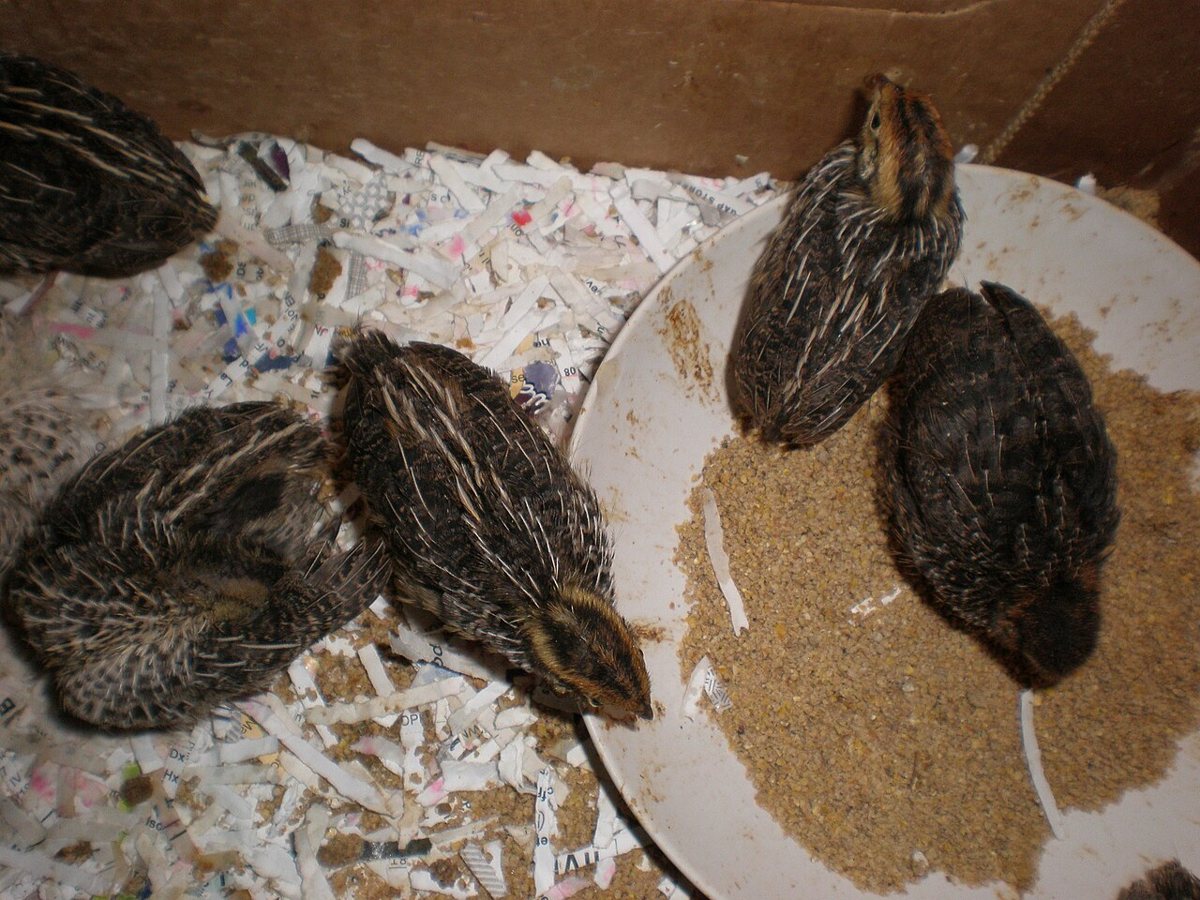
- Grind it for the first week or two. Game bird crumbles are often too big for day-old coturnix. Pulse them in a blender or food processor until they look like coarse sand.
- Spread feed on a paper plate or egg flat on day one, then move to a chick feeder with small holes so chicks do not scratch it all out or climb in.
- Keep feed available all day. Chicks eat little and often.
- Hold the treats. A balanced starter is all they need. If you do give anything else, offer chick grit with it.
Our guide to what baby quail eat compares starter brands and protein levels, and what do quail eat covers the switch to adult feed.

Bedding and footing
Smooth surfaces cause splayed legs, where a chick’s legs slide out to the sides. Research guidance from ICAR-CCARI recommends covering brooder floors with corrugated paper for footing in the early days, because spraddled legs cause high early losses.
- Days 1–3: paper towels or rubber shelf liner. Paper towels are easy to change; shelf liner can be washed and reused.
- After day 3: pine shavings, once chicks have learned what feed is (so they do not fill up on shavings).
- Avoid: newspaper or slick cardboard (too slippery), cedar shavings (aromatic oils), and fine sawdust (can be eaten or breathed in).
Light
Most keepers leave a low light on for the first few days so chicks can find feed and water. Hoover’s Hatchery recommends 24 hours of light on day 1, dropping by an hour a day to 18 hours by the end of week 1. ICAR-CCARI describes continuous light for the first 2–3 weeks, then 12 hours. Either approach works; what matters is that chicks can always find water early on and that you do not push young females into lay too early with long days. A red bulb or dim light at night is less disruptive than bright white light.
When can quail chicks go outside?
Chicks can move to outdoor housing once they are fully feathered and off supplemental heat, usually at 4–6 weeks. Night-time temperatures matter more than daytime ones. If nights are still below about 50–60°F, many keepers wait or give a sheltered hutch with a draft-free corner. Move them into secure housing built for adults: see our quail housing guide.
Troubleshooting common quail chick problems
Not veterinary advice. This section is general information for backyard keepers. If several chicks are sick or dying, contact a veterinarian who treats poultry or your state’s animal diagnostic laboratory.
| Problem | Signs | Common causes | What keepers do |
|---|---|---|---|
| Chilling or overheating | Huddling and shrill peeps, or panting and lying spread at the edges | Wrong heat height, no cool zone, drafts | Adjust heat, add a cool zone, block drafts |
| Drowning | Wet, chilled or dead chicks near water | Water too deep or open dishes | Marbles, pebbles or screen in water; quail-size waterers |
| Splayed legs | Legs slide out sideways; chick cannot stand | Slippery floor, hatching on smooth surface | Change to textured floor; a small hobble splint early often helps. See splayed leg in quail chicks |
| Pasty butt | Droppings stuck over the vent | Stress, chilling, overheating | Gently soften with warm water and remove; check temperatures |
| Piling and smothering | Chicks found crushed in corners | Square corners, cold spots, sudden scares | Round corners, steady heat, quiet location |
| Pecking | Bloody toes or heads | Crowding, boredom, bright white light, too much heat | More space, dimmer or red light, separate injured chicks |
| Starve-outs | Thin, weak chicks that never seem to eat | Feed too coarse or hard to find | Grind feed, scatter on a flat plate, dip beaks |
| Escapes and injuries | Missing chicks, head bumps | No lid, gaps, chicks flying up | Fine mesh lid, no gaps wider than about 1/4 inch |
If losses keep happening despite good conditions, our guide to why quail chicks die walks through each cause in more depth. For the bigger picture of the whole flock life cycle, see raising coturnix quail.
Frequently asked questions
How long do quail chicks need a heat lamp?
Usually 4–6 weeks, until they are fully feathered. In a warm house in summer, many chicks are off heat by about 4 weeks. In a cold garage or in winter, plan on 6 weeks or more, and wean off gradually.
Can quail chicks eat medicated chick starter?
Medicated chick starter usually contains amprolium, and research summarized by ICAR-CCARI found amprolium effective against coccidiosis in quail. The bigger problem is protein: most chick starter is around 18–20%, below what quail chicks need. A game bird or turkey starter (medicated or not) is a better fit.
How big are quail chicks?
Coturnix chicks weigh about 8–9 grams at hatch, roughly the size of a large bumblebee. Alabama Extension puts them at about 40 grams by 2 weeks and about 90–100 grams by 4 weeks. Jumbo strains grow faster.
When can quail chicks go outside?
Once they are fully feathered and no longer need heat, usually at 4–6 weeks. Wait for mild nights and move them into predator-proof housing.
What do coturnix quail chicks eat?
A game bird or turkey starter with about 24–30% protein, ground fine for the first week or two, plus clean water in a drown-proof waterer. They do not need treats. If you give anything besides starter, add chick grit.
Sources
- Mississippi State University Extension. Brooding Chicks (temperature schedule and behavior).
- Jacob, J. and McCrea, B. Raising Japanese Quail in Small and Backyard Flocks. Cooperative Extension.
- Alabama Cooperative Extension System. Feeding Game Birds: Pheasant, Quail, and Partridge (ANR-1343).
- ICAR-Central Coastal Agricultural Research Institute. Japanese quail: brooding, rearing and health cover.
- Hoover’s Hatchery. Quail Care.
- Meyer Hatchery. Coturnix Quail Brooding 101: From Hatch to Outside.