
Quick answer: How long do quail chicks need a heat lamp? Most coturnix chicks need supplemental heat for about 3 to 5 weeks, until they are well feathered and can hold their body temperature in the room you have. Mississippi State Extension says chicks need 2 to 4 weeks to develop temperature control, and its brooding schedule drops the lamp-edge temperature about 5°F each week, from about 90–95°F in week one toward room temperature near week five. Watch the birds, not only the calendar: if they still huddle when the lamp is off, they are not ready.
How long do quail need a heat lamp is a duration question, not a replacement for a full temperature chart. The week-by-week setpoints already live in the quail brooder temperature by week guide. This article focuses on when you can turn the heat off, how a heat plate changes that timing, how room temperature and season matter, and the signs that you weaned heat too early or left it on too long. It does not assume one brand of lamp, and it does not claim a single day that works in every garage or spare bathroom.
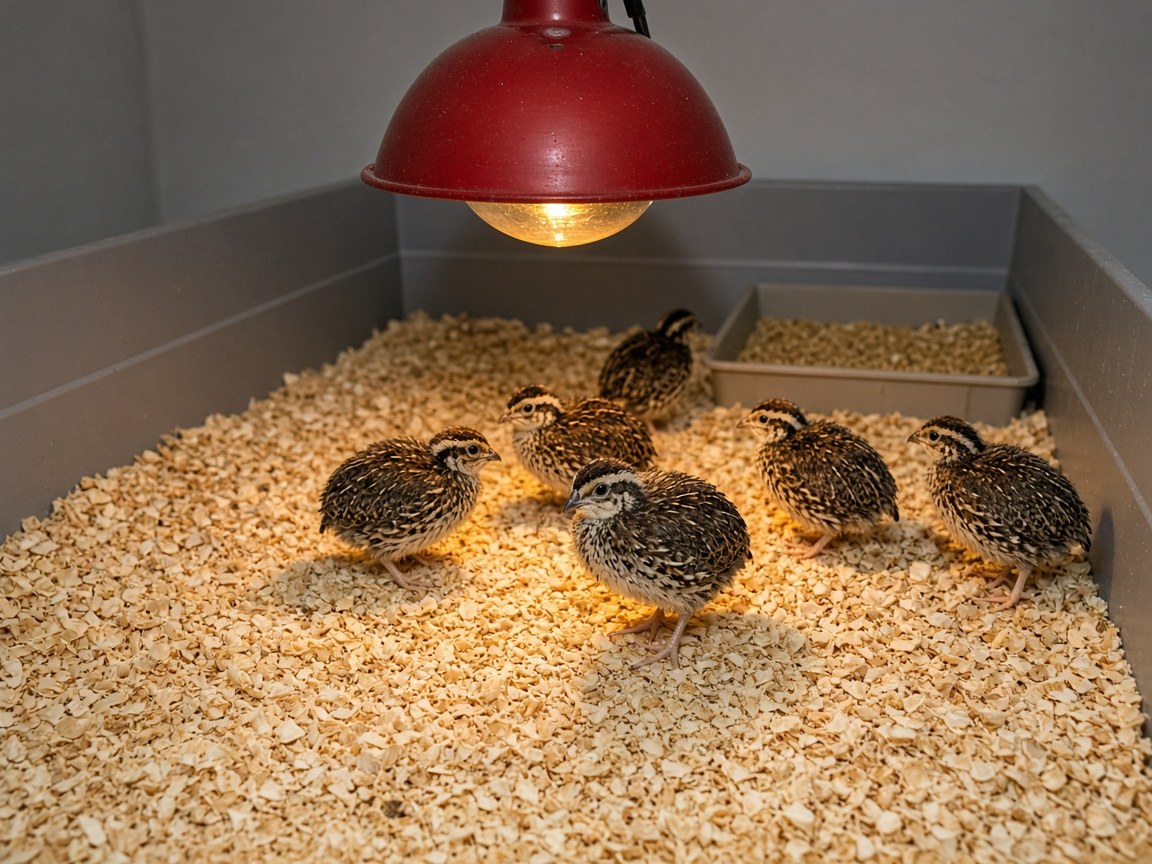
The usual timeline
Newly hatched coturnix cannot keep themselves warm. Mississippi State’s brooding publication says temperature control develops over 2 to 4 weeks as down is replaced by feathers, and it lists a schedule that reduces brooding temperature 5°F each week. Under that schedule, chicks are expected to maintain their own body temperature at 5 weeks if the room is about 70°F.
| Age | Heat at the lamp or plate edge (chick height) | Typical room or cool-zone goal | What the chicks should look like |
|---|---|---|---|
| Days 1–7 | 90–95°F | A clearly cooler escape zone | Spread in a loose ring around the heat, not in a tight pile and not panting on the walls |
| Days 8–14 | 85–90°F | Cooler than week one | More time spent eating away from the hot spot |
| Days 15–21 | 80–85°F | Room often in the 70s if the house is warm | Feathers coming in on the wings and back |
| Days 22–28 | 75–80°F | Many indoor rooms are close to this | Mostly feathered; shorter visits to the heat |
| Days 29–35 | 70–75°F, then trial periods with heat off if the room is near 70°F | About 70°F | Calm, eating, no night huddles |
Those numbers are a starting grid, measured 1 inch above the litter at the edge of the heat, not on the wall. Mississippi State also notes that in warm southern conditions, overheating is a more common mistake than too little heat.
A heat lamp is only one tool. A radiant heat plate, a safe radiant heater, or a well-designed brooder can deliver the same temperature curve. The chicks tell you if the hardware is working.
When the lamp can go off
Use all three of these, not just the chick’s age:
- Feathering. They should be largely feathered, not still downy on the back and sides.
- Room temperature. A 70°F spare room at week four is very different from a 50°F garage. In a cold room, keep a heat source available longer, or move the brooder before you cut heat.
- Behavior with the heat off. Try a stretch of several hours, including an evening, with the lamp off or the plate raised, while you are home to watch. If chicks huddle, cheep in distress, or pile, turn the heat back on and try again in a few days. If they eat, drink and rest loosely, you are close to done.
Do not make the last test on a night you are away, and do not rely on a single warm afternoon. Overnight is when rooms drop and chicks get into trouble.
Outdoor move-out is a separate decision. Even fully feathered six-week-old birds can need a draft-free shelter, and weather extremes are covered in whether adult quail need heat in winter and raising quail in a hot climate. A chick that no longer needs a lamp in a 70°F house may still be unready for a raw night in an uninsulated hutch.
Heat lamp vs heat plate vs room heat
| Source | Strength | Watch-outs | Effect on “how long” |
|---|---|---|---|
| Clamp lamp with a broad, hot bulb | Cheap, strong heat | Fire risk, harsh glare, easy to overheat a small tote; use a ceramic fixture, a secure clamp, and a cool zone | Often weaned on the 3–5 week pattern if the room is warm |
| Radiant heat plate | Chicks go under it like a hen; lower fire risk in many setups | A plate that is too high is useless; one that is too low can trap chicks | Same feathering rule; you lower the plate less often than you dim a lamp |
| Whole-room heat (warm bathroom, climate-controlled room) | Even temperature | Poor ventilation, or a room that is warm by day and cold at night | You may drop supplemental heat sooner if the room truly stays near 70°F |
| “They’ll be fine with a desk lamp” | Usually a false saving | Not enough reserve if the night is cold | Do not use a weak lamp as your only plan in a cold space |
Whatever you use, chicks must be able to walk away from the heat. A uniform 95°F tote with no cool end is a week-one danger.
Signs you pulled heat too early — or left it too late
Too early: loud, distressed cheeping; tight huddles; piling; pasty vents; deaths in the cold corners by morning. Turn heat back on and review why quail chicks die.
Too late or too hot: panting, wings held out, chicks sleeping pressed to the walls, dry scorching of litter, or sluggish birds under a blazing bulb. Mississippi State’s warning about overheating applies all the way through weaning. Chronic extra heat also wastes power and can delay hardy feathering in a too-warm box, though underheating is the more dramatic killer in a cold garage.
A safe weaning plan
- Follow the weekly drop of about 5°F, using a thermometer at chick height.
- Around week three, raise the lamp or plate so the hot spot is milder and the cool zone is used more.
- In week four, if the room is near 70°F and chicks are well feathered, try a supervised afternoon with heat reduced or off.
- If that goes well, try a full night with you available to check.
- Once they rest and eat normally without supplemental heat, move the fixture out so it cannot fall or reheat the pen by accident.
- Keep the fixture handy for a cold snap for another week.
For the physical layout — sides, floors, waterers and lamp distance — use the quail brooder setup guide and the week-by-week chick care article rather than repeating those builds here.
Troubleshooting
| Problem | Likely cause | Fix |
|---|---|---|
| Chicks still huddle at 4 weeks | Room is colder than you think, or they are poorly feathered | Measure night temperature; restore a milder heat source; delay weaning |
| Chicks are 2 weeks old and always away from the lamp | Heat is too high | Raise or dim it; confirm 85–90°F at the edge, not 100°F in the center |
| Temperature swings every night | Cheap thermostat, a draft, or a lamp on a timer that shuts off | Fix drafts; do not put needed night heat on a timer that goes off |
| Brooder is in a garage in January | Ambient air far below 70°F | You will need heat longer, or you need a warmer room |
| One chick is always under the heat while others roam | A weak or bullied bird | Check health and crowding; add a second warm pocket if the group is large |
Frequently asked questions
Do jumbo coturnix need the lamp longer?
They still feather on a similar schedule. Room temperature and feathering, not the marketing name, decide it. A larger chick can still chill if the garage is cold.
Can I brood without a heat lamp at all?
Only if the whole brooding area reliably holds the week-one temperatures at chick height, which most houses do not. A heat plate in a warm room is a common lamp alternative. A box with no supplemental heat in a 68°F house is usually too cold for day-olds.
Should I run the lamp 24 hours a day?
The heat should be available whenever the chicks would otherwise chill, including night. That is not the same as blasting light and heat with no off-ramp. Provide a dimmer cool zone so they can sleep away from the brightest spot.
What if the power goes out?
Have a backup: a safe battery plan, a smaller enclosure you can warm, or a place to move the chicks. A dense huddle in a huge, cooling brooder is dangerous. Check them rather than assuming they will “tough it out.”
Do adult quail ever need the lamp again?
Healthy, fully feathered adults in a dry, draft-free pen usually do not need a heat lamp, and heat lamps in adult housing start fires and cause heat stress. That question is covered in the winter heat article linked above.
Sources
- Tom W. Smith, Jr., Mississippi State University Extension. Brooding Chickens and Quail and Temperatures recommended for brooding quail (90–95°F start, about 5°F weekly drop, 2–4 weeks to develop temperature control, around 5 weeks at a 70°F room).
- Raising Japanese Quail in Small and Backyard Flocks, Jacob and McCrea, Poultry Extension (critical first weeks; heat, feed and water ready before chicks arrive).