
Quick answer: When to switch quail from starter to layer feed is at about 6 weeks of age for pullets that will lay, or at the first egg if that comes slightly later — not in week two, and not by mixing a handful of layer pellets into the chick bag. NSW Department of Primary Industries recommends a diet of about 25% protein and 1.0% calcium for the first six weeks, then a laying diet with more calcium. Alabama Extension says a breeder diet should be introduced at least two weeks before expected egg production, or at the first egg. Meat birds that will be processed at 6–8 weeks generally stay on a starter or grower diet and never need layer feed.
When to switch quail to layer feed is a timing and calcium problem as much as a protein problem. Coturnix grow so fast that the same bird can be a chick one month and a laying hen the next. Switch too early, and growing bones and kidneys see more calcium than they need. Switch too late, and early eggs may have thin or soft shells, or hens may pull calcium from their own bodies. This guide gives a clear age window, how to make the change, what to do with mixed-age flocks, and why meat birds are different. Background protein numbers are in quail feed protein percentage.
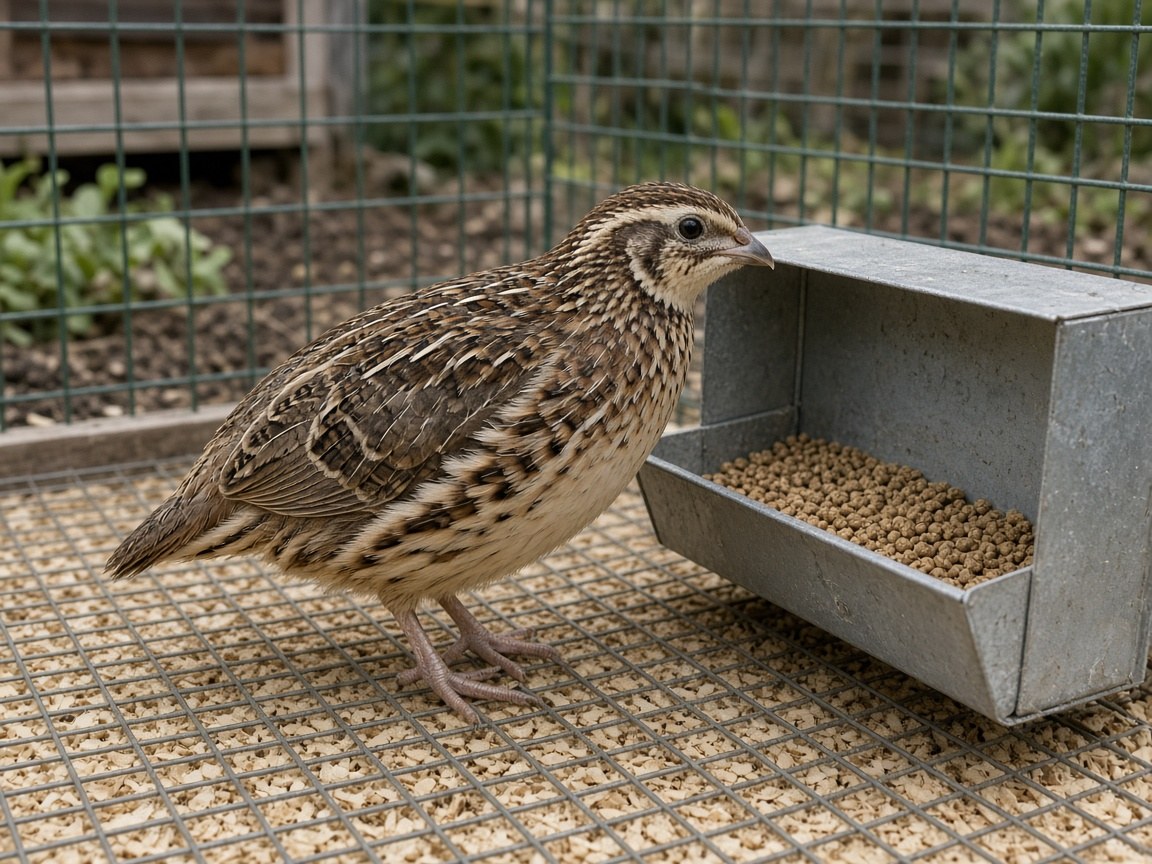
Why the switch exists
Starter (or a game bird / turkey starter) is built for growth: high protein, modest calcium (NSW cites about 1.0% in the first six weeks). Layer and breeder diets are built for eggs: enough protein to keep laying, and much more calcium for shells. Alabama Extension’s game-bird tables show adult breeder diets around 2.6% calcium, versus well under 1.5% in starter and grower diets.
A six-week-old coturnix pullet is close to the start of lay. Poultry Extension says Japanese quail mature in about six weeks and can produce eggs by about seven weeks; NSW says they are often in full production by about 50 days. That is why the feed change and the first egg sit on the same calendar, and why chicken timelines (“layer feed at 18 weeks”) do not transfer.
Our quail egg laying age guide covers when eggs actually start. Soft or thin shells after that are often a calcium or vitamin D problem, and they also appear in the egg bound prevention discussion.
The recommended window
| Bird | When to change | What to change to | What not to do |
|---|---|---|---|
| Pullets kept for eggs | About 6 weeks, or at first egg, and no later than the start of regular lay | A game bird layer or a complete layer diet that actually meets laying-bird calcium needs; oyster shell as a free-choice backup | Do not start layer feed in week 1–3 |
| Pullets, if you want a more conservative Extension-style ramp | Begin introducing the laying/breeder diet about 2 weeks before you expect eggs (Alabama ANR-1343) | Same | Do not flip back and forth every few days |
| Meat birds processed at 6–8 weeks | No layer switch | Stay on starter or a meat/grower diet through processing | Layer feed is wasted on birds that will never lay for you |
| Mixed straight-run groups | Split the sexes when you can tell them apart, or accept a compromise only briefly | Hens to layer; males and meat birds off layer feed | Long-term layer feed for males is a poor fit |
| Late, underweight pullets | Wait until they are closer to mature size, then switch as eggs begin | Starter/grower until then | Do not force a tiny pullet onto a high-calcium diet just because a hatch-mate laid |
NSW says shell grit or ground limestone can be added after 5 weeks, or offered free choice, as calcium needs rise near maturity. That is a useful bridge, not a reason to dump full layer mash on four-week-old chicks.
How to make the change without a boycott
Quail can refuse a sudden new texture. A clean switch over several days works better than an overnight surprise:
- At about 5½ to 6 weeks, confirm the birds are mostly feathered, eating well and close to adult size for their line.
- Mix about one-quarter layer (or breeder) feed with three-quarters starter for a day or two, then half and half, then three-quarters layer.
- After a few days, feed only the laying diet, still as a crumble if you can get it. Large pellets are harder for quail than for hens.
- Offer free-choice oyster shell or a coarse calcium source in a separate dish once hens are laying, so heavy layers can take more. This is calcium, not the same thing as insoluble grit; see do quail need grit.
- Keep a complete feed as the staple. Oyster shell supplements the layer diet; it does not replace it.
If you cannot find a game bird layer, some keepers use a chicken layer crumble and watch shell quality and body condition. Chicken layer feed is often lower in protein than a game bird layer. That compromise is discussed in can quail eat chicken feed. It is a backup, not the first choice.
Signs you switched too early or too late
Too early (high calcium while they are still growing hard): birds are well under laying age, still small, and have been put on layer feed “to make them lay sooner.” Layer feed does not flip a four-week-old pullet into lay. You have only changed the mineral balance of a growing diet. Move them back to a starter or grower until the window above.
Too late: first eggs are very soft, rubbery, or shell-less; hens look depleted; egg eating starts because shells are weak. Begin a proper laying diet and oyster shell, and review light (Japanese quail need 14 to 18 hours of light to hold production, per Poultry Extension). Soft shells also have other causes, including heat and disease, so look at the whole bird, not only the bag.
Mixed flocks and one-feeder households
If males, meat birds and layers share one hopper, you have an awkward choice. The least-bad short-term option is a diet that meets the hens’ calcium needs and giving males extra room so they are not the long-term residents on that feed. The better option is to separate birds by purpose, which is also easier for breeding and fighting control.
Do not try to “average” starter and layer in one bucket forever. That usually means too much calcium for growing birds and not enough for layers.
Troubleshooting
| Problem | Timing clue | Fix |
|---|---|---|
| Soft shells at week 7–8 | Still on starter | Switch to a laying diet and offer oyster shell |
| No eggs at week 8–10, already on layer feed | Light, age, or not actually hens | Check day length, sex, and why quail are not laying; feed was not the only switch that matters |
| Birds leave the new feed | Texture or taste change was abrupt | Blend over several days; try a crumble |
| Meat birds on layer feed look stocky but you wanted growth | Wrong diet for the goal | Return to a grower/starter until processing |
| Chicks accidentally got layer feed for a day | One mistake | Put starter back; one day is not usually a crisis |
Frequently asked questions
Can I keep quail on starter forever?
You can, if you add a proper calcium source once they start laying, but it is easy to get the calcium wrong. A formulated layer or breeder diet plus free-choice oyster shell is the more reliable path for hens.
When do I switch males?
Males do not need layer feed. After you sex them, a game bird maintenance or grower-type diet is a better match if you can run two feeds. If they stay with hens, they will eat what the hens eat.
Is “all flock” feed a good middle step?
Some all-flock feeds are low in calcium and need oyster shell for laying hens; others vary. Read the calcium percentage. If it is close to a starter, it is not a layer feed. If it is a layer, it is not a chick feed.
Do jumbo pullets switch later because they are bigger?
They still start laying on a coturnix schedule, often around 6–8 weeks. Judge by age and first eggs, not by the idea that “bigger means they are still chicks.”
Should I switch based on weight instead of age?
Weight helps you avoid pushing a stunted bird, but age plus first eggs is the usual trigger. A healthy pullet near 6–7 weeks should move onto a laying plan.
Sources
- Randall, M. and Bolla, G. Raising Japanese quail. NSW DPI, via The Poultry Site (about 25% protein and 1.0% calcium for 6 weeks; raise calcium near maturity; shell grit after 5 weeks; full lay by about 50 days).
- Alabama Cooperative Extension System. Feeding Game Birds: Pheasant, Quail, and Partridge (ANR-1343) (introduce breeder diet at least two weeks before expected production or at first egg; calcium contrasts between starter and breeder diets).
- Raising Japanese Quail in Small and Backyard Flocks, Jacob and McCrea, Poultry Extension (maturity at about 6 weeks; eggs by about 7 weeks; 14–18 hours of light).