
Quick answer: Quail brooder temperature by week: start at about 95°F (35°C) at chick level in week 1, then lower it about 5°F (3°C) each week: about 90°F in week 2, 85°F in week 3, 80°F in week 4 and 75°F in week 5. Most coturnix need little or no extra heat by 5–6 weeks if the room stays near 70°F. Mississippi State suggests the lower end of each range in summer and the higher end in winter. Always check chick behavior: huddling means cold, spreading to the edges and panting means hot.
Getting the quail brooder temperature by week right is the single biggest factor in a healthy first month. Coturnix chicks are tiny, they cannot control their own body temperature at first, and they feather out fast. This chart pulls together the published schedules from Mississippi State, Texas A&M, NSW Department of Primary Industries, Virginia Tech and others, converts them to both °F and °C, and shows how to measure correctly, adjust for the season and wean chicks off heat.
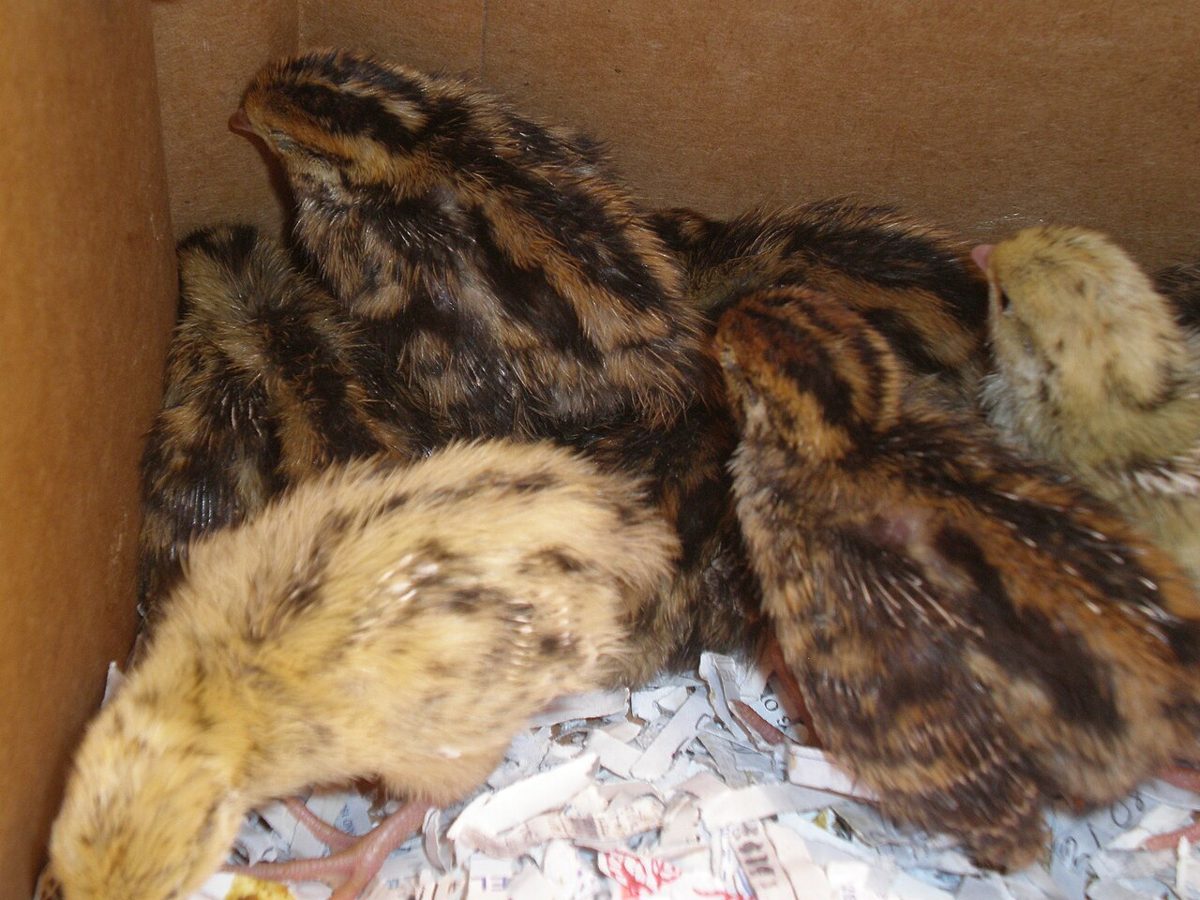

Quail brooder temperature chart
| Age | Temperature at chick level under the heat | °C | Typical look (varies by line and warmth) |
|---|---|---|---|
| Week 1 (days 1–7) | 95°F (90–95°F) | 35°C | Down only; wing feathers starting |
| Week 2 (days 8–14) | 90°F (85–90°F) | 32°C | Wing and tail feathers growing |
| Week 3 (days 15–21) | 85°F (80–85°F) | 29°C | Patchy feathers on body |
| Week 4 (days 22–28) | 80°F (75–80°F) | 27°C | Mostly feathered |
| Week 5 (days 29–35) | 75°F (70–75°F) | 24°C | Nearly fully feathered |
| Week 6 onward | 70°F or no extra heat | 21°C | Fully feathered |
The ranges in brackets are Mississippi State Extension’s summer-to-winter schedule. The single figures follow the common “95°F, then 5°F less each week” rule that Texas A&M, Virginia Tech, Hoover’s Hatchery and others use.
How the published schedules compare
| Source | Week 1 | Weekly drop | When heat ends |
|---|---|---|---|
| Mississippi State Extension | 90–95°F (lower in summer, higher in winter) | 5°F | At 5 weeks if the room is near 70°F |
| Texas A&M AgriLife Extension | 95–97°F at chick level | 5°F | At 75°F |
| Virginia Tech 4-H manual | 95°F on the heated side | 5°F | At room temperature |
| NSW DPI | About 35°C (95°F) | About 3.5°C (about 6°F) | When fully feathered at about 3–4 weeks |
| Penn State (bobwhite) | About 95°F under heat, about 88°F room | 5°F | At 70°F |
| Hoover’s Hatchery | 95°F | 5°F | Not stated |
The agreement is strong: about 95°F to start and about 5°F off each week. NSW DPI moves faster, ending heat when chicks are fully feathered at about 3–4 weeks; that suits a warm climate or room. Bobwhite are slower to feather than coturnix, so Penn State’s schedule runs a little longer.
Why chicks need this much heat
Mississippi State Extension explains that a day-old chick’s body temperature is about 3°F below an adult’s. It starts rising at about 4 days of age and peaks at about 10 days, and chicks need 2 to 4 weeks to develop full temperature control. Missouri Extension notes that the body temperature difference disappears at about three weeks, when feathering, metabolism and body size let chicks handle a cooler environment. Missouri also gives 75–80°F as the minimum room temperature for holding chicks.
How to measure brooder temperature correctly
- Measure at chick height. NSW DPI says to measure at the level of the chicks. Mississippi State measures at the outer edge of the heat source, about 1 inch above the litter.
- Use two thermometers: one under the heat, one in the cool zone.
- Check after 24 hours of running. Preheat the brooder for a day before chicks arrive and adjust.
- Recheck at night. Rooms cool after dark, especially garages and sheds.
- Trust the chicks over the thermometer. Mississippi State says contented chicks spread evenly and peep quietly; cold chicks huddle under the heat and chirp loudly; hot chicks move away from the heat, pant and look drowsy.
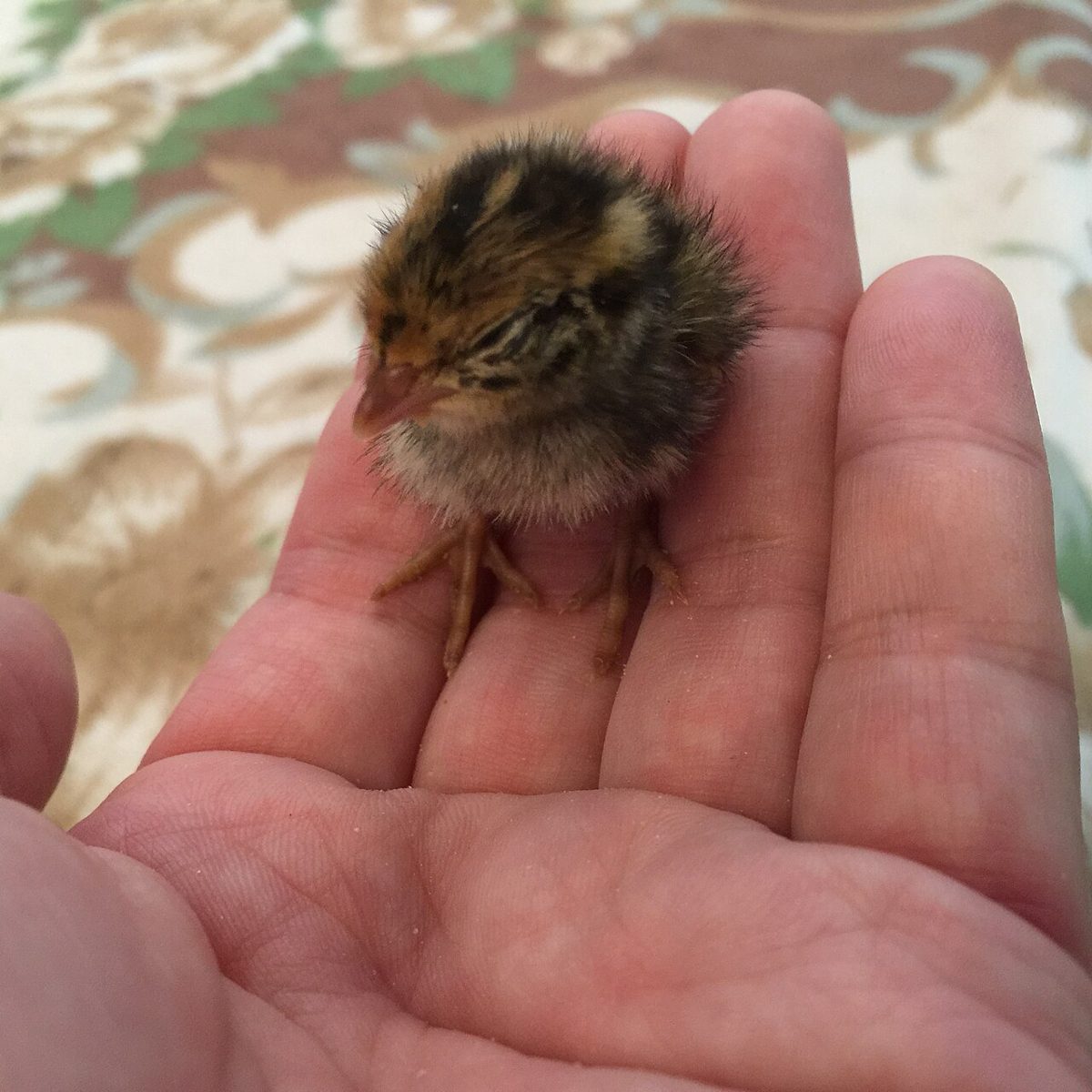

Adjusting the heat each week
| Heat source | How to lower the temperature |
|---|---|
| Heat lamp | Raise the lamp a few inches, or switch to a lower-wattage bulb; keep it firmly secured |
| Heat plate | Raise the legs one notch; many keepers set it so chicks just touch it with their backs |
| Ceramic heat emitter with thermostat | Turn the thermostat down about 5°F |
| Room heat | Lower the room setting; keep a warm corner |
Always leave a cooler area so chicks can move away from the heat. Our quail brooder setup guide compares heat lamps and heat plates, including fire safety advice from Ohio State and the NFPA.
Adjusting for season and room
- Summer. Mississippi State recommends lower brooding temperatures in warm months and says overheating is the most frequent brooding error it sees in the South.
- Winter. Use the higher end of each range, especially in a garage or shed. Mississippi State notes that most buildings cannot hold temperatures steady in winter.
- Warm house. If your room is already 75°F, chicks may not need extra heat by week 4.
- Drafts. A draft at chick level makes any temperature feel colder. Solid sides help.
Weaning off heat
This is the simple approach many keepers use; adjust it to your climate.
- From about week 4, turn heat off during the warmest part of the day if chicks are well feathered.
- Watch them for an hour. If they stay spread out and active, they are fine.
- Keep heat at night for a few more days, then stop.
- Do not move chicks outdoors until fully feathered and nights are mild. Our seasonal care guide covers moving birds out.
Troubleshooting
| What you see | Likely cause | Fix |
|---|---|---|
| Chicks piled under the heat, loud peeping | Too cold | Lower lamp or plate, or add heat; check for drafts |
| Chicks pressed against the far wall, panting | Too hot | Raise the heat, enlarge the cool zone |
| Chicks crowded to one side, away from a window or door | Draft | Block the draft |
| Chicks piled in corners at night | Fright or cold | Round off corners, add heat, reduce noise |
| Slow feathering | Low-protein feed | Use a 24–30% game bird starter; see quail feed protein percentage |
Frequently asked questions
What temperature should a quail brooder be in week 1?
About 95°F (35°C) at chick level under the heat, with a cooler area to move to. Mississippi State uses 90°F in summer and 95°F in winter.
When can quail chicks go without a heat lamp?
Usually at about 5–6 weeks if the room is near 70°F, and sooner in warm weather. Mississippi State says chicks maintain their own body temperature at 5 weeks with a room near 70°F.
Can quail chicks get too hot?
Yes. Overheated chicks pant, look drowsy and move away from the heat. Mississippi State calls overheating the most frequent brooding error in the South.
How do I lower the brooder temperature?
Raise the heat lamp or heat plate, use a lower-wattage bulb, or turn down a thermostat by about 5°F a week.
Is 100°F too hot for quail chicks?
For most of the brooder, yes. Published schedules top out at 95–97°F at chick level in the first week, and chicks always need a cooler area.
Our quail chick care guide covers feed, water and daily checks for the first six weeks, and how to incubate quail eggs covers the days before hatch.
Sources
- Mississippi State University Extension. Temperatures recommended for brooding quail.
- Smith, T. W. Brooding Chickens and Quail (Information Sheet 1338). Mississippi State University Extension.
- Thornberry, F. D. Producing Quail for Home Consumption (L-5215). Texas A&M AgriLife Extension.
- Virginia Cooperative Extension. Beginning of Life (4-H 408-029).
- Randall, M. and Bolla, G. Raising Japanese Quail. NSW Department of Primary Industries Primefact, republished by The Poultry Site.
- Penn State Extension. Bobwhite Quail Production, via the Agricultural Marketing Resource Center.
- Hoover’s Hatchery. Quail Care Guide.
- Missouri Extension. Incubating Eggs (G8353).