
Quick answer: To incubate quail eggs, run a forced-air incubator at 99.5°F with about 40–50% humidity and turn the eggs at least three times a day (or use an automatic turner) through day 14. On day 15, stop turning, raise humidity to about 65–75% and keep the lid closed. Coturnix usually hatch on days 17–18.
Learning how to incubate quail eggs is the cheapest way to start or grow a flock, and coturnix are among the easiest poultry eggs to hatch at home. The process is short (about two and a half weeks), but small eggs are less forgiving of temperature swings than chicken eggs. Below you will find the exact settings, a day-by-day plan, how to judge humidity properly, realistic hatch rates, and what your unhatched eggs can tell you.
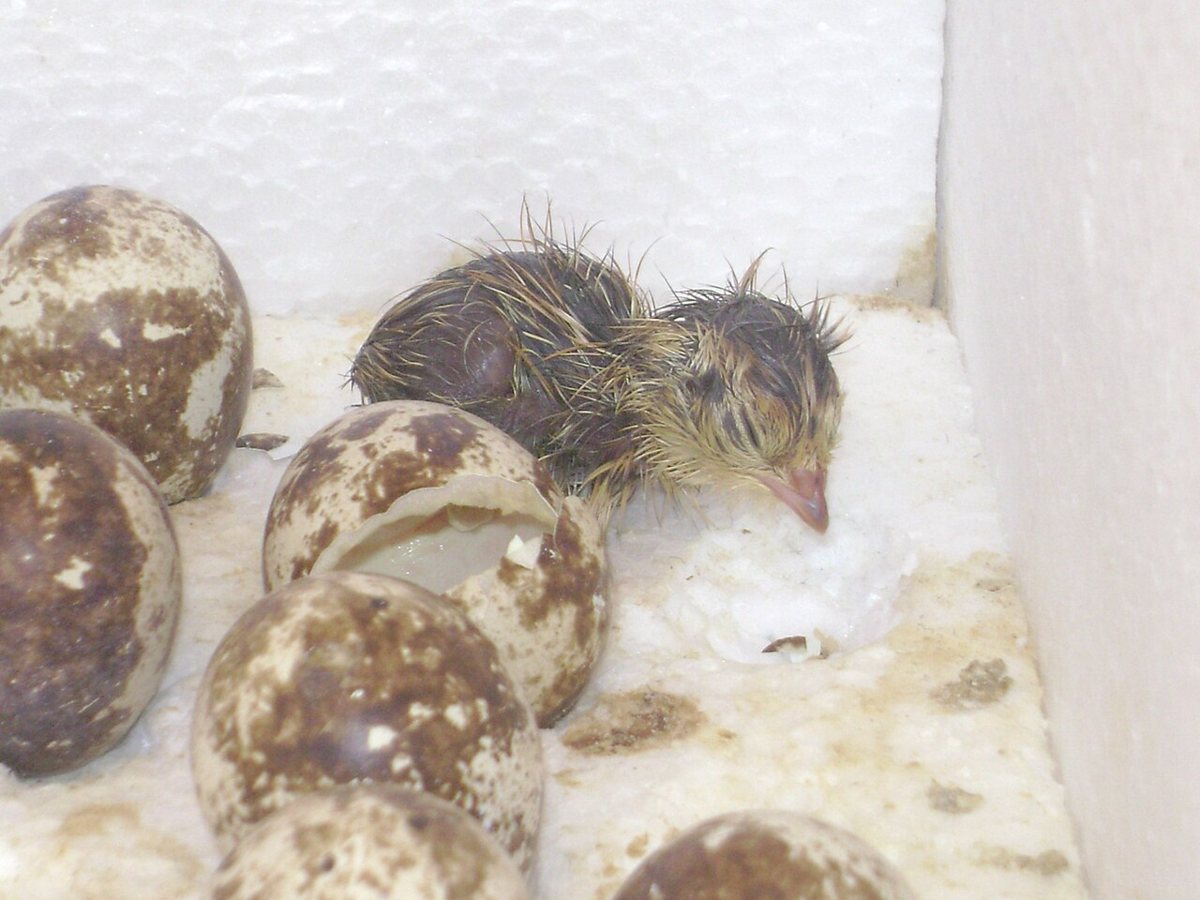

Quail incubation settings at a glance
| Setting | Days 1–14 | Lockdown (day 15 to hatch) |
|---|---|---|
| Temperature, forced-air (fan) incubator | 99.5°F (37.5°C) | 99.5°F; some guides drop to 99.0°F |
| Temperature, still-air incubator (no fan) | About 100.5°F measured at the top of the eggs | Same |
| Humidity, common hatchery practice | 40–50% RH | 65–75% RH |
| Humidity, Clemson/Virginia Tech table | 84–86°F wet bulb (about 52–58% RH) | 90–94°F wet bulb (about 69–81% RH) |
| Turning | At least 3 times a day, odd number preferred, or automatic | Stop turning |
| Expected hatch | Day 17 in Extension tables; most home hatches land on days 17–18, with stragglers to day 19 or 20 | |
Those two humidity rows are not a typo. Extension tables were written for well-sealed, well-calibrated machines, and hatcheries recommend drier settings that work better in small hobby incubators. We explain how to pick the right number for your machine further down, and our quail incubation temperature and humidity chart goes deeper.
What you need before the eggs arrive
- A forced-air incubator. A fan keeps temperature even across the tray, which matters more for small eggs. If it has an automatic turner, make sure you have quail-size rails or trays. Most turners ship with chicken-size cups.
- A second thermometer-hygrometer. Built-in sensors are often off by a degree or more. Hatchery guides and experienced keepers both say a separate, tested gauge is the single best upgrade.
- A stable room. No direct sun, drafts, heater vents or busy hallways. A room that swings 15°F between day and night will push your incubator around.
- A brooder, set up before hatch day. Chicks need to go somewhere warm about 12–24 hours after they hatch. See our guide on how to set up a quail brooder.
- Optional: a bright LED candler, a kitchen scale that reads to 0.1 g, a pencil and a notebook.
Choosing and storing hatching eggs
Your hatch rate is decided partly before the eggs ever go in. Pick clean, normal-sized, normal-shaped eggs with sound shells. Skip cracked, thin-shelled, very small, very large or misshapen eggs. Do not wash hatching eggs: washing removes the cuticle, the natural coating that helps keep bacteria out.
- Store cool, not cold. Penn State guidance for quail is 55–65°F, and University of Missouri guidance for poultry eggs is 45–55°F with fairly high humidity. A cool closet or basement works. A household refrigerator is too cold.
- Set them quickly. Penn State’s quail guidance is to set eggs within 3–7 days of laying; hatchability drops once eggs are held longer than about 7–10 days.
- Tilt stored eggs. If you hold eggs for more than a few days, store them pointy end down and tilt the carton the other way once or twice a day.
- Rest shipped eggs. Let shipped eggs sit pointy end down at room temperature for about 24 hours before setting (Meyer Hatchery’s guidance). This lets the air cell settle and avoids the condensation that forms when cold eggs go straight into a warm, humid incubator.
Collecting from your own flock? Fertility depends heavily on how many hens each male covers. Our guide to the quail breeding ratio explains how to set up a breeding group for fertile eggs.
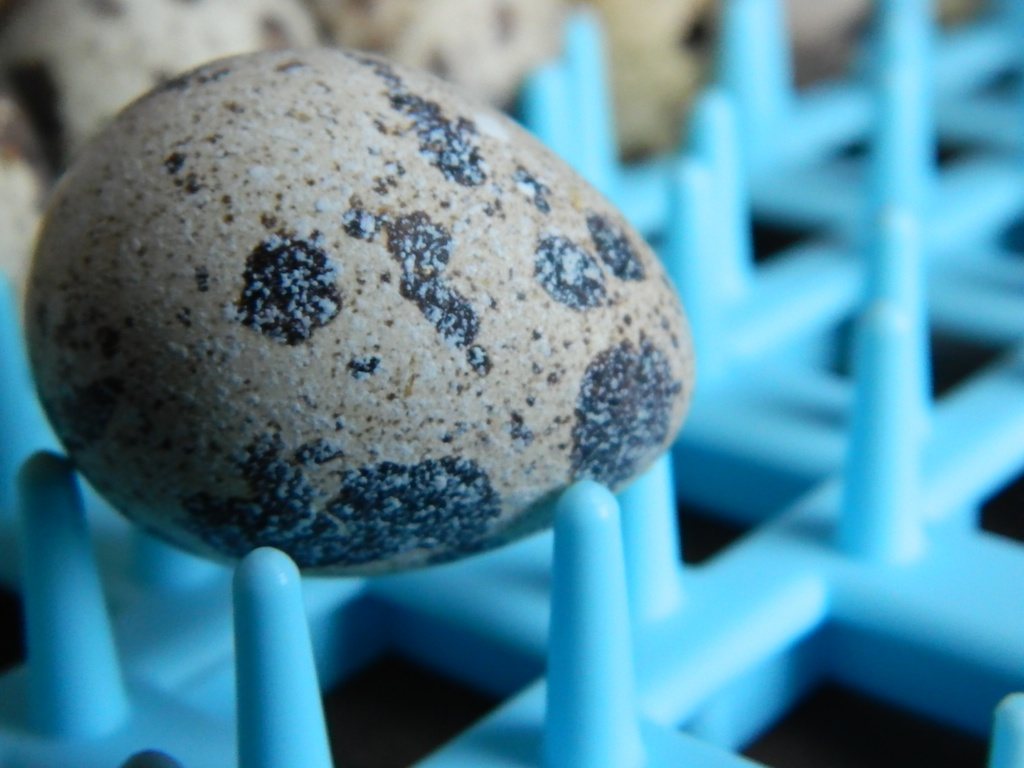

How to incubate quail eggs, step by step
Day −1: run and calibrate the incubator
Run the incubator for at least 24 hours before the eggs go in. Put your second gauge at egg height, in the middle of the tray. Adjust temperature in small steps and wait an hour between changes. If the built-in display and your gauge disagree, trust a gauge you have checked against a second thermometer.
Day 0: set the eggs
Wash your hands. If you will turn by hand, mark each egg with a soft pencil: an X on one side and an O on the other. On a turner, place eggs pointy end down. In a flat tray, lay them on their sides. Write the set date and time in your notebook. The temperature will dip for a few hours while the eggs warm up. That is normal, so do not chase it by turning up the thermostat.
Days 1–14: hold steady and turn
Turning keeps the embryo from sticking to the shell membranes, and Missouri Extension notes the most important turning period is early in incubation. Turn at least three times a day; an odd number (3, 5 or 7) means the egg does not rest on the same side every night. Alternate direction rather than rolling the egg in full circles. Top up water with warm water so you do not chill the incubator. Open the lid as little as possible.
Around days 7–10: candle (optional)
Coturnix eggs are thick and dark-speckled, so a weak flashlight shows little. A bright LED candler in a dark room will usually show a dark mass and veins in fertile eggs by about the end of the first week, while clears stay bright. Remove only eggs you are sure are clear or clearly dead, such as those with a blood ring. When in doubt, leave it in. Our guide on how to candle quail eggs has photos of what to look for.
Day 14 or 15: lockdown
Stop turning. Take the eggs off the turner (or switch the turner off) and lay them on their sides on a textured surface, such as rubber shelf liner, so hatchlings get grip and do not develop splayed legs. Raise humidity to the lockdown range, then close the lid and leave it closed. Opening the lid during hatch drops humidity sharply and can shrink-wrap pipped chicks in their membranes. Read more in our quail lockdown guide.
Days 16–18: the hatch
You will see pips (a small hole) and then zipping (a crack around the shell). Coturnix often go from pip to out of the shell in under an hour, which is faster than chicks. Some eggs will hatch a day early and some a day or two late. Low average temperature and rough shipping both delay hatches.
After hatch: move chicks to the brooder
Leave chicks in the incubator until they are dry and fluffy, usually within about 12 hours. If many are hatching over a long window, open the lid once or twice a day for a few seconds to move dry chicks out rather than opening it every time one hatches. The brooder should already be at about 95°F at chick level with drown-proof water. From here, follow our quail chick care guide, and for the rest of the life cycle see raising coturnix quail.
Clean up
Unplug the incubator, remove shells and fluff, wash, then disinfect according to the manufacturer’s directions. A dilute bleach solution is a common choice. Let everything dry fully before storing it.
Getting humidity right for your incubator
Humidity controls how much water the egg loses. Lose too little and the chick is too big and wet to turn and pip, or it drowns in fluid. Lose too much and the membranes dry out and stick to the chick. University of Missouri Extension recommends that poultry eggs lose 11–14% of their weight by the end of the turning period. That target was developed for chicken eggs, but it is the most practical yardstick home hatchers have for quail too.
- Weigh a batch of eggs together on day 0 and divide by the number of eggs. A typical coturnix egg weighs about 10 g; jumbo eggs are heavier.
- Weigh the same eggs again on day 7 and day 14.
- By day 14, you want roughly 1.1–1.4 g lost per 10 g egg (11–14%). If they are losing too slowly, run drier. Too fast, add water or surface area.
- Write down the setting that hits the target. That is your number for that incubator in that room, and it is more useful than any chart.
If you do not want to weigh eggs, watch the air cell with a candler. It should grow a little every week. A small air cell at lockdown points to too much humidity; a very large one points to too little. Condensation dripping on the window before lockdown is a sign humidity is too high.
Temperature: the setting that matters most
- Measure in the right place. In still-air incubators, the air layers by temperature, so measure at the level of the top of the eggs. Missouri Extension suggests about 1 inch above the egg screen.
- Small changes move hatch day. In chicken eggs, a half-degree change in average temperature shifts hatch time by about 5 hours. Early hatches with messy navels often point to running hot; late, drawn-out hatches point to running cool.
- Overheating kills faster than chilling. Extension sources note that running at 105°F for 15–30 minutes can seriously harm or kill embryos, while short cool spells mostly slow development.
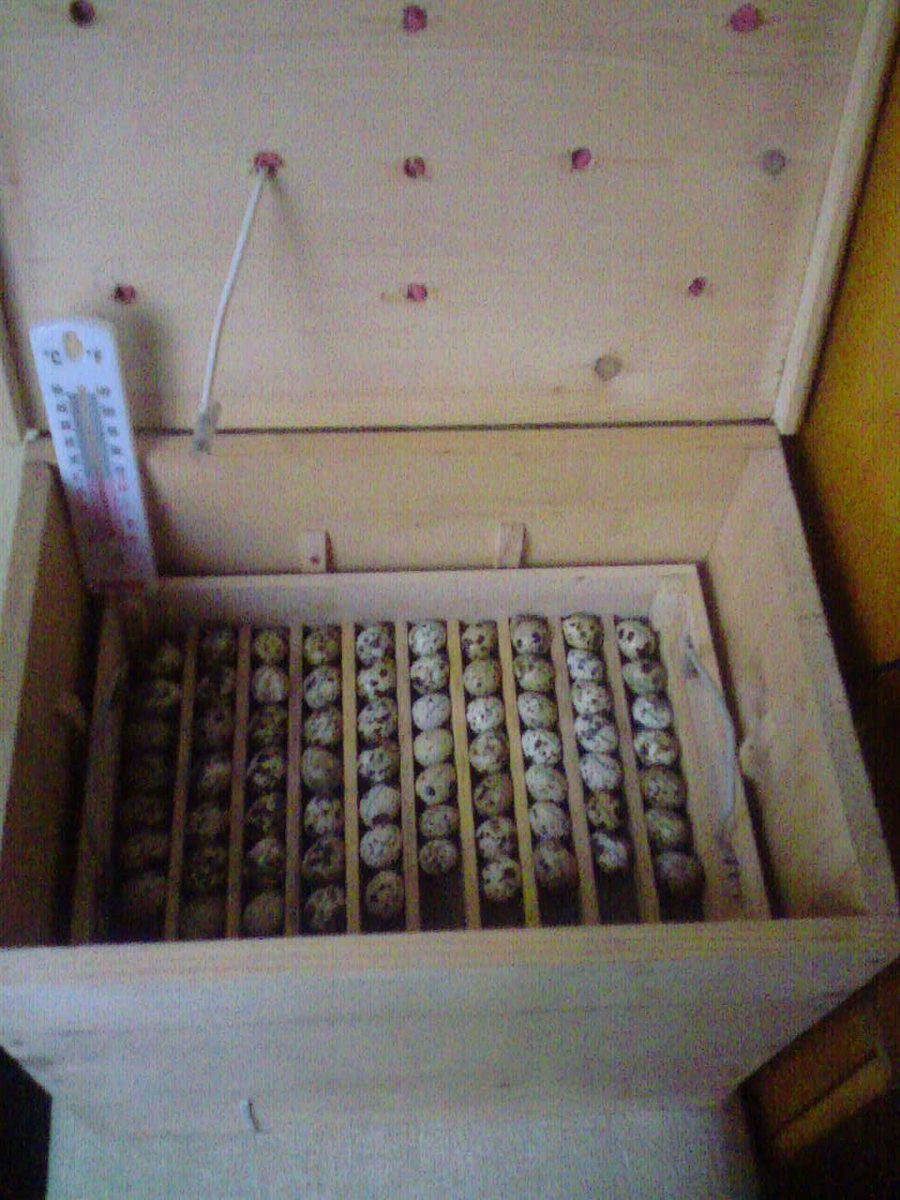

What hatch rate should you expect?
| Egg source | Typical hatch of eggs set | Why |
|---|---|---|
| Your own flock or a local breeder | About 75–80% is a good result | Fresh eggs, no shipping damage |
| Shipped eggs | Often around 50%, sometimes far lower | Rough handling and temperature swings in transit damage air cells |
| Commercial breeder benchmark | About 80% | Alabama Extension’s figure for a well-run Japanese quail breeder flock |
Even in good conditions, some eggs will not hatch. Missouri Extension notes that about 2 in 10 fertile poultry eggs normally fail, mostly in the first and last weeks. Set a few more eggs than the number of birds you want.
Troubleshooting: what your unhatched eggs are telling you
When the hatch is over, crack the eggs that did not hatch into an old dish (outdoors; it smells). What you find points to the cause.
| What you find | Likely cause | Fix for next time |
|---|---|---|
| Clear yolk, no development | Infertile egg, or embryo died very early | Check male-to-hen ratio and male age; set fresher eggs |
| Blood ring or tiny embryo | Death in the first 2–3 days: poor egg storage, overheating or big swings early | Store eggs cooler, set within a week, stabilize the incubator before setting |
| Embryo died midway, looks red | Overheating, poor turning, poor ventilation, contamination | Verify temperature with a second gauge; turn on schedule; do not set dirty eggs |
| Fully formed but never pipped | Low average temperature or wrong humidity | Check calibration; use the weight-loss method |
| Pipped but died in the shell | Humidity dropped at hatch (often from opening the lid) or chick too weak | Keep lockdown humidity up and the lid closed |
| Chicks hatched early with bloody or open navels | Temperature too high or swinging | Lower setpoint slightly; move incubator away from sun and drafts |
| Chicks sticky, shell stuck to down | Humidity too low after pipping | Raise lockdown humidity |
For a longer checklist, including incubator faults and egg-handling mistakes, see why your quail eggs are not hatching.
If the power goes out
Keep the lid closed and cover the incubator with a blanket or towels to hold heat, leaving the vents uncovered. Embryos tolerate a few hours of cooling better than overheating, and many hatches survive short outages, usually hatching a little late. A small battery backup (UPS) is cheap insurance in storm-prone areas.
Should you help a chick out?
Usually no. Opening the incubator during hatch puts every other pipped egg at risk, and chicks that cannot finish hatching often have problems that will not go away. Most hatchery guides advise against assisting.
Frequently asked questions
How long do quail eggs take to hatch?
Coturnix eggs take about 17–18 days at 99.5°F in a forced-air incubator. Extension tables list 17 days, while many hobby hatches peak on day 18. Bobwhite eggs take longer, about 23–24 days.
Can you incubate quail eggs in a chicken incubator?
Yes. Temperature is the same. You only need quail-size turner rails or trays (or turn by hand on a flat tray) and to follow the quail schedule: stop turning around day 14–15 instead of day 18.
Can you incubate quail eggs without an incubator?
Not reliably. Domestic coturnix rarely go broody, and DIY setups such as heat lamps over a box swing too much for small eggs. A small broody bantam chicken can hatch quail eggs, but she may crush them or not accept the chicks. A basic forced-air incubator is far more dependable.
Will supermarket quail eggs hatch?
Occasionally, but don’t count on it. Most store-bought quail eggs come from hen-only flocks and are refrigerated, which lowers hatchability. Buy hatching eggs from a breeder if you want a real hatch.
What temperature and humidity do quail eggs need?
Run a forced-air incubator at 99.5°F (about 100.5°F in a still-air unit, measured at the top of the eggs). Hold humidity around 40–50% for days 1–14, then raise it to 65–75% at lockdown. Adjust to your machine using the egg weight-loss method above.
Sources
- Virginia Cooperative Extension. Beginning of Life, Publication 408-029, Table 3 (adapted from Clemson University Extension).
- Lyons, J. J. Small Flock Series: Incubation of Poultry (G8353). University of Missouri Extension.
- Penn State Cooperative Extension via AgMRC. Bobwhite Quail Production (egg holding temperature and storage time).
- Alabama Cooperative Extension System. Feeding Game Birds: Pheasant, Quail, and Partridge (ANR-1343) (breeder hatch-rate benchmark).
- Meyer Hatchery. Guide to Incubating and Hatching Coturnix Quail Eggs.
- Jacob, J. and McCrea, B. Raising Japanese Quail in Small and Backyard Flocks. Cooperative Extension.