
Quick answer: For coturnix quail egg incubation, run a forced-air (fan) incubator at 99.5°F (37.5°C) and a still-air incubator at about 100.5°F measured at the top of the eggs. Keep humidity moderate for days 1–14 (published guides range from about 40% to 60%), stop turning on day 14 or 15, and raise humidity to about 65–75% for hatch on days 17–18. Fine-tune humidity by weighing the eggs.
Getting quail egg incubation temperature and humidity right is most of the battle in a good hatch. The tricky part is that published numbers do not all agree, especially for humidity, and many incubator manuals were written for chicken eggs. This chart pulls the main sources together, converts wet-bulb readings to percent humidity, and shows how to check your settings with a kitchen scale so you can stop guessing.
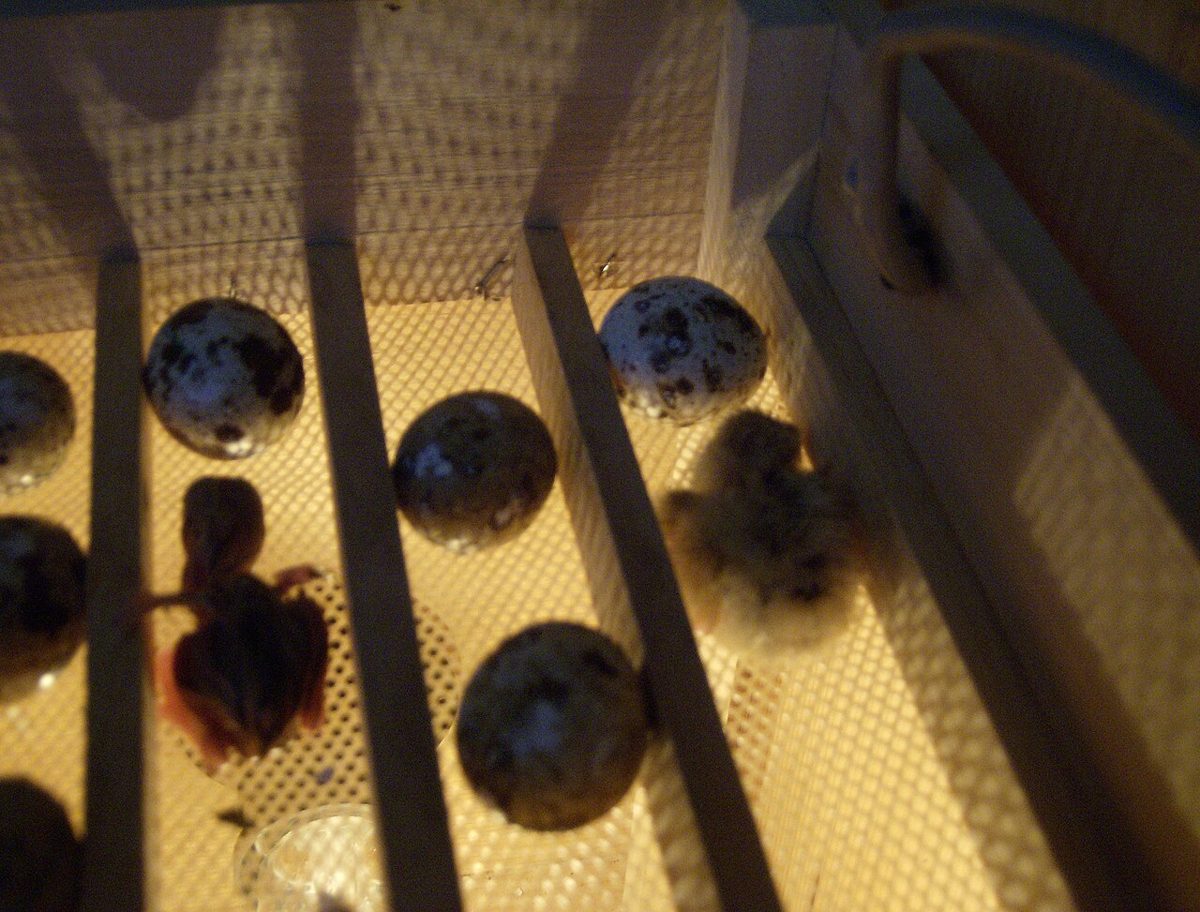

The quick chart
| Stage | Days | Forced-air temperature | Still-air temperature (top of eggs) | Humidity | Turning |
|---|---|---|---|---|---|
| Setting and incubation | 1–14 | 99.5°F (37.5°C) | About 100.5°F (38°C) | About 40–60% RH, adjusted by egg weight | At least 3 times a day, or automatic |
| Lockdown | 15 to hatch | 99.0–99.5°F (37.2–37.5°C) | About 100.5°F | About 65–75% RH | Stop turning |
| Hatch | 17–18, stragglers to 19 | Same | Same | Keep high; do not open the lid | None |
Virginia Tech Extension’s 4-H manual reproduces a Clemson University table that lists 17 days for coturnix, 99.5°F in a forced-air incubator, 100.5°F in a still-air incubator, and no turning after day 15. NSW Department of Primary Industries gives 17–18 days.
Temperature: the numbers and why they matter
Forced-air incubators
NSW DPI recommends 99.5°F ± 0.5°F (37.5°C ± 0.3°C) for forced-draft incubators until day 14, then 99°F (37.2°C) in a separate hatcher. If the same machine is used for setting and hatching, it advises keeping 99.5°F throughout.
Still-air incubators
Air in a still-air incubator layers by temperature, so where you measure matters. The Clemson table lists 100.5°F. NSW DPI gives a rising schedule for still-air machines, measured at the top of the eggs: 101°F in the first week, 102°F in the second, and no more than 103°F until hatching. Both approaches can work; pick one, measure at the top of the eggs, and keep it steady.
What wrong temperatures do
University of Missouri Extension explains that the upper lethal limit for embryos is very close to the normal incubating temperature, and that running at 105°F for 30 minutes will seriously affect or kill embryos. Slightly low temperatures for short periods do less harm; they slow growth until temperature recovers. If the power fails, follow our incubator power outage steps.
| Problem | What you see at hatch |
|---|---|
| Running hot | Early hatch, chicks with bloody or poorly healed navels, deaths in the first week or midway |
| Big temperature swings | Early or spread-out hatch, weak chicks |
| Running cool | Late hatch, chicks fully formed but never pipped |
| Short power cut | Usually a late hatch; most embryos tolerate a short chill better than overheating |
Missouri Extension links early hatches with bloody navels to temperatures that run too high or swing too widely, and fully formed chicks that never pip to low average temperature, among other causes.
Check your thermometer
The display on a cheap incubator can be off by a degree or more. Missouri Extension recommends running the incubator for several hours, preferably overnight, so temperature and humidity settle before eggs go in. Put a second thermometer at egg height in the middle of the tray. If two gauges disagree, compare both against a third before you change anything.
Humidity: why sources disagree
Humidity controls how much water the eggs lose. Too little loss and the chick is large and wet and struggles to pip. Too much loss and the membranes dry and stick.
Here is what the main sources say for quail:
| Source | Days 1–14 | Lockdown and hatch |
|---|---|---|
| NSW DPI (forced-air) | 60% RH (wet bulb 86°F) | 70% RH (wet bulb 90°F) |
| Clemson table, via Virginia Tech | Wet bulb 84–86°F (about 52–58% RH) | Wet bulb 90–94°F (about 69–81% RH) |
| Common US hatchery practice | About 40–50% RH | About 65–75% RH |
| Penn State (bobwhite, for comparison) | Incubator should supply 60% RH | Not stated |
The research and Extension numbers are higher than what many US hatcheries now suggest for small home incubators. Neither is wrong; they assume different machines, room conditions and egg sources. That is why the weight-loss method below is so useful: it tells you what your incubator is actually doing.
Wet-bulb to percent humidity
Older guides give humidity as a wet-bulb temperature. A wet-bulb thermometer has a damp wick over its bulb; the drier the air, the more it cools. Missouri Extension gives one example: a wet-bulb reading of 88°F with a dry-bulb reading of 101°F equals about 60% humidity.
The table below converts common wet-bulb readings at quail incubating temperatures. We calculated these with a standard psychrometric formula for sea level; at high altitude the numbers shift a little.
| Wet bulb | RH at 99.5°F dry bulb | RH at 100.5°F dry bulb |
|---|---|---|
| 80°F | About 43% | About 41% |
| 82°F | About 47% | About 45% |
| 84°F | About 52% | About 50% |
| 86°F | About 58% | About 55% |
| 88°F | About 63% | About 61% |
| 90°F | About 69% | About 66% |
| 92°F | About 75% | About 72% |
| 94°F | About 81% | About 78% |
The weight-loss method
Missouri Extension recommends that poultry eggs lose 11–14% of their weight from setting to the end of incubation before hatch (day 18 for chickens). Quail eggs are smaller and incubation is shorter, but the same target is the most practical yardstick home hatchers have. Use it like this:
- Weigh the eggs on the day you set them. Weigh them together on a kitchen scale that reads in grams. Extension says the average Japanese quail egg weighs about 10 grams, so a dozen is about 120 grams.
- Work out your target. For 120 grams, an 11–14% loss is about 13–17 grams. That means a lockdown weight of roughly 103–107 grams.
- Weigh again on about day 7 and day 14. Loss should be roughly steady, so by day 7 you want about half the total.
- Adjust. Losing too slowly? Lower humidity. Losing too fast? Raise it.
- Write it down. Next time, start at the humidity that worked.
You can also watch the air cell when you candle. Missouri Extension notes that candling shows the rate of dehydration. A small air cell at lockdown points to too much humidity; a large one, too little. NSW DPI notes that quail’s colored shells make candling harder, so use a bright light in a dark room.
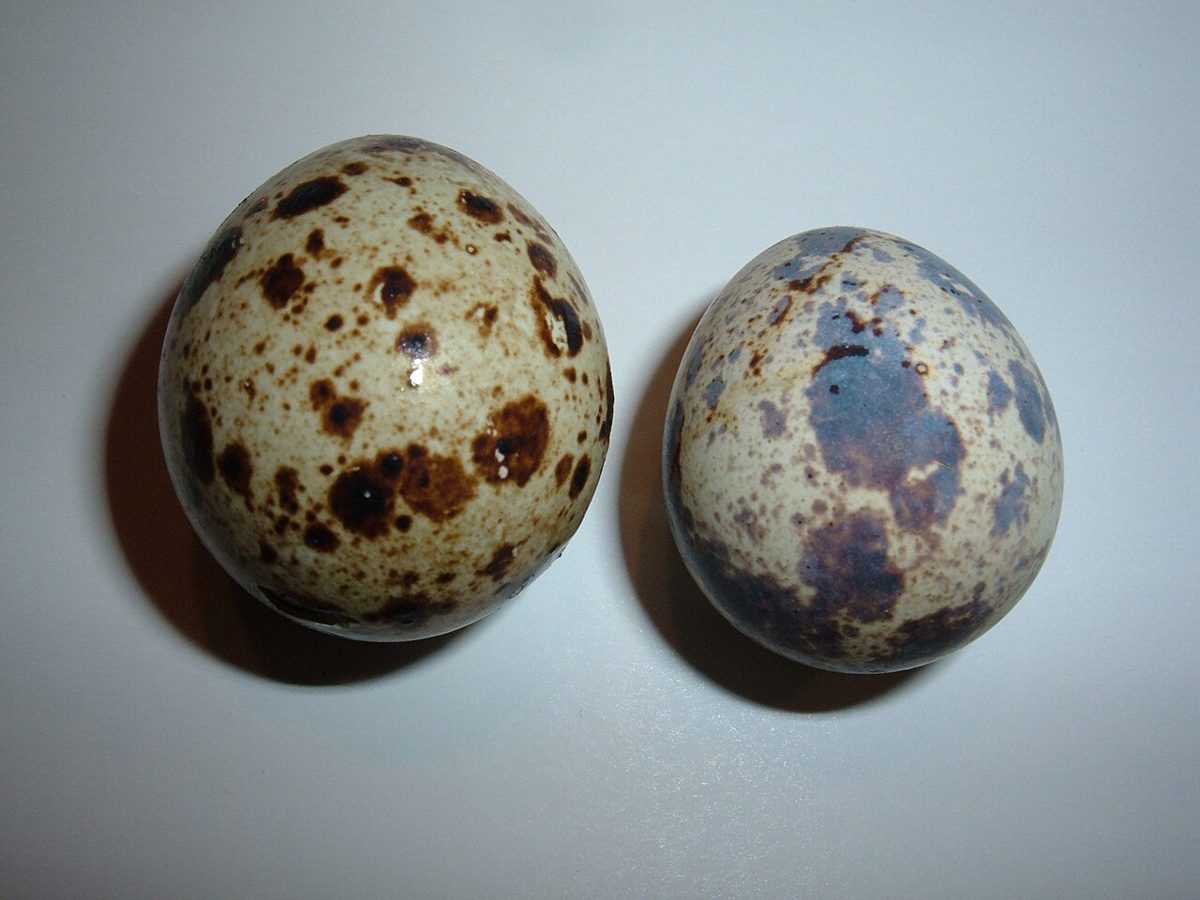

Lockdown and hatch settings
At day 14 or 15, stop turning and raise humidity. NSW DPI says to stop turning at day 14, and the Clemson table says not to turn after day 15. Both raise humidity to about 70% for hatch. Missouri Extension notes that from that point, condensation on the top of the incubator shows humidity is adequate, though the amount depends on room temperature.
Keep the lid shut. Opening the incubator during hatch drops humidity quickly and can leave chicks stuck in drying membranes. Missouri Extension says chicks usually take about 12 hours to dry and fluff, so let them dry before moving them to a warm brooder. Our guide to setting up a quail brooder covers that next step.
For the full process, from choosing eggs to candling and hatch day, see our guide to how to incubate quail eggs and our quail lockdown guide.
Before incubation: egg storage
Temperature and humidity start mattering before eggs go in.
- Storage temperature. NSW DPI recommends storing hatching eggs at about 59°F (15°C) and warns that a household refrigerator is too cold. Penn State Extension gives 55–65°F.
- Storage time. NSW DPI says best results come from eggs held no longer than a week. Penn State says hatchability declines after about 7–10 days and is best within 3–7 days.
- Clean, unwashed eggs. NSW DPI advises setting only clean eggs and not washing hatching eggs.
- Warm slowly. Missouri Extension warns that cold eggs moved into warm, humid air can “sweat,” and that moisture on the shell lets microorganisms grow. Let eggs come to room temperature before setting.
Our quail eggs guide explains how eating eggs and hatching eggs are stored differently.
Troubleshooting by hatch result
| What happened | Likely setting problem | Next time |
|---|---|---|
| Many early deaths (blood ring) | Overheating, storage too long or too cold | Verify temperature; set fresher eggs |
| Fully formed, not pipped | Low average temperature, humidity too high or too low | Calibrate; use the weight-loss method |
| Pipped, then died | Humidity dropped at hatch, often from opening the lid | Raise lockdown humidity; keep the lid shut |
| Chicks sticky, shell stuck to down | Humidity too low after pipping | Raise lockdown humidity |
| Early hatch, bloody navels | Temperature too high or swinging | Lower setpoint slightly; move incubator away from sun and drafts |
| Late, spread-out hatch | Running cool or eggs stored long | Check temperature at egg height |
Missouri Extension lists these patterns for poultry in general. If your hatch rate is low and settings look right, the problem may be fertility; see our guide to coturnix quail behavior and breeding for breeding ratios and breeder age.
Frequently asked questions
What temperature should I incubate quail eggs at?
99.5°F (37.5°C) in a forced-air incubator, or about 100.5°F measured at the top of the eggs in a still-air incubator.
What humidity do quail eggs need?
About 40–60% for days 1–14, depending on your incubator and room, then about 65–75% for lockdown and hatch. Weigh the eggs to find the right level for your setup.
When do I stop turning quail eggs?
On day 14 or 15. NSW DPI says day 14; the Clemson table says no turning after day 15.
Can I incubate quail eggs in a chicken incubator?
Yes. NSW DPI says Japanese quail eggs can be incubated in any chicken-egg incubator, though egg trays may need to be modified for the smaller eggs.
What happens if the temperature gets too high?
Even short spikes are dangerous. Missouri Extension says 105°F for 30 minutes can seriously harm or kill embryos. A short drop in temperature does less harm than a spike.
Sources
- Randall, M. and Bolla, G. Raising Japanese Quail. NSW Department of Primary Industries Primefact, republished by The Poultry Site.
- University of Missouri Extension. Incubating Poultry Eggs (G8353).
- Virginia Cooperative Extension. Beginning of Life (4-H 408-029), including Clemson University Extension’s “Incubating Eggs of Domestic Birds” table.
- Penn State Extension. Bobwhite Quail Production, via the Agricultural Marketing Resource Center.
- Jacob, J. and McCrea, B. Raising Japanese Quail in Small and Backyard Flocks. Cooperative Extension.
- Meyer Hatchery. Guide to Incubating and Hatching Coturnix Quail Eggs.