
Quick answer: Quail heat stress starts when birds pant, hold their wings away from the body and stop eating. Research on laying Japanese quail puts their comfort zone at roughly 64–79°F (18–26°C); egg production suffers above about 86°F (30°C), and 95°F (35°C) is severe heat. Give deep shade, moving air and cool water before a heat wave, and cool a collapsed bird right away.
For fully feathered adult coturnix, quail heat stress is usually a bigger danger than cold, and it can build quickly in small hutches that sit in the sun. Coturnix cannot sweat. They shed heat by panting, by holding their wings out and through their droppings, and all of those stop working well when the air is hot and humid. This guide explains the temperatures that matter, the warning signs, what to do in an emergency and how to set up a pen so it never gets that far.
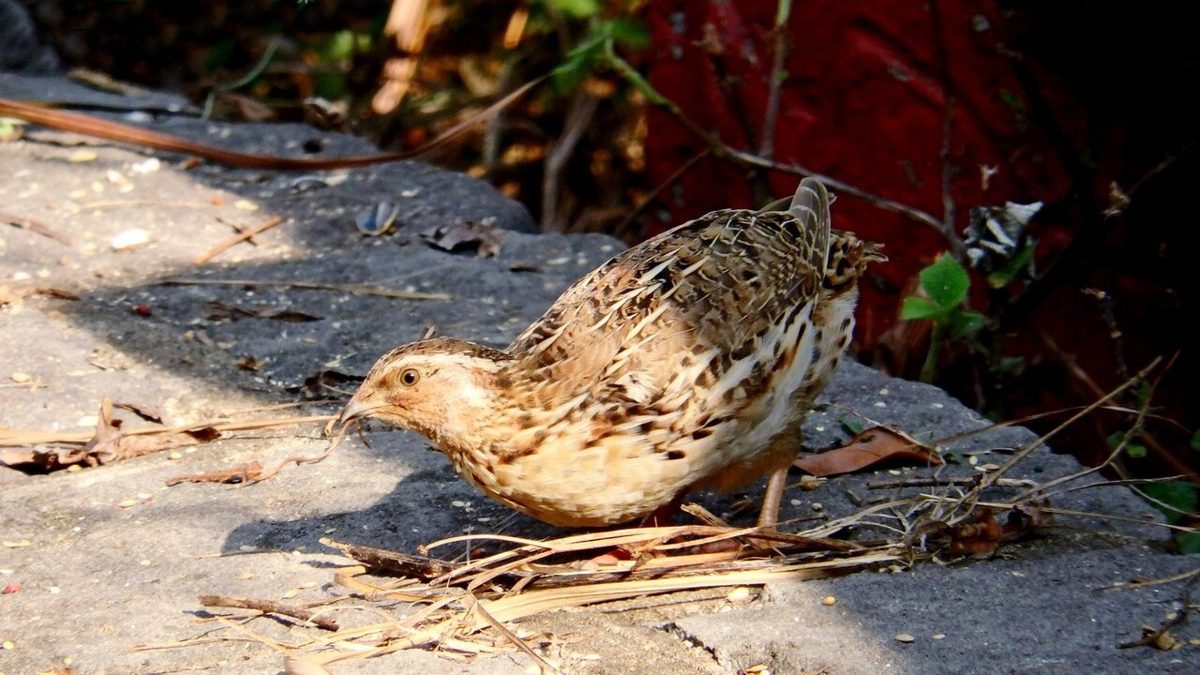

What temperature is too hot for quail?
There is no single cut-off, because humidity, shade, airflow and the bird’s size all change the picture. Controlled studies on laying Japanese quail give useful guide rails. They were done in climate chambers, so a pen in full sun will be harder on birds than the air temperature suggests.
| Air temperature | What the research shows | What it means for you |
|---|---|---|
| 64–72°F (18–22°C) | A 2024 Brazilian study cites this as the thermoneutral zone for laying quail | Ideal |
| About 73–79°F (23–26°C) | A 2017 Brazilian study cites comfort at about 73°F, possibly up to 79°F | Still comfortable |
| Up to 86°F (30°C) | The same study cites good egg production when highs stay under about 86°F | Watch birds on hot afternoons |
| 90°F (32°C) | Birds breathed faster and lost about 48% of their heat by respiratory evaporation (panting) | Heat stress is under way; cool the pen |
| 95°F (35°C) | Treated as severe heat; birds ate less when the air was still | Danger, especially with humidity |
| 104°F (40°C) | In a 1973 study, body temperature rose more in humid air than in dry air | Life-threatening |
Chicks are a different story. The 2024 study notes that newly hatched quail need much warmer conditions, which is why brooders run at about 95°F in the first week. But chicks overheat too. Mississippi State University Extension says overheating, not chilling, is the most frequent brooding error it sees in the South. Our guide to setting up a quail brooder shows how to give chicks a cool zone.
Why humidity makes heat worse
Panting cools a bird by evaporating water from its airways. In humid air, less water evaporates, so panting does less. A 1973 study in the International Journal of Biometeorology found that at 104°F (40°C), quail body temperature rose about 3°F (1.7°C) in dry air but about 4.5°F (2.5°C) in very humid air, and panting rates approached 800 breaths a minute. On a muggy day, start cooling earlier than you would on a dry one.
Signs of heat stress
University of Arizona Cooperative Extension describes the stages in backyard poultry, and the same signs show in quail.
| Stage | What you see | What to do |
|---|---|---|
| Warm | Light panting, otherwise normal | Check shade and water |
| Light to moderate heat stress | Heavier panting, wings held away from the body, crouching | Start cooling the pen now |
| Heat exhaustion | Heavy panting, wings out, lethargic, limp, lying down or unconscious | Emergency: cool the bird right away |
| Other clues | Birds eating less, drinking more, wet droppings, fewer or thin-shelled eggs | Plan for the next hot day |
Extension notes that very watery droppings during heat are common, because birds drink more and lose heat through their droppings. That alone is not a sign of disease, but bloody or foul droppings are; see our quail diseases guide.
Emergency first aid
For a bird that is limp, lying down or barely responding:
- Move it to shade right away, somewhere with moving air.
- Cool the body. Arizona Extension advises submerging a chicken’s body up to the neck (never the head) in cool, not icy, water. For a quail, hold it in your hand and lower the body into a shallow bowl of cool water for a short time, keeping the head well clear.
- Let it recover somewhere cool and quiet until it stands and moves normally.
- Offer cool water once it is alert. Do not force water into its beak.
- Cool the rest of the flock at the same time; if one bird collapsed, others are close behind.
If a bird does not recover within an hour, or several birds are affected, call a vet who treats poultry.
How to keep quail cool
Arizona Extension sums it up as shade, water and ventilation first, then extra cooling such as ice blocks and misters.
Shade
- Put hutches and cages in shade for the afternoon, not just the morning. Extension points out that shade on the east side of a run may be gone by late afternoon; place shade cloth over the middle or west end.
- Add shade cloth or a tarp over the roof. Leave the sides open for air.
- Never leave a small pen or carrier in full sun, even for a short time.
Airflow
- Open vents, doors and windows on enclosed hutches. Our quail housing guide explains how to vent a hutch without drafts in winter.
- Use a fan in enclosed spaces, especially on humid days, with cords kept away from birds. The 2017 Brazilian study found quail ate less at 95°F (35°C) in still air, which is one more reason to keep air moving.
Water
- Offer several water sources in the shade. Add ice cubes or frozen bottles to keep water cool.
- Clean and refill open water daily; Extension warns that dirty open water spreads coccidiosis.
- Electrolytes can help on extreme days. Extension advises offering them for a few hours, then going back to plain water.
Extra cooling
- Freeze bottles of water and lay them in the pen in the morning so birds can rest next to them.
- A mister on a timer helps in dry heat. Do not soak the bedding; damp ground is fine, but a wet, muddy floor breeds disease.
- Frozen chopped fruit or vegetables in an ice block give birds water and something to peck without filling them up.
Feed
- Birds eat less in heat. Extension suggests feeding in the early morning and late evening, and limiting treats, especially scratch grains.
- NSW Department of Primary Industries suggests raising calcium to as much as 3.5% of the layer diet in hot weather, because hens eat less but still need calcium for shells. Offering oyster shell free-choice is an easy way to cover this. Our guide to what quail eat has more on feeding.
Who is most at risk?
- Heavy and jumbo birds. An Egyptian study found that a heavier quail line started panting sooner than a lighter one when exposed to 95°F (35°C), after about 5 minutes versus about 8.
- Birds in small, solid-sided hutches or under metal roofs in full sun.
- Crowded pens. More bodies means more heat. See how much space quail need.
- Birds not used to heat. The same Egyptian study found that birds raised in warmer conditions coped better later. A sudden early-season heat wave is often harder on a flock than the same temperature in August.
After the heat: what to expect
Heat lowers feed intake, and Arizona Extension notes this cuts egg numbers and shell quality. Expect fewer, thinner-shelled eggs during and just after a heat wave, and collect eggs more often. If laying does not come back once the weather cools, check the other causes in why quail stop laying.
Heat wave checklist
- Shade over the afternoon side of every pen
- Vents open; fan ready for enclosed spaces
- At least two cool water sources per pen
- Bottles freezing the night before
- Feed early and late; treats cut back
- Oyster shell available
- Check birds at mid-afternoon, the hottest part of the day
Our quail care by season calendar shows when to get this ready each year.
Frequently asked questions
What temperature is too hot for quail?
Research on laying quail puts comfort at roughly 64–79°F, with egg production suffering above about 86°F and severe heat stress around 95°F. Shade, humidity and airflow change how hot it feels to the birds, so watch their behavior, not just the thermometer.
Is it normal for quail to pant?
Light panting on a warm day is a normal cooling response. Heavy panting with wings held away from the body means the bird is struggling and the pen needs cooling.
Can I spray my quail with water?
A fine mist in dry heat can help, but do not soak birds or bedding. For a bird in collapse, cooling the body in cool (not icy) water is more effective.
Should I give my quail ice?
Ice in the water and frozen bottles in the pen are both helpful. Avoid icy water baths for an overheated bird; cool water is safer.
Do quail need a fan?
Not always, but a fan helps a lot in enclosed hutches and on humid days. Keep cords and blades out of reach.
Sources
- Wright, A. Managing Backyard Chickens During Periods of Extreme Summer Temperature. University of Arizona Cooperative Extension.
- Matos Júnior, J. B. et al. 2024. Sensible and latent heat flow of Japanese quails kept in different thermal environments. Arquivo Brasileiro de Medicina Veterinária e Zootecnia 76(2):357–366.
- Santos, T. C. et al. 2017. Behavior of Japanese quail in different air velocities and air temperatures. Pesquisa Agropecuária Brasileira 52(5):344–354.
- Behavioural responses of two Japanese quail lines differing in body weight to heat stress. 2012. Egyptian Journal of Animal Production 49(1):151–158.
- Chilgren, J. D. and King, J. R. 1973. Thermoregulatory responses of Japanese quail to various air temperatures and humidities. International Journal of Biometeorology 17(1):29–40.
- Smith, T. W. Brooding Chickens and Quail (Information Sheet 1338). Mississippi State University Extension.
- Randall, M. and Bolla, G. Raising Japanese Quail. NSW Department of Primary Industries Primefact, republished by The Poultry Site.