
Quick answer: Plan on about 1 square foot per adult coturnix quail in a cage or hutch, and 2 square feet or more in a ground pen or aviary. Commercial and research guides go as low as about 0.15–0.4 square feet per bird, but those are production minimums for caged layers, not good backyard welfare. Add more room for breeding groups with males, and keep chicks at no more than about 6 per square foot.
How many quail per square foot is the question that decides how big your hutch needs to be, and the answers online range from “a shoebox each” to “4 square feet per bird.” Both extremes come from real sources, written for very different situations. This guide lays out what Extension services, research institutes and hatcheries actually say, converts it all to square feet, and gives you a simple calculator for common cage and pen sizes.
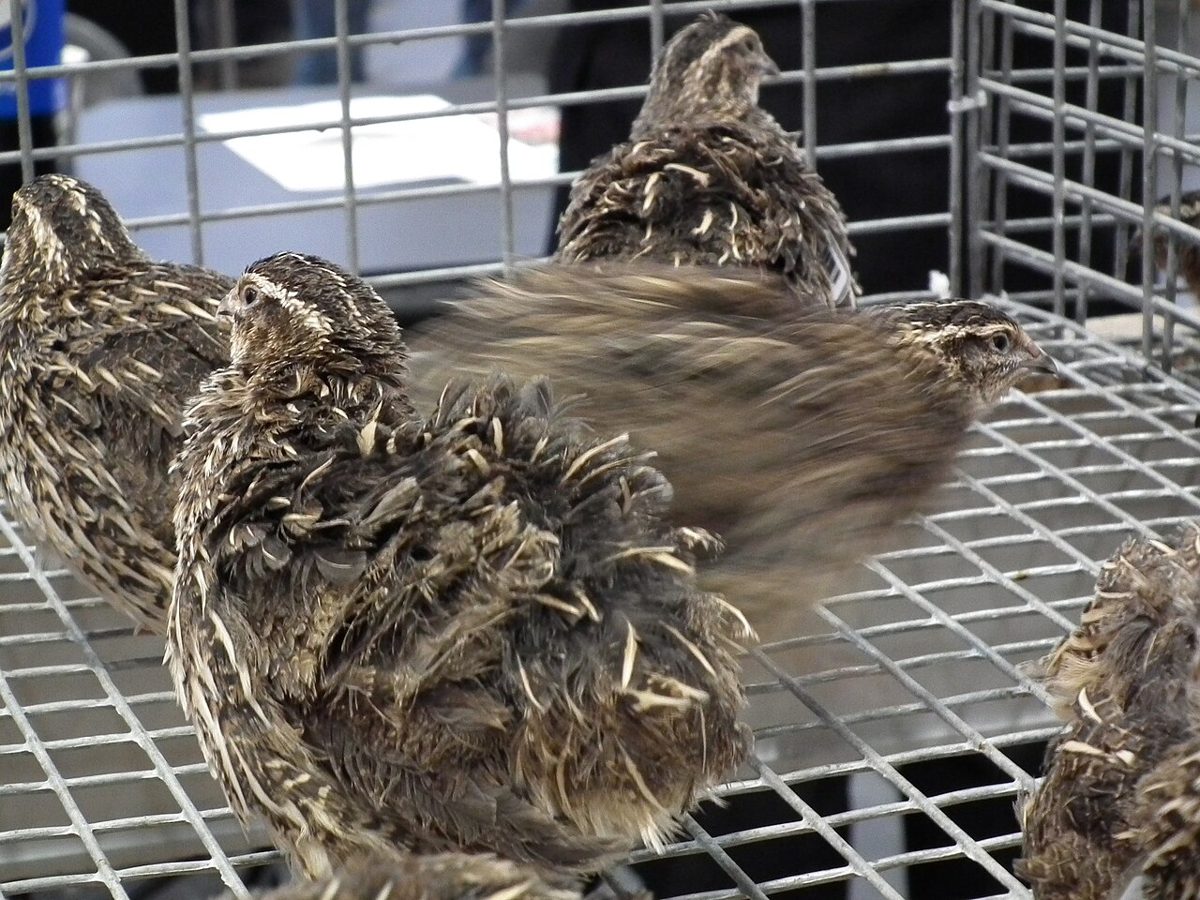

Our recommendation
| Setup | Space per adult coturnix | Birds per square foot |
|---|---|---|
| Cage or hutch with a wire or solid floor | About 1 sq ft | About 1 |
| Hutch with an attached run | 1 sq ft in the hutch plus run space | About 1 counting the hutch only |
| Ground pen or coop with deep litter | 2 sq ft or more | 0.5 or fewer |
| Walk-in aviary, planted | As generous as you can manage | Varies |
| Chicks, weeks 0–2 | At least about 0.17 sq ft | Up to about 6 |
| Chicks, weeks 2–6 | At least about 0.25 sq ft | Up to about 4 |
These numbers match Virginia Tech Extension’s 4-H guidance of 1 square foot per bird and the chick densities in Texas A&M AgriLife Extension’s quail guide. They give room for dust bathing, cover and a bird that wants to get away from a pushy cage-mate.
What the sources say
| Source | Space per adult bird | In square feet | Context |
|---|---|---|---|
| NSW Department of Primary Industries | 145 cm² on litter, 125 cm² on wire | About 0.16 and 0.13 sq ft | Minimum for production; a 13 × 20 cm cage for two birds |
| ICAR-CCARI (India) | 20–30 quail in a 120 × 60 cm cage | About 0.26–0.39 sq ft | Commercial laying cages |
| Texas A&M AgriLife Extension | 3 birds per sq ft after 6 weeks | About 0.33 sq ft | Meat quail raised to processing |
| Penn State Extension (bobwhite) | 0.5 sq ft in cages; 1 sq ft in floor pens | 0.5–1 sq ft | Bobwhite breeders, a larger and more active bird |
| Virginia Tech Extension (4-H) | 1 sq ft | 1 sq ft | Coturnix raised to maturity in a classroom |
| Hoover’s Hatchery | 4 sq ft from 6–12 weeks, with run space | 4 sq ft | Free-range or run setups |
| SPCA New Zealand | “The biggest and best you can afford” | Not given | Welfare guidance; room for dust bathing and foraging |
Two things stand out. First, the commercial numbers are tiny. NSW DPI’s 145 cm² is about the size of a 4 × 6 inch index card per bird. Those figures describe what quail can live and produce in, not what lets them behave normally. Second, the welfare-focused sources all push in the other direction. SPCA New Zealand says quail should be able to dust-bathe and forage, and that preventing those behaviors can frustrate them.
Why more space is worth it
- Less pecking and fighting. NSW DPI lists reducing the number of birds per pen among the main ways to prevent feather picking and cannibalism. Texas A&M also recommends more floor space to curb pecking.
- Cleaner air. Fewer birds per square foot means less ammonia and moisture. Cooperative Extension’s ventilation guidance explains that good airflow removes moisture, dust, ammonia and heat.
- Cooler birds in summer. More bodies in a small box means more heat. See quail heat stress.
- Room for normal behavior. Dust bathing, scratching and hiding all need floor space. Our coturnix quail behavior guide explains why these matter.
Space calculator
Multiply the floor’s length by its width in feet, then divide by the space per bird.
| Floor size | Area | Birds at 1 sq ft each | Birds at 2 sq ft each | Commercial density (0.33 sq ft) for comparison |
|---|---|---|---|---|
| 2 × 2 ft | 4 sq ft | 4 | 2 | 12 |
| 2 × 3 ft | 6 sq ft | 6 | 3 | 18 |
| 2 × 4 ft | 8 sq ft | 8 | 4 | 24 |
| 3 × 4 ft | 12 sq ft | 12 | 6 | 36 |
| 3 × 6 ft | 18 sq ft | 18 | 9 | 54 |
| 4 × 8 ft | 32 sq ft | 32 | 16 | 96 |
| 8 × 10 ft aviary | 80 sq ft | 80 | 40 | 240 |
Work in inches? Multiply length by width in inches and divide by 144 to get square feet. A 24 × 36 inch cage is 864 square inches, or 6 square feet.
Adjustments to the basic number
Breeding groups. Males chase and mount hens, and crowding makes over-mating injuries worse. Give breeding pens at least the full 1 square foot per bird, plus cover. See quail breeding ratio for how many hens per male.
Jumbo and Texas A&M lines. Extension lists jumbo coturnix at 250–300 grams, about twice a standard bird. Give them more room; we suggest roughly 1.5 square feet each in cages.
Meat birds kept for a few weeks. Texas A&M’s 3 birds per square foot is a reasonable limit for grow-out to processing at about 7 weeks. Our guide to raising quail for meat covers that setup.
Ground pens. Birds on litter need more room than birds on wire because litter gets wet and dirty faster, and eggs get buried. Two square feet or more keeps litter manageable.

Height matters too
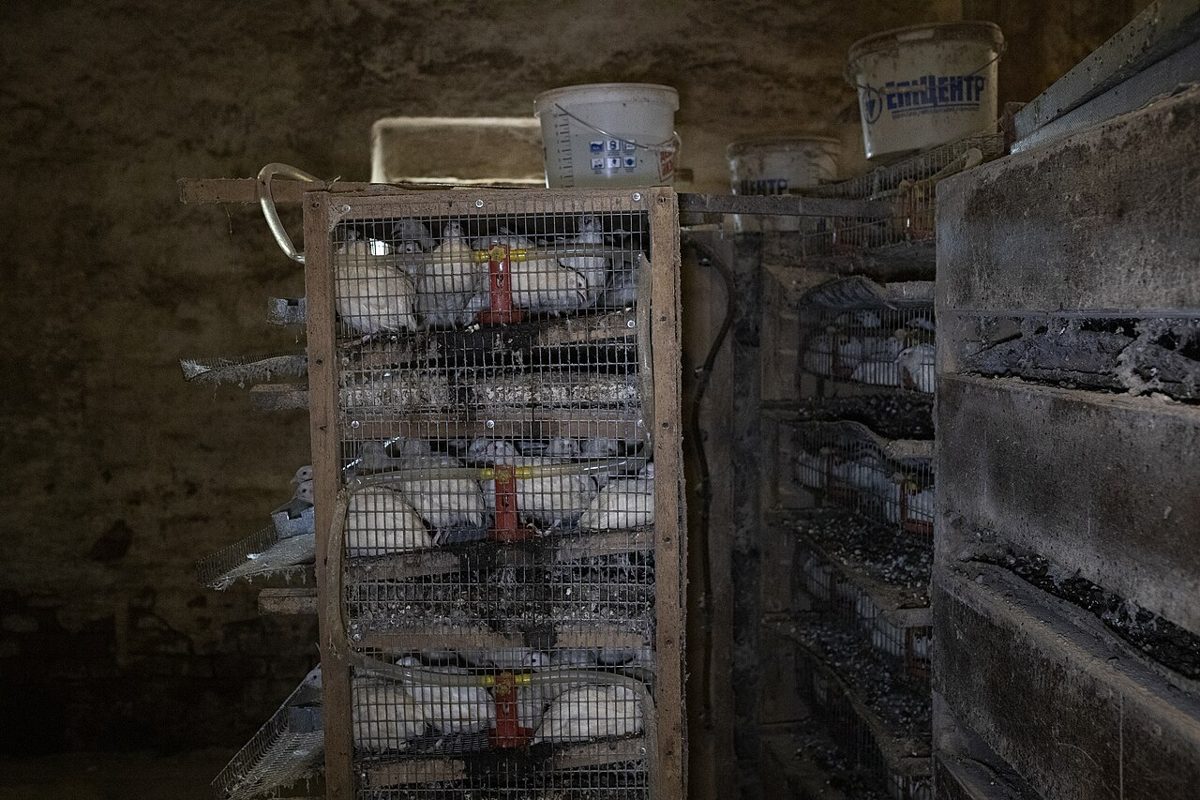
Quail flush straight up when frightened. NSW DPI recommends a solid metal or plywood roof to minimize head injuries. Keepers usually choose one of two heights: low enough (about 10–12 inches) that a startled bird cannot build up speed, or tall enough to walk into so birds have room to fly and land. Keepers report most scalping at in-between heights, where birds can launch hard but not fly. Our quail housing guide covers ceiling choices and soft netting.
Feeder and waterer space
Floor area is only part of it. Every bird needs to reach feed and water without a fight.
| Equipment | Space per bird | Source |
|---|---|---|
| Feed trough | 1.25–2.5 cm (about 1/2 to 1 inch) of feeder length | NSW DPI |
| Water trough | At least 0.6 cm (about 1/4 inch) | NSW DPI |
| Nipples or cups | One per 5 birds | NSW DPI |
| Chick feeders | 2–3 cm (about 1 inch) per chick | ICAR-CCARI |
| Chick waterers | 1–1.5 cm (about 1/2 inch) per chick | ICAR-CCARI |
In a 12-bird hutch, that means at least two or three water cups or nipples and a feeder with 6–12 inches of usable edge. We like to add one more waterer than the minimum, so a clogged nipple never leaves birds dry.
Signs your quail are overcrowded
| Sign | Why it happens | What to do |
|---|---|---|
| Feather pulling, bald backs, bloody heads | Stress and competition | Remove birds or add space; add cover |
| Strong ammonia smell, wet litter | Too many droppings for the area | Clean more often, add ventilation, reduce numbers |
| Dirty or cracked eggs | Birds trampling eggs | Fewer birds; sloped cage floor |
| One or two birds always at the edges, thin | Bullying at feeders | More feeder space; separate bullies |
| Panting on mild days | Body heat building up | More space and airflow |
If birds are also sick or dying, crowding may be part of a bigger problem; see our quail diseases guide.
Frequently asked questions
How many quail can I keep in a 2 × 4 foot cage?
About 8 at 1 square foot each. For a breeding group, or for jumbo birds, plan on 5 or 6.
What is the minimum space for quail?
Production guides go down to about 0.15–0.4 square feet per bird in cages. Those are commercial minimums. For backyard birds, 1 square foot each is a better floor.
How much space do quail chicks need?
Texas A&M recommends no more than 6 chicks per square foot for the first two weeks and 4 per square foot from 2 to 6 weeks.
Do quail need a run?
No, but extra space helps. A secure hutch with 1 square foot per bird works; a run or aviary gives room for foraging and dust bathing.
Can I keep quail in a rabbit hutch?
Often, yes, if the mesh is small enough to stop chicks and predators, the floor area gives about 1 square foot per bird, and the roof is solid or padded.
Sources
- Randall, M. and Bolla, G. Raising Japanese Quail. NSW Department of Primary Industries Primefact, republished by The Poultry Site.
- ICAR-Central Coastal Agricultural Research Institute. Japanese Quail.
- Thornberry, F. D. Producing Quail for Home Consumption (L-5215). Texas A&M AgriLife Extension.
- Penn State Extension. Bobwhite Quail Production, via the Agricultural Marketing Resource Center.
- Virginia Cooperative Extension. Beginning of Life (4-H 408-029).
- Hoover’s Hatchery. Quail Care Guide.
- SPCA New Zealand. Caring for Quail.
- Jacob, J. and McCrea, B. Raising Japanese Quail in Small and Backyard Flocks. Cooperative Extension.
- Cooperative Extension. Ventilation in Small and Backyard Poultry Flock Housing.