
Quick answer: For raising quail for meat, start with a jumbo or Texas A&M coturnix line, brood chicks at 95–97°F and lower the heat 5°F a week, and feed a 26–30% protein game bird starter for six weeks. Keep growing birds on short days (about 8 hours of light) so they fatten instead of fighting. Most are ready at 6–8 weeks. Expect each bird to eat about 3–3.5 lb of feed and to dress out at roughly 72% of live weight.
Raising quail for meat is one of the quickest ways to put home-grown protein in the freezer. Coturnix go from hatch to table in about two months, they need little space, and a batch of 25 birds fits in a garage brooder and one grow-out pen. This guide covers the whole cycle: which birds to buy, how to brood and feed them, when they are ready, a plain overview of processing, and what the numbers look like in feed and meat.
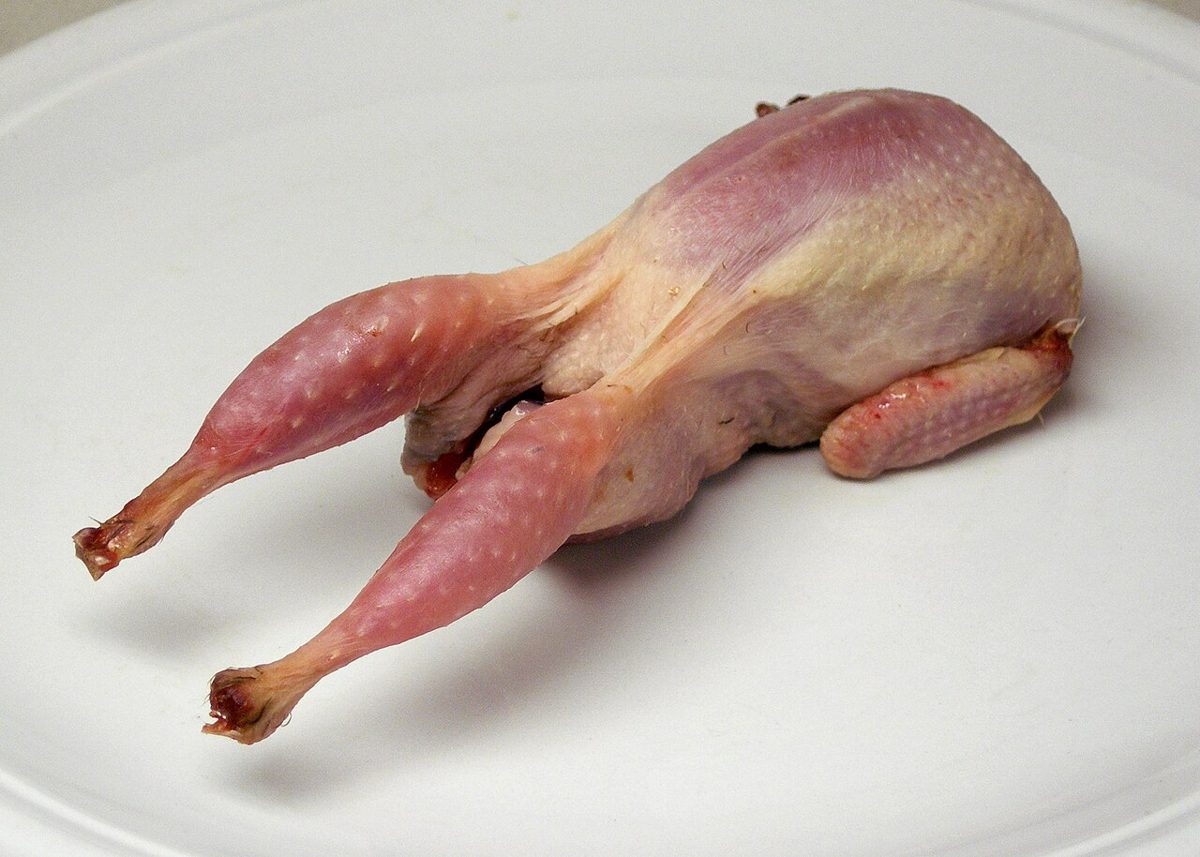

Why coturnix for meat?
Extension’s guide to bobwhite quail notes that most producers raising quail for meat prefer Japanese quail because they grow more efficiently and produce larger carcasses. Texas A&M AgriLife Extension adds that the large coturnix strains are hardier than most bobwhite strains and reach slaughter weight much earlier.
Line matters more than color. Our guide to coturnix quail breeds explains the names, but for meat the short version is:
| Bird | Typical weight | Meat notes |
|---|---|---|
| Standard coturnix | Males 100–140 g, females 120–160 g (Extension) | Small, darker carcass; fine for the table but little meat per bird |
| Jumbo coturnix | About 250–300 g (Extension) | Selected for rapid growth and feed efficiency; the usual backyard meat bird |
| Texas A&M strain | 10–13 oz (about 280–370 g) live at 7 weeks (Texas A&M) | Heavily muscled with light-colored flesh; usually sold as white or “jumbo white” |
Texas A&M points out that smaller coturnix strains yield small, dark-fleshed carcasses that are less desirable as a gourmet item. If meat is the main goal, it is worth paying more for hatching eggs or chicks from a breeder who can tell you real 6- to 8-week weights. Texas A&M also recommends buying from reputable game bird farms in the National Poultry Improvement Plan (NPIP).
Week-by-week plan for a meat batch
| Age | Heat at chick level | Feed | Space (max density) | Notes |
|---|---|---|---|---|
| Week 1 | 95–97°F | 26–30% game bird starter, ground fine | 6 chicks per sq ft | Bright light first 3 days, marbles in waterers |
| Week 2 | About 90°F | Starter | 6 per sq ft | Move to tube feeders after about 7 days |
| Weeks 3–4 | 85°F, then 80°F | Starter | 4 per sq ft | Chicks feather quickly; watch for piling or panting |
| Weeks 5–6 | Down to 75°F, then off heat when feathered | Starter | 4 per sq ft | Separate obvious males if you keep any hens |
| Weeks 6–8 | None for feathered birds | 20% game bird grower | 3 per sq ft | Short days (about 8 hours of light); weigh a few birds weekly |
Temperatures, feed, densities and the 5°F-per-week step come from Texas A&M AgriLife Extension’s Producing Quail for Home Consumption. For the details of brooder setup, heat sources and early losses, see our quail chick care guide.
Feeding meat quail
Texas A&M recommends a fresh, high-quality game bird starter with 26–30% protein for the first six weeks, then a 20% game bird grower. During the first week, grind the starter to a cornmeal texture in a blender or coffee grinder and pile it on shallow trays so tiny chicks can find it. After about 7 days they can eat from tube feeders.
- Plan on 3 to 3.5 lb of feed per bird for the whole feeding period (Texas A&M).
- Never let feed or water run out.
- Skip grain and scratch. Texas A&M warns that supplemental feedstuffs such as grain are unnecessary and may slow growth or cause health problems.
- Texas A&M suggests water-soluble poultry vitamins for the first two weeks to help prevent leg problems, used at the label dose only.
Our full feeding guide, what do quail eat, compares game bird, turkey and chicken feeds if your store has a limited choice.
Light: the trick most beginners miss
Cooperative Extension and NSW Department of Primary Industries both recommend giving quail raised for meat only about 8 hours of light a day. That is not enough to trigger sexual maturity, so the birds waste less energy fighting and mating and fatten more quickly. ICAR’s quail guidance from India makes a similar point: eight hours of light and 16 hours of darkness for at least 7–10 days before marketing helps improve the condition of meat birds.
During brooding, Texas A&M suggests bright light for the first three days so chicks find food and water, then low-intensity light to reduce pecking and cannibalism. A dim bulb or a red bulb on a timer covers both needs.
Housing and stopping cannibalism
Meat birds do well in a clean, dry, well-ventilated pen with 2–4 inches of wood shavings or rice hulls, never slick cardboard or newspaper. Cages and wire runs need mesh small enough to stop escapes. Texas A&M lists the main fixes for feather pecking and cannibalism:
- Lower light intensity, or use red light.
- Give more floor space and better ventilation.
- Use an anti-peck product from the feed store on wounded birds.
- Hang clumps of tree foliage or leafy alfalfa hay in the pen to keep birds busy.
Our raising coturnix quail guide covers predator-proof housing and space for adult birds you keep on after harvest.
When are meat quail ready?
There is no single right day. Texas A&M’s meat strain hits 10–13 oz live at about 7 weeks, and ICAR markets its broiler quail at 5–6 weeks. Most backyard keepers process somewhere between 6 and 8 weeks. Texas A&M’s advice is to slaughter as soon as birds reach optimum size, because after that you keep paying for feed without gaining much meat.
- Weigh five or six birds each week from week 5 on a kitchen scale.
- Feel the breast. A meat-ready bird has a full, rounded breast over the keel bone.
- Once weekly gains flatten, plan your processing day.
We go deeper on timing in when to butcher quail.
Processing at home: an overview
This is a summary, not a step-by-step class. If you have never processed poultry, learn from an experienced keeper first.
- Withhold feed. Texas A&M recommends removing feed and water 4–6 hours before slaughter to reduce contamination during processing.
- Dispatch humanely and quickly. The AVMA Guidelines for the Humane Slaughter of Animals (2024 edition) say cervical dislocation may be used for quail by trained people, and that its effectiveness must be checked. Practice the technique so it is fast and complete.
- Bleed, then pluck or skin. Texas A&M describes two options: scald and pluck, or slit the skin down the back and skin the bird. Skinning is faster; plucking keeps the skin for roasting.
- Eviscerate. Remove the internal organs, including the lungs, kidneys, crop, neck and tail head.
- Chill fast. Wash carcasses thoroughly and chill them in an ice-water slush for at least two hours.
- Freeze. Texas A&M suggests packing birds in freezer containers, covering them with water and pressing out the air. Frozen this way, quail keep quality for 9–12 months.
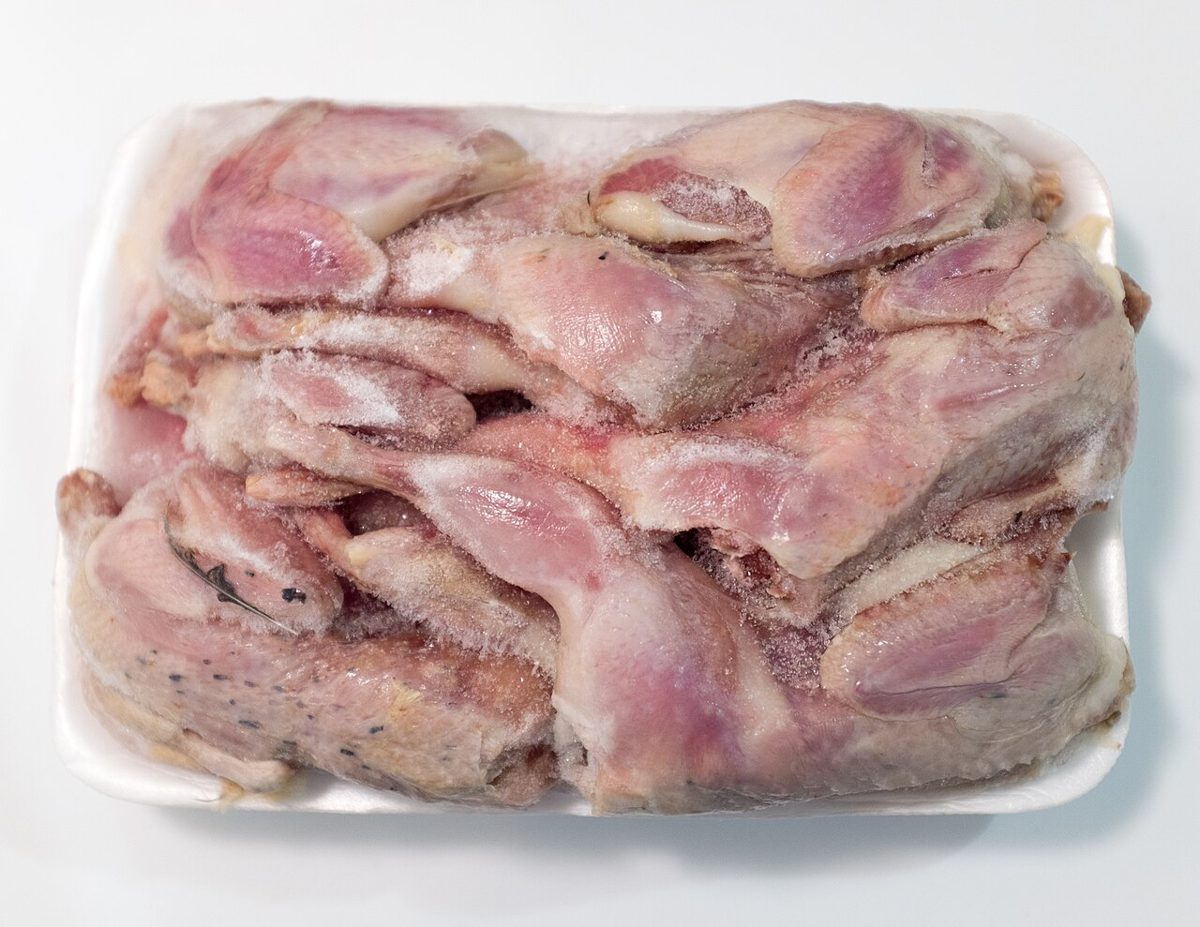

Our step-by-step guide to processing quail at home goes through tools, setup and each cut.
How much meat do you get?
Texas A&M puts the dressing percentage for quail at about 72% of live weight. Here is what that means in practice:
| Live weight | Dressed weight at 72% | Example |
|---|---|---|
| 4 oz (113 g) | About 2.9 oz (81 g) | Standard coturnix |
| 9 oz (255 g) | About 6.5 oz (184 g) | Jumbo coturnix |
| 12 oz (340 g) | About 8.6 oz (245 g) | Texas A&M meat strain at 7 weeks |
Dressed weight includes the bones. A whole quail is a small portion, so most people cook more than one bird per person. Gram for gram, quail is a little richer than chicken: USDA FoodData Central lists raw quail meat at 134 kcal, 21.8 g protein, 4.5 g fat and 4.5 mg iron per 100 g, against 119 kcal, 21.4 g protein, 3.1 g fat and 0.9 mg iron for raw chicken meat. Our quail meat vs chicken comparison adds breast meat, skin and minerals.
What a meat batch costs
Feed is the main running cost. At the 3–3.5 lb of feed per bird that Texas A&M lists and the roughly $26–$32 we saw for 40 lb bags of game bird starter in November 2026, feed works out to about $2.00–$2.80 per bird. Add the cost of hatching eggs or chicks, bedding and electricity for the brooder. Our cost to raise quail breakdown works through a full budget, including cost per pound of meat.
Troubleshooting
| Problem | Likely cause | Fix |
|---|---|---|
| Birds stay small at 7–8 weeks | Standard line sold as jumbo; low-protein feed | Check line weights with the seller; feed 26–30% starter to 6 weeks |
| Fighting and bloody heads | Too much light, crowding, mature males | Cut to about 8 hours of low-intensity light; add space; process sooner |
| Leg problems in chicks | Slick floors; low vitamins | Use shavings or textured liners; vitamins for the first two weeks |
| Sudden deaths or watery droppings | Disease, often linked to wet litter or dirty water | Isolate sick birds and get a diagnosis; see our quail health guide |
| Tough or dry meat | Overcooking a lean, small bird | Cook hot and fast, or braise; check 165°F in the thickest part |
Can you sell home-raised quail meat?
For your own table, home processing is common. Selling is different. Quail are a “non-amenable” species under federal meat and poultry law, which means they are not covered by mandatory USDA inspection; Cornell Small Farms explains that they fall under FDA rules instead, and USDA-FSIS offers voluntary, fee-based inspection. On top of that, states set their own licensing and processing rules. Before you sell a single bird, call your state department of agriculture or health department.
Cooking safely
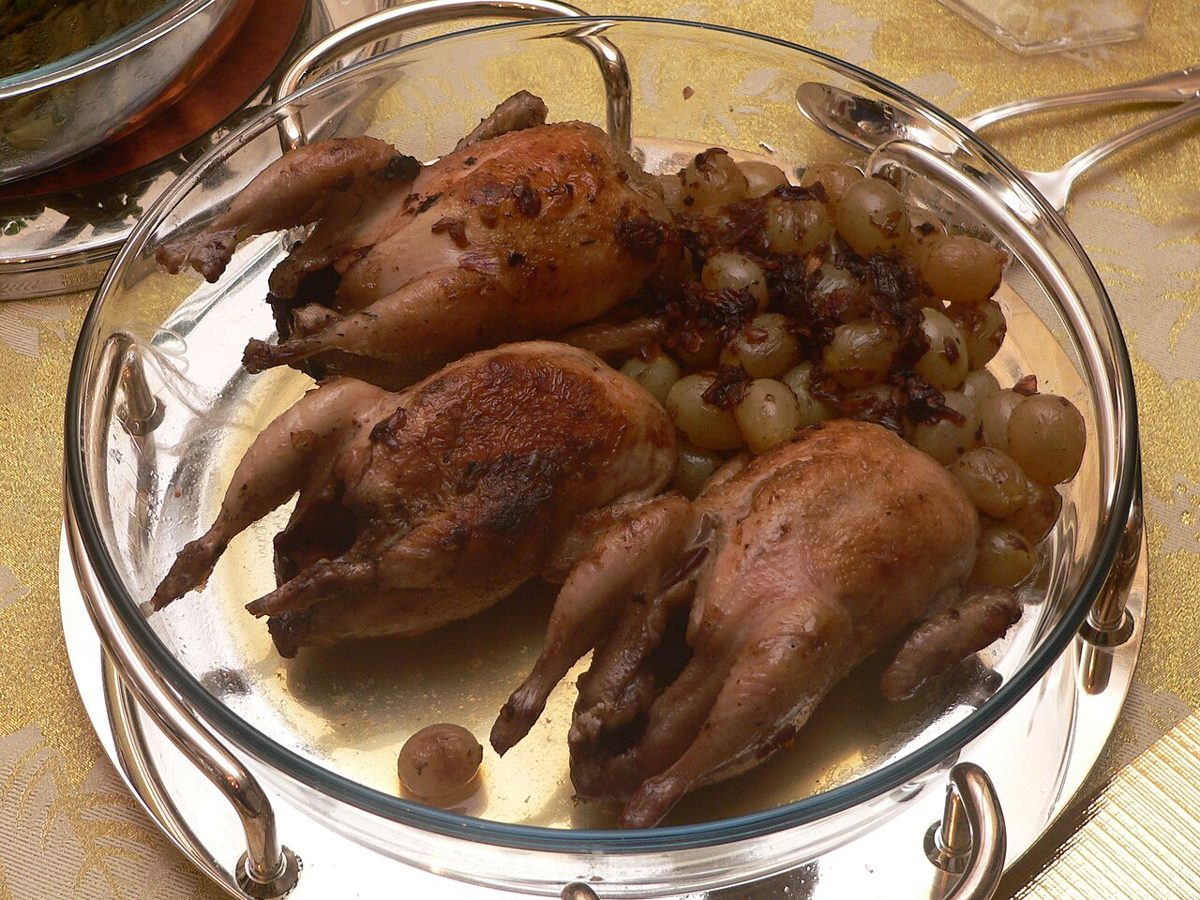
USDA-FSIS lists 165°F as the safe minimum internal temperature for all poultry, including whole birds, legs and breasts. Quail are small and lean, so they cook quickly. Texas A&M’s recipes grill, broil or bake them for about 15–25 minutes, until the leg bone twists easily in the joint, but use a thermometer to confirm 165°F.

Frequently asked questions
How long does it take to raise quail for meat?
About 6–8 weeks from hatch. Texas A&M’s meat strain reaches 10–13 oz live weight at about 7 weeks.
Can I raise males and hens together for meat?
Yes, if you process before they reach full sexual maturity. Keeping growing birds on about 8 hours of light delays maturity and cuts fighting.
Are jumbo quail worth it for meat?
Usually, yes. Extension lists jumbo coturnix at 250–300 g, about twice a standard bird, so you get far more meat for each bird you brood and process. See jumbo coturnix quail vs regular for eggs, feed and space.
Should I pluck or skin quail?
Both work. Skinning is faster; plucking keeps the skin for roasting. Texas A&M describes both methods.
How long does frozen quail keep?
Texas A&M says quail frozen in containers covered with water keep quality for 9–12 months.
Sources
- Thornberry, F. D. Producing Quail for Home Consumption (L-5215). Texas A&M AgriLife Extension.
- Jacob, J. and McCrea, B. Raising Japanese Quail in Small and Backyard Flocks. Cooperative Extension.
- Jacob, J. Raising Bobwhite Quail: Small and Backyard Flock. Cooperative Extension.
- Randall, M. and Bolla, G. Raising Japanese Quail. NSW Department of Primary Industries Primefact, republished by The Poultry Site.
- ICAR-Central Coastal Agricultural Research Institute. Japanese quail.
- American Veterinary Medical Association. AVMA Guidelines for the Humane Slaughter of Animals: 2024 Edition (pheasants and quail section; PDF hosted by the American Association of Avian Pathologists).
- Cornell Small Farms Program. Are the Animals or Birds Amenable or Non-Amenable?
- USDA Food Safety and Inspection Service. Safe Minimum Internal Temperature Chart.
- USDA Agricultural Research Service. FoodData Central, SR Legacy records “Quail, meat only, raw” (FDC ID 172419) and “Chicken, broilers or fryers, meat only, raw” (FDC ID 171052).