
Quick answer: Jumbo coturnix quail vs regular coturnix comes down to size and purpose. Both are the same species, Japanese quail. Pet button quail are a different, much smaller species; see button quail vs coturnix. Cooperative Extension puts standard birds at about 100–160 g and jumbo birds at 250–300 g, roughly twice the weight. Jumbos are the better choice for meat and dual-purpose flocks. Standard birds are usually the more feed-efficient choice for eggs only: research on lines selected for heavy body weight found bigger eggs but fewer of them.
Jumbo coturnix quail vs regular coturnix is one of the first decisions new keepers face, and hatchery listings rarely explain the trade-offs. “Jumbo” is not a separate breed. It is a size-selected line of the same Japanese quail, bred over many generations for heavier birds. This guide compares the two on weight, meat, eggs, feed, space and price, using Extension figures and published selection studies, and helps you decide which suits your goals.
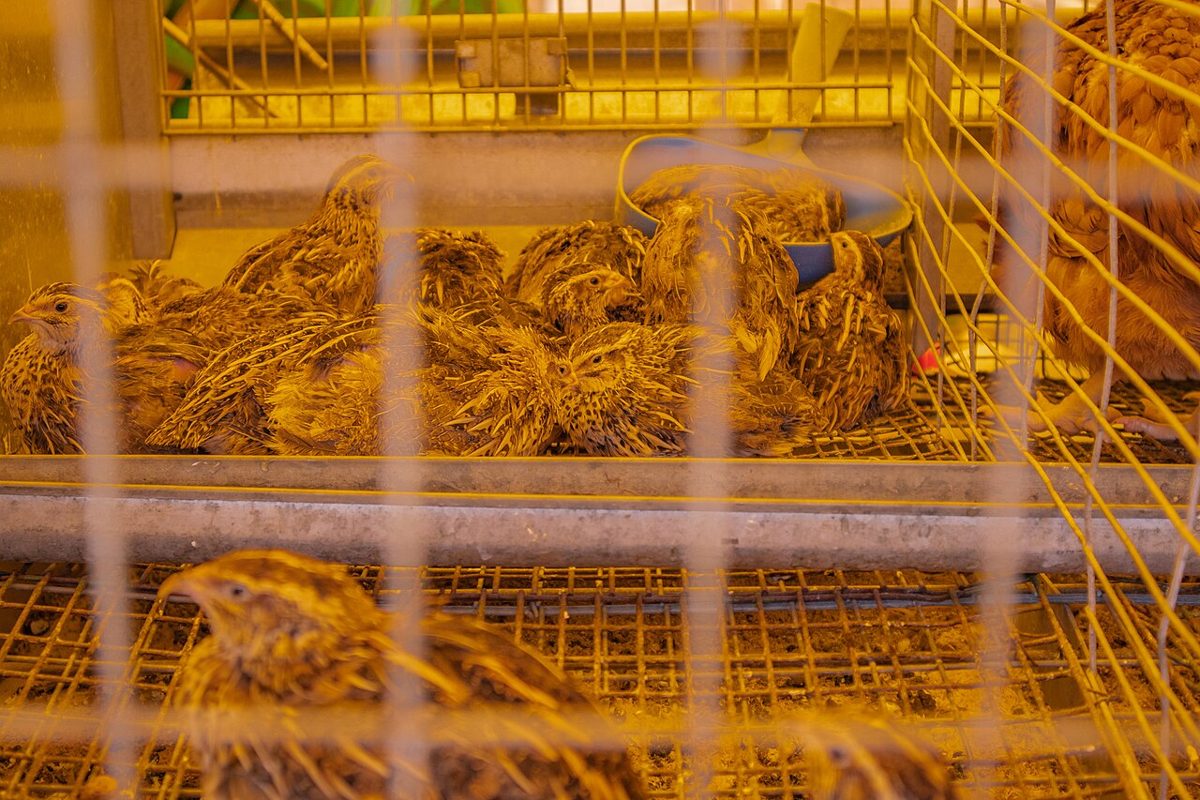

Jumbo vs regular coturnix at a glance
| Trait | Regular (standard) coturnix | Jumbo coturnix | Source |
|---|---|---|---|
| Adult weight | Males 100–140 g, females 120–160 g (3.5–5.6 oz) | 250–300 g (8.8–10.6 oz) | Cooperative Extension |
| Bred for | Eggs, general use | Fast growth and size | Cooperative Extension |
| Meat strains | Small, dark-fleshed carcasses | Texas A&M strain: 10–13 oz live at 7 weeks, light flesh | Texas A&M AgriLife Extension |
| Egg size | About 10 g | Heavier, but the eggs vary by line | NSW DPI; selection studies |
| Egg numbers | Higher in egg-type lines | Lower in heavy lines in research | Durmuş et al. 2017 |
| Feed per bird | Less | More, because the bird is bigger | General; see feed section |
| Space | Our suggestion: about 1 sq ft per bird | Our suggestion: a little more | Our recommendation |
What “jumbo” actually means
Cooperative Extension describes jumbo Japanese quail as birds of 250 to 300 grams that have been selected for rapid growth and feed efficiency. In the sources we checked, there is no official breed standard for the word, so two hatcheries’ “jumbos” can be quite different. Texas A&M AgriLife Extension describes one well-known meat line, the Texas A&M strain, as heavily muscled and light-fleshed, reaching 10 to 13 ounces live at a slaughter age of 7 weeks. It says smaller coturnix strains yield small, dark-fleshed carcasses that are less desirable as a gourmet item.
Size is inherited, but only if breeders keep selecting for it. Research lines show that weight responds to selection over generations, which also means a jumbo line bred from random birds will drift back toward average. When buying, ask the seller for typical 6- to 8-week weights from the parent flock, as we suggest in our coturnix quail breeds guide.
Meat: where jumbos clearly win
For the table, size is the whole point. Each jumbo bird is roughly twice the weight of a standard one, so you catch, process and pluck about half as many birds for the same amount of meat.
| Bird | Live weight | Dressed weight at 72% |
|---|---|---|
| Standard male | 100–140 g | About 72–100 g |
| Standard female | 120–160 g | About 86–115 g |
| Jumbo | 250–300 g | About 180–215 g |
| Texas A&M strain at 7 weeks | 280–370 g (10–13 oz) | About 200–265 g |
The 72% dressing rate is Texas A&M’s figure. Our guide on when to butcher quail explains how to time processing, and raising quail for meat covers the full grow-out.
Eggs: bigger eggs, usually fewer of them
If eggs are your main goal, the picture changes. NSW Department of Primary Industries puts the average standard coturnix egg at about 10 g.
Two lines of research point the same way:
- Durmuş and colleagues (2017) selected Japanese quail for 11 generations. Selection for high body weight increased egg weight and peak production, but total egg production in the heavy line fell by 13.5%, and its laying dropped off fastest after the peak.
- Okamoto and colleagues (1989) compared large and small lines selected for 6-week body weight over 48 generations. The large line converted feed to body weight better, but feed conversion to egg production was poorer than in the control line.
In plain terms: heavy lines lay bigger eggs, but you may get fewer of them for the feed. These were research lines, not specific US hatchery strains, so treat the direction as reliable and the exact numbers as line-specific. A 2021 review of egg-quality work in the South African Journal of Animal Science also notes higher egg weights reported in high-body-weight lines.
Feed and space
A bigger bird eats more. NSW DPI reports that adult Japanese quail eat about 14–18 g of feed a day, while ICAR-CCARI lists 30–35 g a day from six weeks for its heavier production line. Those figures come from different lines and settings, but they show the range. Texas A&M says each meat bird needs about 3 to 3.5 lb of feed during grow-out.
Space should scale with size. Texas A&M recommends no more than 3 birds per square foot after six weeks for meat birds. For layers kept long-term, we suggest about 1 square foot per bird and a little more for jumbos; see how many quail per square foot for every published figure.
Price and availability
Jumbo hatching eggs and chicks often cost more than standard ones, and color choice is narrower. The breeder guide Quail Stead notes that jumbos come in few colors, mostly Pharaoh (wild-type brown) and white, and that jumbo celadons are rare. If you want many feather colors or celadon (blue) eggs, standard-sized lines give more choice. Prices vary widely by seller, so compare locally; our cost to raise quail breakdown uses standard-line prices.
Which should you choose?
| Your goal | Better choice | Why |
|---|---|---|
| Meat only | Jumbo or Texas A&M | Twice the meat per bird; less processing per pound |
| Eggs only, small space | Standard | Less feed per bird; egg-type lines lay more |
| Eggs and meat | Jumbo | Bigger carcasses from extra males; eggs still good |
| Many colors or blue eggs | Standard | Wider choice of color lines |
| Breeding your own meat line | Jumbo, with a scale | Keep selecting the heaviest birds each generation |
How to keep a jumbo line jumbo
- Weigh at 6 or 8 weeks. Pick the same age each time.
- Breed from the heaviest healthy birds, both males and hens.
- Avoid close inbreeding. NSW DPI warns that inbreeding increases abnormalities and reduces reproductive performance.
- Do not mix in standard birds if size is your goal.
- Keep records so you can see whether average weight is holding.
Our guide to coturnix behavior and breeding covers breeding groups and ratios.
Common mistakes
| Mistake | Result | Fix |
|---|---|---|
| Buying “jumbo” without weights | Average-size birds | Ask for parent weights |
| Breeding jumbos from random birds | Size drifts down | Select the heaviest each generation |
| Expecting jumbos to out-lay standard hens | Fewer eggs than hoped | Keep egg-type lines for eggs |
| Crowding big birds | Pecking, poor growth | Give more space |
| Low-protein feed | Slow growth | Use game bird starter; see can quail eat chicken feed |
Frequently asked questions
Are jumbo coturnix a different breed?
No. They are Japanese quail selected for size. Cooperative Extension describes them as selected for rapid growth and feed efficiency.
How big do jumbo coturnix get?
Cooperative Extension puts jumbo Japanese quail at 250 to 300 grams. The Texas A&M meat strain reaches 10 to 13 ounces live at 7 weeks.
Do jumbo quail lay bigger eggs?
Generally yes. Selection studies found heavier eggs in high-body-weight lines, but fewer eggs in total.
Are jumbo quail good layers?
They lay well, but research on heavy lines found lower total egg production than other lines. For eggs only, standard egg-type birds are usually more efficient.
Can I mix jumbo and standard coturnix?
Yes, they can live together. If you breed them together, chicks will be smaller than pure jumbos.
Sources
- Jacob, J. and McCrea, B. Raising Japanese Quail in Small and Backyard Flocks. Cooperative Extension.
- Thornberry, F. D. Producing Quail for Home Consumption (L-5215). Texas A&M AgriLife Extension.
- Durmuş, I., Alkan, S., Narinç, D., Karabağ, K. and Karslı, T. (2017). Effects of mass selection on egg production on some reproductive traits in Japanese quail. European Poultry Science 81: 1–9.
- Okamoto, S., Kobayashi, S. and Matsuo, T. (1989). Feed conversion to body weight gain and egg production in large and small Japanese quail lines selected for 6-week body weight. Japanese Poultry Science 26(4): 227–234.
- El-Attrouny, M. M. and Iraqi, M. M. (2021). Influence of selection for egg production on egg quality traits in Japanese quail. South African Journal of Animal Science 51(1).
- Randall, M. and Bolla, G. Raising Japanese Quail. NSW Department of Primary Industries Primefact, republished by The Poultry Site.
- ICAR-Central Coastal Agricultural Research Institute. Japanese Quail.
- Quail Stead. Jumbo Coturnix Quail: What ‘Jumbo’ Actually Means.