
Quick answer: Coturnix quail breeds sold to backyard keepers are color and size varieties of one species, Japanese quail (Coturnix japonica). Pharaoh (wild type) is the usual starter bird and is easy to sex by breast feathers. Jumbo and Texas A&M lines are selected for a heavier carcass. Celadon is not a feather color; it is a recessive trait for blue-green eggs. Feed, housing and hatch time stay the same from one color to the next.
Shopping for coturnix quail breeds can feel like walking into a candy shop: Pharaoh, Italian, Tibetan, tuxedo, Texas A&M white, jumbo, celadon. Those names are useful, but they are not separate species. They are color mutations and size-selected lines of the same domesticated Japanese quail. Housing, feed and hatching do not change with feather color. What does change is how the birds look, how easy they are to sex, how heavy a well-bred line gets, and, with celadon, the color of the eggshell.

One species, many catalog names
Japanese quail have been farmed for eggs and meat for a long time. That history produced many plumage mutations and a few heavier lines. US hatcheries sell those lines under familiar names, but there is no official registry, so two sellers can use “Pharaoh” or “jumbo Italian” for birds that do not look or weigh the same.
Cooperative Extension treats the backyard bird as Japanese quail, with a standard adult size and a heavier “jumbo” type selected for rapid growth. The day-to-day work of raising coturnix quail is the same whether the flock is brown, gold or white: a predator-proof enclosure, a complete game-bird feed, clean water and enough light for hens to lay.
Coturnix quail breeds at a glance
Weights below are typical ranges, not a guarantee for every bird you buy.
| Variety | What you see | Typical adult size | Best used for | Notes |
|---|---|---|---|---|
| Pharaoh (wild type) | Brown, barred, wild pattern | Males 100–140 g; females 120–160 g | Beginners, eggs, breeding | Feather-sexable. Male: plain rusty breast. Female: speckled breast. Cooperative Extension. |
| Jumbo (size line) | Often Pharaoh color on a heavier frame | About 250–300 g | Meat or dual-purpose | “Jumbo” is a size claim, not a color. Ask for parent weights. Cooperative Extension. |
| Italian (fawn / golden) | Golden-fawn wild pattern, dark V-marks | Standard or jumbo, by line | Looks and eggs | Well-marked birds are often still feather-sexable. Names are not standardized. |
| Tibetan | Dark chocolate; some have a pale spot under the beak | Standard, or jumbo if size-selected | Looks | Also sold as dark or Dark British Range. |
| Texas A&M white | White or mostly white; often a small brown eye patch | Meat strain: 10–13 oz (about 280–370 g) at 7 weeks | Meat; light-fleshed carcass | Texas A&M AgriLife Extension. Solid white birds are not reliably feather-sexable. |
| Tuxedo | Dark body with a white bib or patches | Depends on the line | Looks | A color pattern, not a size class. Markings often vary in crosses. |
| Rosetta | Red-brown or rich chocolate, usually no white bib | Depends on the line | Looks | Also sold as British Range. Confirm with a seller photo. |
| Celadon (egg trait) | Any feather color can carry it; eggs are blue-green | The size of the line it sits on | Blue-green eggs | Autosomal recessive gene ce (Ito et al., 1993). Not a plumage variety. |
The common varieties, in plain language
Pharaoh, or wild type
This is the original brown coturnix look. Cooperative Extension describes the adult female as having light tan feathers on the throat and upper breast, with black stippling, and the male as having rusty brown throat and breast feathering. That makes Pharaoh a practical first bird: you can usually sort the sexes without vent-sexing, then keep a hen-only laying group or a balanced breeding pen.
Jumbo lines
Jumbo is a size line, not a color. Cooperative Extension lists jumbo Japanese quail at 250–300 grams, about twice a standard bird, selected for rapid growth and feed efficiency. Jumbo Pharaoh, or jumbo brown, keeps the feather-sexing advantage of wild-type plumage. A “jumbo” label is only as good as the breeding behind it, so ask for typical 6- to 8-week weights from the parents.
Italian, fawn or golden
Italian, as US sellers usually mean it, is a golden-fawn bird that still shows the wild pattern, painted in warm yellow instead of brown. Well-marked birds are often still feather-sexable. Closely related gold types are also sold as Manchurian, and the names get mixed together. If you want a uniform look, buy from a breeder who can show adult birds, not only a color word on a bag of eggs.

Texas A&M white
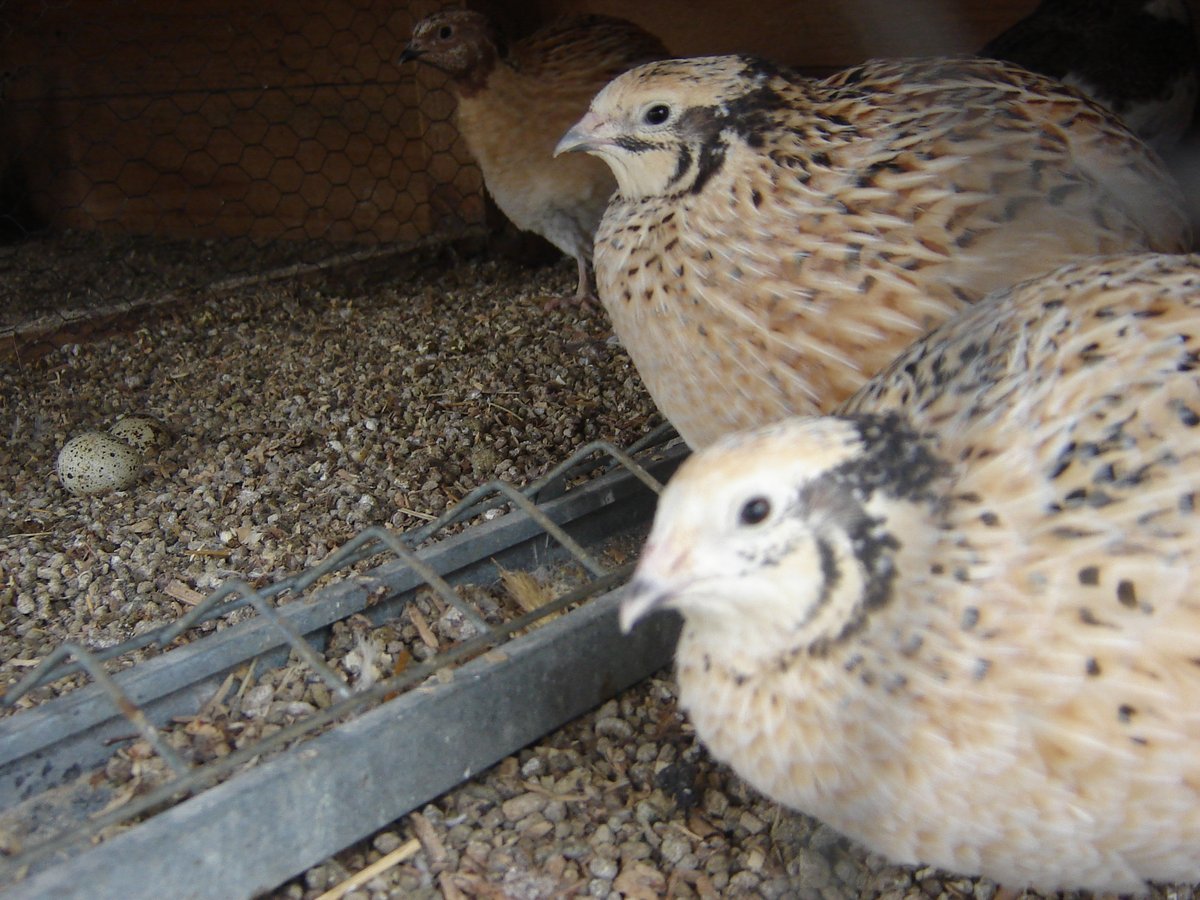
Texas A&M AgriLife Extension describes a heavily muscled, light-fleshed coturnix strain that reaches 10 to 13 ounces (about 280–370 grams) live weight at seven weeks. In the US this line is widely sold as Texas A&M, A&M white or jumbo white, usually as a white or mostly white bird. Solid white plumage hides the breast pattern, so plan on vent-sexing, waiting for a male to crow, or buying already-sexed adults.
Tibetan, Rosetta and tuxedo
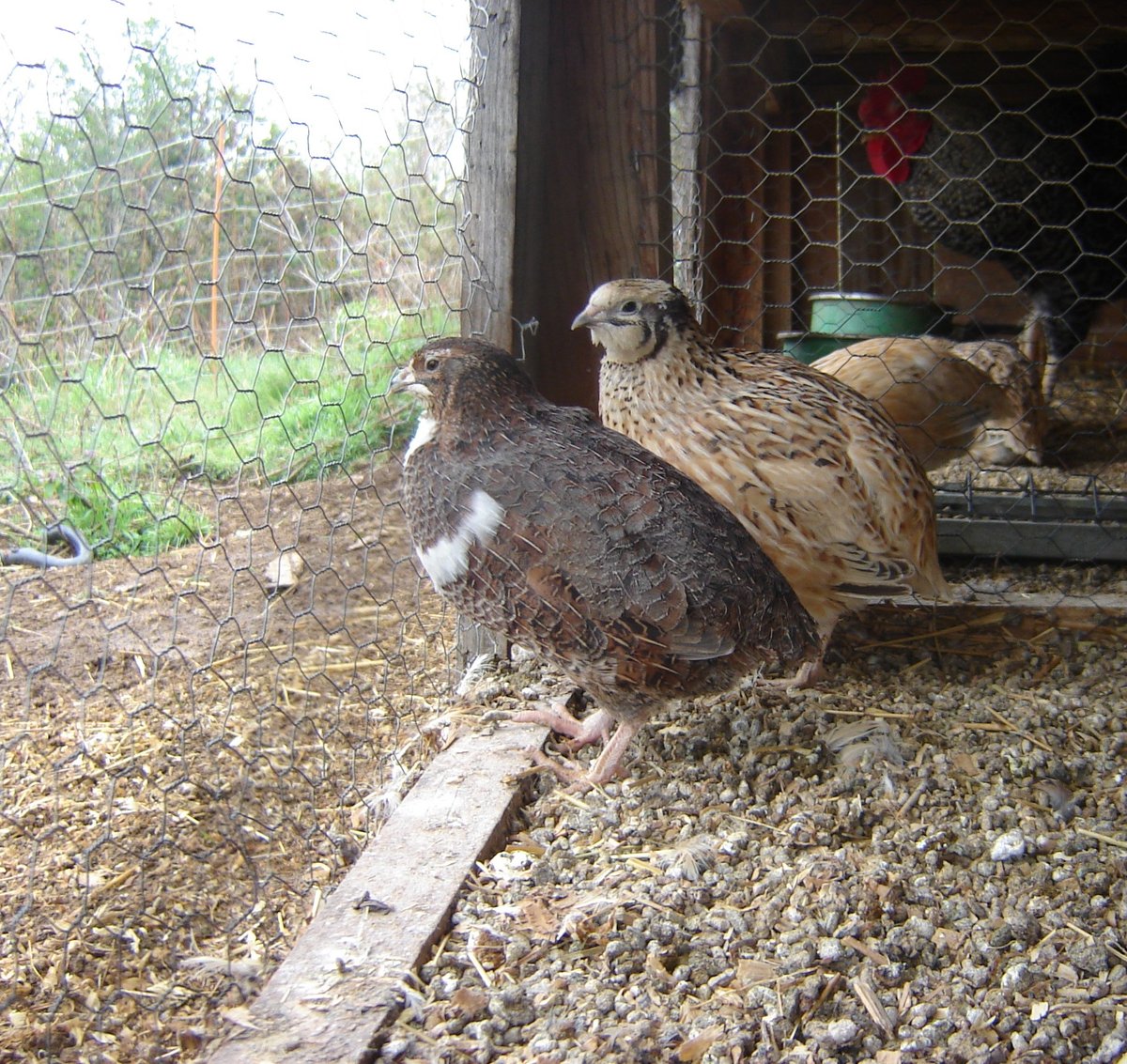
These are plumage patterns, not different kinds of quail. Tibetan is usually very dark chocolate. Rosetta is a rich red-brown. Tuxedo is a dark bird with a white bib or white patches, like the darker bird in the photo above. Sellers also use older names such as British Range. None of these colors has a well-documented official advantage in egg number or growth over a well-bred line of the same size. Buy them if you like the look, and judge production by the breeder’s flock.
Celadon: a blue-green egg, not a breed
Celadon is an eggshell-color mutation, not a feather color. Ito and colleagues described it in 1993 as an autosomal recessive trait and proposed the gene symbol ce. The brown surface pigment on most quail eggs is reduced, so the underlying blue-green shell shows through. A hen lays celadon eggs only if she carries two copies of the gene. Buy from a flock where both parents are proven celadon if blue-green eggs are the point. Any plumage color can carry the trait.
How to choose a variety
Start with your goal, then pick a color. Every variety still needs the same care described in our guides to quail housing and what quail eat.
- First flock, mostly eggs: Pharaoh or jumbo Pharaoh. They are widely available, easy to sex, and you can keep hens only once you have sorted them.
- Meat, or a heavier dual-purpose bird: a jumbo line with documented weights, or the Texas A&M meat strain. Texas A&M AgriLife Extension also suggests buying from reputable game-bird farms, ideally in the National Poultry Improvement Plan (NPIP).
- Blue-green eggs: celadon, on whatever size and color line you like. Confirm that both parents produce celadon eggs, or that the seller hatches from proven ce/ce stock.
- Looks: Italian, tuxedo, Rosetta or Tibetan. Ask for recent photos of the actual breeding pen.
If you start from hatching eggs, read how to incubate quail eggs before you order, and have the brooder ready using the week-by-week plan in our quail chick care guide. Chicks of every color need the same heat, crumb-size feed and draft-free start.
Common mix-ups and how to avoid them
- You bought “jumbo” and the birds stayed small. The word is not regulated. Compare the seller’s 6- to 8-week weights with the Cooperative Extension range of about 250–300 g, or with the Texas A&M 10- to 13-ounce figure if that is the line you wanted.
- The “celadon” hens lay speckled brown eggs. The trait is recessive. A carrier hen looks like any other quail and lays normal mottled eggs. Only hens with two copies of ce lay the blue-green shell.
- You cannot tell males from females in a white flock. That is expected. Use vent-sexing, listen for crowing, or wait for the first eggs. Pharaoh and many well-marked Italian birds are easier to sort by sight.
- Chicks do not match the parents. Mixed-color pens throw mixed chicks. Tuxedo markings often fail to repeat cleanly. Hatch inside one variety, or buy sexed adults from a closed color group, if you want a consistent look.
- A seller claims one color lays better or is calmer than another. Treat that as a claim about that person’s flock. Keepers sometimes report temperament differences, but no solid extension source assigns a lay rate or personality to Italian versus Pharaoh.
FAQ
Are coturnix quail breeds different species?
No. Pharaoh, jumbo, Italian, Texas A&M white, tuxedo and celadon coturnix are all Japanese quail (Coturnix japonica). They are not bobwhite or California quail, and they should not be released outdoors.
Do different colors need different feed or housing?
No. Color does not change the basic needs: a complete game-bird feed, predator-proof housing and 14–18 hours of light for laying hens, as Cooperative Extension describes for Japanese quail in general.
If I incubate celadon eggs, will every hen lay blue-green eggs?
Only if both parents passed on the recessive celadon gene, so the hen is ce/ce. Eggs from a mixed flock can hatch celadon layers, carriers and ordinary mottled-egg hens.
Can I keep mixed colors in the same pen?
Yes, for a pet or laying flock. If you hatch their eggs, expect mixed colors and, unless both parents are proven celadon, mixed eggshell colors too.
Which variety is best for a first flock?
Pharaoh or jumbo Pharaoh. They are easy to find, easy to sex by breast feathers, and they lay the familiar mottled egg.
Sources
- Jacob, J. and McCrea, B. Raising Japanese Quail in Small and Backyard Flocks. Cooperative Extension (University of Kentucky, Delaware State University).
- Thornberry, F. D. Producing Quail for Home Consumption (L-5215). Texas A&M AgriLife Extension.
- Ito, S., Tsudzuki, M., Komori, M. and Mizutani, M. 1993. Celadon: An eggshell color mutation in Japanese quail. Journal of Heredity 84(2):145–147.
- Online Mendelian Inheritance in Animals. OMIA:000142-93934, Eggshell colour, blue, in Coturnix japonica.