
Quick answer: Coturnix hens start laying quail eggs at about 7 weeks and need 14–18 hours of light a day to keep going. Collect every day, toss cracked eggs, and dry-clean dirty ones with a brush or fine sandpaper instead of washing them. Refrigerate eating eggs at 40°F or below and cook them until the white and yolk are firm. Hatching eggs are different: keep them cool (about 59°F), unwashed, and set them within a week.
Quail eggs are the main reason most people start a backyard coturnix flock. A small group of hens can fill a carton every few days, and the eggs taste like rich chicken eggs in a tiny, speckled shell. This guide follows the egg from the hen to the plate: when laying starts, how to collect and clean eggs, how long they keep, what the USDA nutrient data actually shows, and how to boil and peel them without losing your patience.
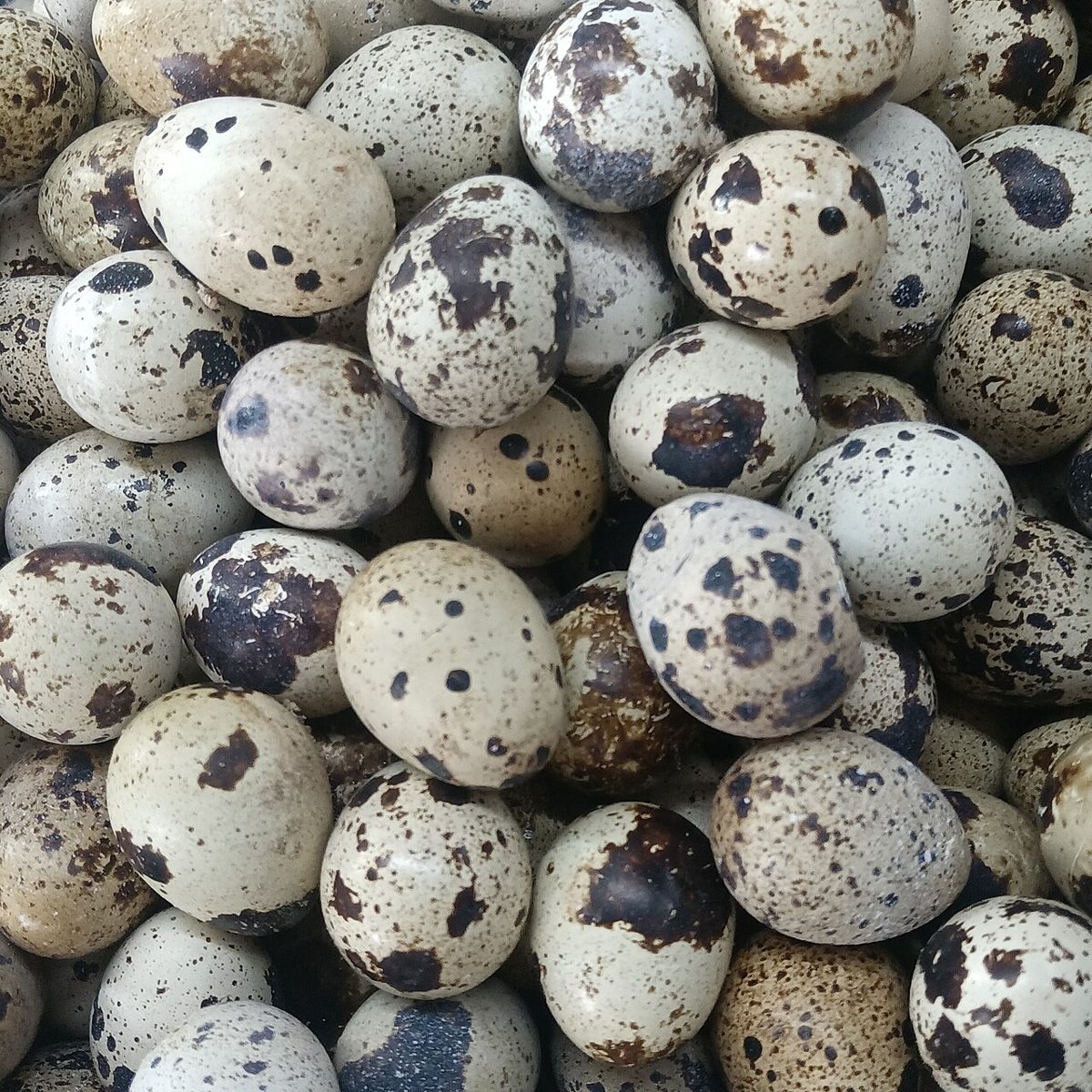

When do coturnix hens start laying?
Cooperative Extension guidance from the University of Kentucky and Delaware State University says Japanese (coturnix) quail mature in about six weeks and can produce eggs by seven weeks. The NSW Department of Primary Industries puts full production at about 50 days of age and expects a well-managed hen to lay around 200 eggs in her first year. Extension adds that hens keep laying economically for at least a year.
Two things control whether those numbers show up in your egg tray:
- Day length. Japanese quail need 14–18 hours of light per day to maintain egg production, according to the same Extension article. In most of the US that means a timer and a small light from early fall to spring.
- Feed. A complete game bird or turkey ration with enough protein and calcium, plus oyster shell on the side. Our guide to what quail eat covers the numbers.
If your hens are old enough and still not laying, the usual suspects are short days, the wrong feed, stress from a move or predator, or a molt. Our checklist on why quail stop laying goes through each one.
| Stage | Typical age | What you will see |
|---|---|---|
| Sexual maturity | About 6 weeks | Males crow; hens fill out |
| First eggs | About 7 weeks | Small, sometimes odd-shaped eggs |
| Full production | About 50 days onward | Close to an egg a day per hen with enough light |
| First laying year | 7 weeks to about 1 year | Around 200 eggs per hen is a realistic target (NSW DPI) |
| Second year | 1–2 years | Fewer eggs; many keepers replace layers |
What a normal quail egg looks like
A standard coturnix egg weighs about 10 grams, roughly 8% of the hen’s body weight, and it takes about five of them to equal one chicken egg. Extension notes that each hen lays her own recognizable shell pattern. NSW DPI adds that shells are often dusted with a light blue, chalky coating and that some strains lay only white eggs. Celadon hens lay blue-green eggs; see our coturnix quail breeds guide for how that trait is inherited.
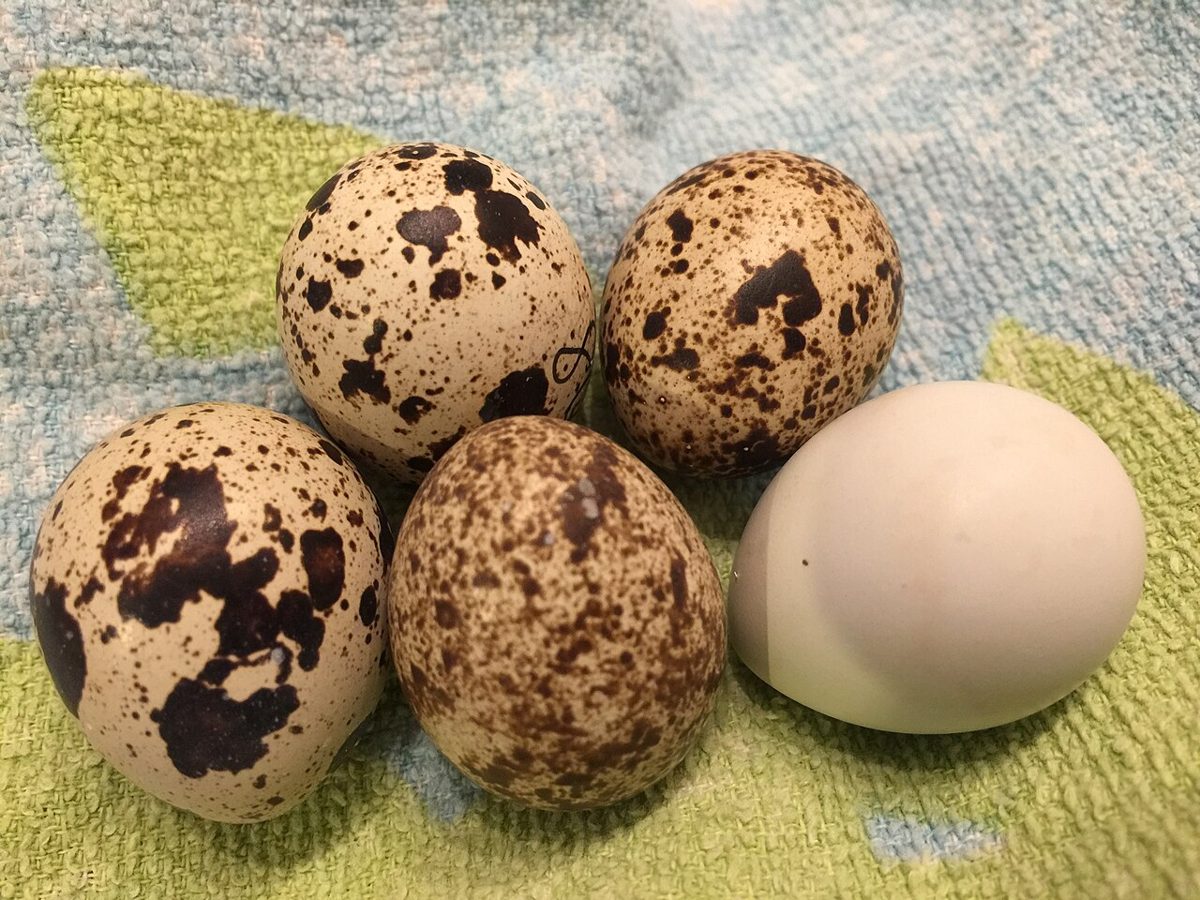

Do not panic over the occasional oddity. Young hens often lay a few small, soft, or misshapen eggs in their first week or two. A pattern of thin shells in adult hens usually points to calcium, heat stress, or age.
How to collect quail eggs
Coturnix are not tidy layers. Extension notes that quail kept in community pens do not build nests; they hide eggs in the litter. Cages with sloped floors that roll eggs to the front keep eggs cleaner and make collection a 30-second job. Our quail housing guide compares roll-out cages, hutches and floor pens.
- Collect at least once a day. Tamil Nadu Agricultural University reports that Japanese quail lay mostly in the evening, so a late-day check catches most eggs. The CDC advises collecting often because eggs left in the pen get dirty or broken.
- Carry a carton or small tray, not your pocket. Quail eggs survive gentle handling but crack if they knock together.
- Check each egg. Throw away any with cracks. The CDC notes that bacteria enter more easily through a cracked shell.
- Dry-clean dirt. The CDC recommends fine sandpaper, a brush or a cloth for dirty eggs, and warns against washing warm, fresh eggs in colder water, which can pull bacteria into the egg.
- Refrigerate eating eggs soon after collection. USDA’s Food Safety and Inspection Service (FSIS) says refrigerated eggs should not sit out for more than 2 hours.
- Wash your hands afterward. Backyard poultry can carry Salmonella even when they look healthy.
Storing eggs for eating vs. for hatching
This is where many beginners mix things up. Eggs you plan to eat and eggs you plan to incubate need different handling.
| Eating eggs | Hatching eggs | |
|---|---|---|
| Temperature | Refrigerator at 40°F or below (FSIS) | About 59°F (15°C); a household fridge is too cold (NSW DPI) |
| Cleaning | Dry-clean only; wash just before use if you must | Never wash; only set clean eggs |
| Position | In a carton, in the main body of the fridge, not the door | Pointed end down in a carton |
| How long | FSIS lists 3–5 weeks for refrigerated raw shell eggs | Set within about 7 days for best hatch rates |
| Cracked eggs | Discard | Discard; cracked eggs hatch poorly if at all |
The FSIS storage times are written for chicken eggs, which is what most US food-safety charts cover. We use them as the practical guide for quail eggs because there is no separate federal chart for quail eggs. Label cartons with the collection date so you always use the oldest first.
If you are saving eggs to hatch, read how to incubate quail eggs before you start collecting. A few days of good storage makes a real difference to how many hatch.
Quail egg nutrition: what the USDA data shows
The table below uses USDA FoodData Central values for raw whole quail eggs and raw whole chicken eggs, per 100 grams. Per-egg figures are rounded and assume about 9 g of edible egg in a quail egg (the USDA serving size) and 50 g in a large chicken egg.
| Per 100 g, raw | Quail egg | Chicken egg |
|---|---|---|
| Calories | 158 kcal | 143 kcal |
| Protein | 13.0 g | 12.6 g |
| Fat | 11.1 g | 9.5 g |
| Cholesterol | 844 mg | 372 mg |
| Iron | 3.65 mg | 1.75 mg |
| Vitamin B12 | 1.58 µg | 0.89 µg |
| Riboflavin | 0.79 mg | 0.46 mg |
| Per egg (approx.) | 14 kcal, 1.2 g protein | 72 kcal, 6.3 g protein |
Two honest takeaways. First, gram for gram, quail eggs carry more iron, B12 and riboflavin than chicken eggs. Second, they are not lower in cholesterol, despite what you will read on some farm sites; USDA data shows more than twice the cholesterol per 100 g. Per egg, one quail egg has far less of everything simply because it is small. Health claims beyond basic nutrition are not well supported, so we do not repeat them here.
How to cook, boil and peel quail eggs
Food-safety guidance from FSIS and the CDC is to cook eggs until both the white and the yolk are firm, and to cook egg dishes to 160°F. Soft and jammy quail eggs are popular in restaurants, but they carry the same Salmonella risk as runny chicken eggs, so skip them for young children, older adults, pregnant women and anyone with a weakened immune system.
Cracking raw eggs. Extension notes that quail shells are harder to crack cleanly than chicken shells, and the inner membrane is tough. Tap the side with a small serrated knife and cut through the membrane, or use quail egg scissors. Crack each one into a small cup first so a bad egg does not ruin the batch.
Hard-cooking. Lower eggs into water that is already boiling, then start a timer. About 4 minutes gives a firm yolk in most standard coturnix eggs; jumbo eggs need a little longer. These are kitchen starting points, not lab numbers, so cook one test egg the first time. Move the eggs straight into ice water.
Peeling. Extension warns that boiled quail egg shells cling to the whites. Its tip: roll the egg to fragment the shell, then peel. FSIS explains that older eggs peel more easily because the white becomes more alkaline as an egg ages, so boil eggs that are a week or two old, not ones laid this morning.
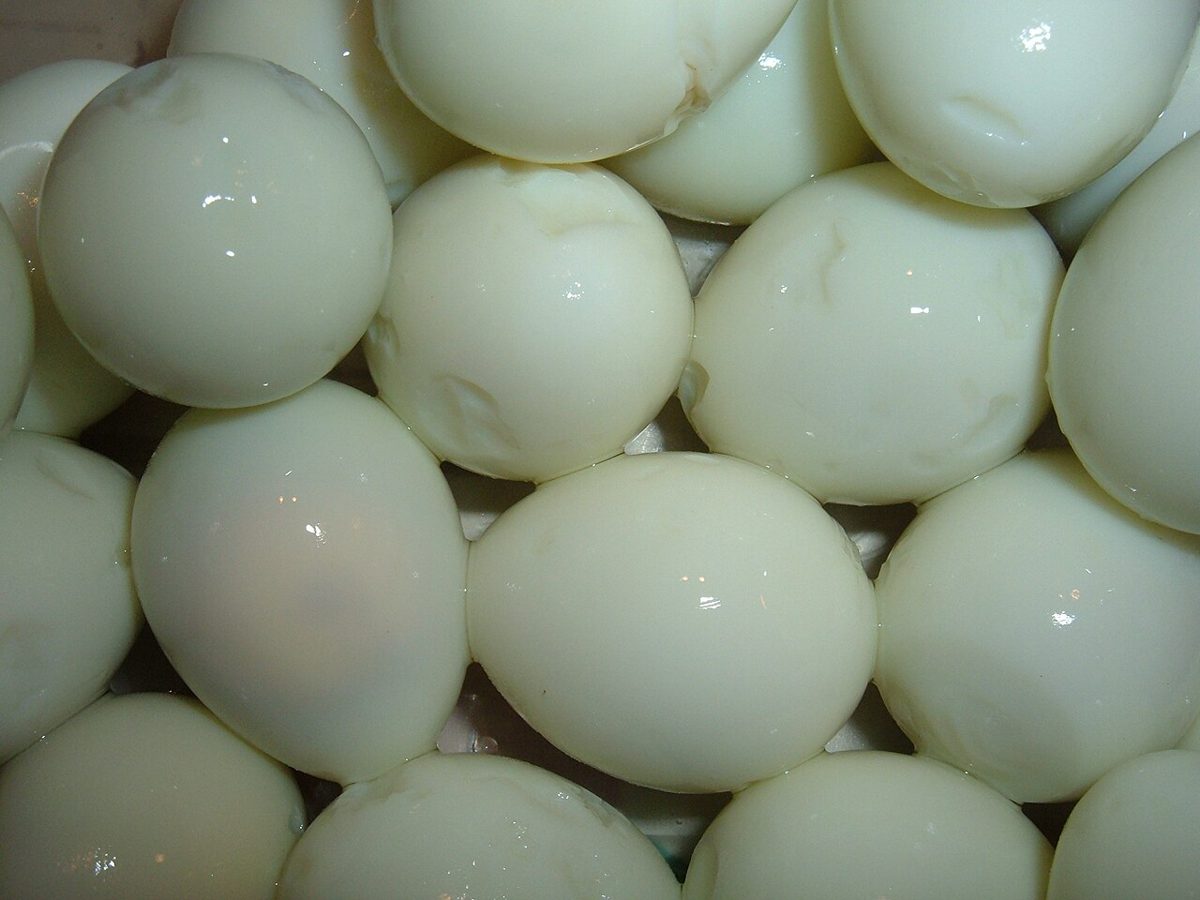

Storing cooked eggs. FSIS says hard-cooked eggs should be refrigerated within 2 hours and used within a week. Home-made pickled eggs must stay refrigerated and be used within 7 days, and FSIS does not recommend home canning of pickled eggs. For a refrigerator recipe, see our pickled quail eggs guide.
Troubleshooting common egg problems
| Problem | Likely causes | What to try |
|---|---|---|
| Laying stopped in fall | Days shorter than 14 hours | Add morning light on a timer to reach 14–16 hours |
| Thin or soft shells | Low calcium, heat, old hens, new layers | Check feed label; offer oyster shell; give shade and cool water in summer |
| Dirty eggs | Wet bedding, eggs buried in litter | Collect more often; consider a sloped roll-out cage floor |
| Eggs pecked or eaten | Crowding, boredom, low protein, broken eggs left in pen | Collect twice daily, remove broken eggs, give more space and correct feed |
| Eggs float in water | Large air cell from age | FSIS: a floater is lower quality but may be safe; crack and check smell and look |
| Blood spot in the yolk | A small vessel broke during ovulation | FSIS: not a safety problem; remove it if you like |
How many eggs will a small flock give you?
As a rough plan, six hens in full lay give you about one chicken-egg equivalent a day (five quail eggs), and a dozen hens give you about two. Production falls if light, feed or temperature slips, and it declines in the second year. If you are deciding how many birds to keep, our raising coturnix quail guide covers flock size, and our breakdown of the cost to raise quail works out what a dozen eggs costs in feed. For month-by-month lighting and heat changes, see our year-round quail care calendar.
Frequently asked questions
Do quail need a male to lay eggs?
No. Hens lay without a male. You only need a male if you want fertile eggs to hatch.
Can you eat fertile quail eggs?
Yes. FSIS notes there is no nutritional difference between fertile and infertile eggs. Collect and refrigerate them the same way as any other eating egg.
Should I wash quail eggs?
Not routinely. The CDC suggests cleaning dirty eggs with fine sandpaper, a brush or a cloth, and warns against washing warm eggs in colder water. Never wash eggs you plan to hatch.
How long do fresh quail eggs last in the fridge?
We follow the FSIS chart for raw shell eggs: 3–5 weeks at 40°F or below. Use the oldest first and crack questionable eggs into a cup before using them.
Why are quail eggs so hard to peel?
The shell and membrane cling to the white, especially in very fresh eggs. Use eggs that are a week or two old, chill them in ice water, and roll them to crack the shell all over before peeling.
Sources
- Jacob, J. and McCrea, B. Raising Japanese Quail in Small and Backyard Flocks. Cooperative Extension (University of Kentucky, Delaware State University).
- Randall, M. and Bolla, G. Raising Japanese Quail. NSW Department of Primary Industries Primefact, republished by The Poultry Site.
- USDA Food Safety and Inspection Service. Shell Eggs from Farm to Table.
- Centers for Disease Control and Prevention. Backyard Poultry: Healthy Pets, Healthy People.
- Tamil Nadu Agricultural University. Quail: Care and Management. TNAU Agritech Portal.
- USDA Agricultural Research Service. FoodData Central, SR Legacy records “Egg, quail, whole, fresh, raw” (FDC ID 172191) and “Egg, whole, raw, fresh” (FDC ID 171287). Search the FDC ID on the site to see the full nutrient list.