
Quick answer: Quail eggs usually fail to hatch for one of five reasons: the eggs were not fertile, they were stored too long or too cold before setting, the incubator ran too hot or too cold, humidity or turning was wrong, or the eggs were opened and chilled at hatch. Break out the eggs that did not hatch and look: clear eggs point to fertility or storage, early deaths to temperature or storage, fully formed chicks that never pipped to low temperature or humidity. Fix the cause the evidence shows, and check your thermometer first.
Why are my quail eggs not hatching? A failed hatch is frustrating, but the eggs that did not hatch are the best clue you have. Missouri Extension’s incubation guide explains how to break them open and read what happened, and NSW Department of Primary Industries gives the egg care and settings that prevent most failures. This guide turns that into a diagnosis chart for coturnix eggs, plus a checklist for your next hatch.

Normal coturnix numbers to compare against
| Item | Normal for coturnix | Source |
|---|---|---|
| Incubation length | 17 days (often 17–18 in practice) | Clemson table in Virginia Tech 4-H manual; NSW DPI |
| Forced-air temperature | 99.5°F (37.5°C) | Clemson table; Missouri Extension |
| Still-air temperature | About 100.5°F at the top of the eggs | Clemson table |
| Stop turning | After day 15 (NSW DPI: day 14) | Clemson table; NSW DPI |
| Egg storage before setting | About 15°C (59°F), not a household fridge; set within 1 week | NSW DPI |
| Drying time after hatch | About 12 hours | Missouri Extension |
Our quail incubation temperature and humidity chart has the full settings day by day.
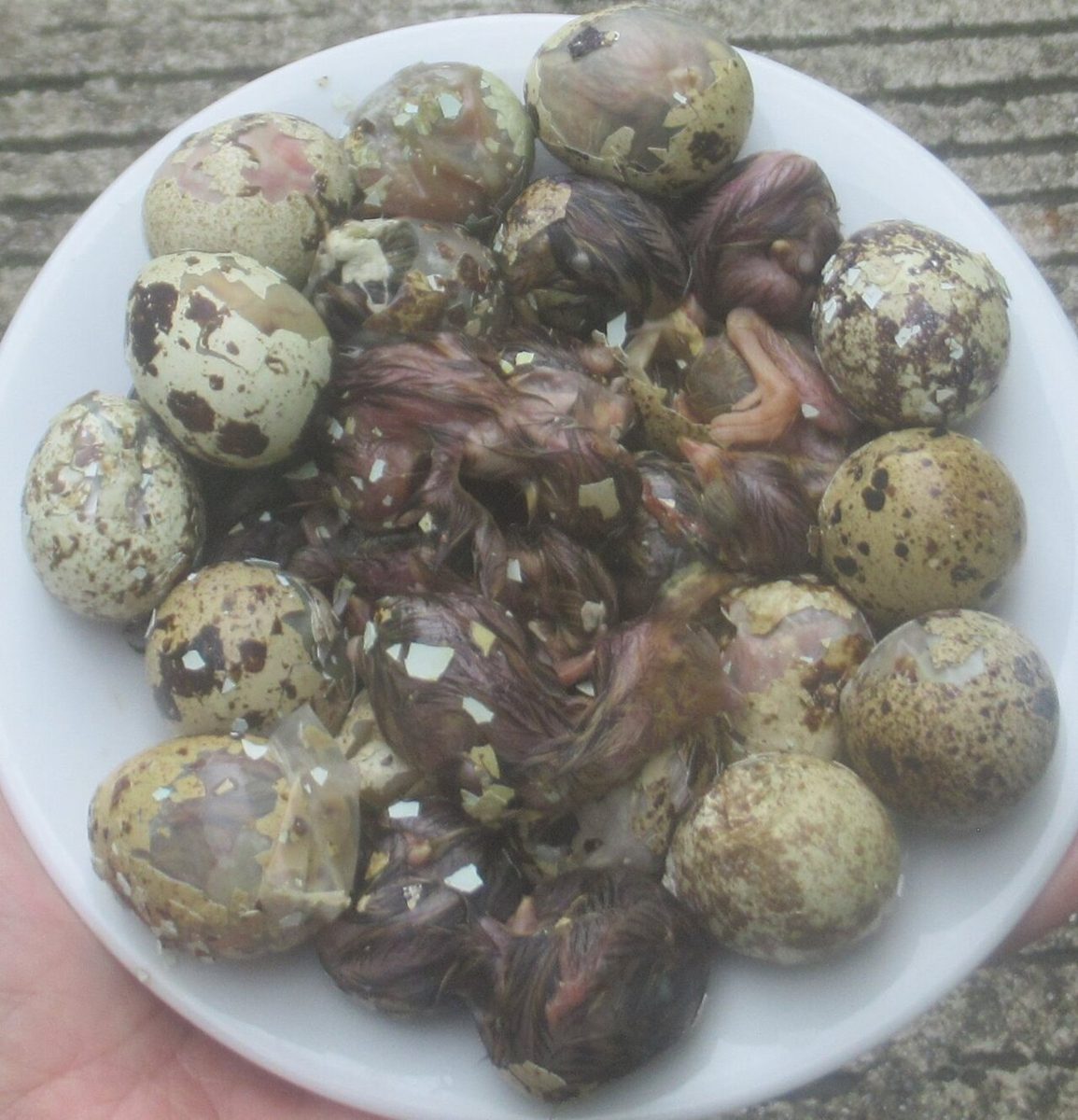
Step 1: Break out the eggs and read them
Wait a day or two past the expected hatch, then open the unhatched eggs onto an old plate outdoors (it can smell). Missouri Extension’s diagnostic signs, applied to quail:
| What you find | What it means | Likely causes |
|---|---|---|
| Clear, no blood ring or embryo | Infertile, or died very early | No male or too few males, old or related breeders, eggs stored too long |
| Blood ring or tiny embryo | Died in the first three days | Incubator problem on days 1–3, poor storage before setting |
| Dead early or mid-term embryo | Died in the first two weeks | Temperature too high or low, poor turning, poor ventilation, breeder nutrition, contamination, poor shells |
| Red-looking embryo | Overheated | Incubator ran hot |
| Fully formed, not pipped | Died just before hatch | Low average temperature, wrong humidity, weak eggs, temperature swings |
| Pipped but did not hatch | Died while hatching | Temperature, ventilation or humidity problems, thin shells, disease |
| Chicks stuck to shell, dry down | Membranes dried out | Humidity too low after pipping started |
| Early hatch, bloody navels | Ran hot | Temperature too high or swinging widely |
Step 2: Match the cause to the fix
Fertility problems (mostly clear eggs)
- Male to hen ratio. NSW DPI says one male with two or three females generally gives high fertility. See our quail breeding ratio guide.
- Age. NSW DPI notes that fertility drops markedly in older birds.
- Relatedness. NSW DPI warns that inbreeding can greatly reduce reproductive performance.
- New males. Missouri Extension says good fertility can be expected within about four days of putting vigorous males with hens in a small flock (a general poultry figure), so do not collect hatching eggs the day a male arrives.
Storage problems (clears and early deaths)
NSW DPI recommends collecting eggs several times a day, storing them at about 15°C (59°F), and setting them within a week; it says a household refrigerator is too cold and that cracked eggs hatch very poorly, if at all. Missouri Extension adds: never store fertile eggs more than two weeks, avoid rapid temperature changes, and do not set dirty, cracked or thin-shelled eggs or eggs with loose air cells. Our incubation guide covers choosing and storing hatching eggs.
Temperature problems (deaths at any stage)
Missouri Extension explains that young embryos are especially sensitive to heat, because the lethal limit is close to the ideal temperature; 105°F for 30 minutes can seriously harm or kill them. Short periods slightly too cold do less harm but slow growth, and older embryos are more sensitive to cold.
- Check the thermometer against a second, trusted one at egg height.
- Keep the incubator in a room away from windows, heaters and drafts.
- Log the temperature morning and evening for the first few days of the next hatch.
Humidity and turning problems (late deaths, stuck chicks)
Missouri Extension says turning prevents membranes sticking and helps the embryo reach hatching position, with days 3 to 7 the most critical. Late deaths and chicks stuck in shells often come back to humidity. For lockdown settings and timing, see our quail lockdown guide.
Step 3: Protect the hatch itself
Missouri Extension warns against opening the incubator often to remove chicks, because it chills and dries the remaining eggs. Leave hatched chicks until they are dry and fluffed, normally about 12 hours, and move them all at once. Chicks that hatch more than 24 hours after the start of the hatch are often weak, according to the same guide, and a long, spread-out hatch usually points to problems throughout incubation, not just on hatch day.
Chicks hatched but have problems
If chicks hatch with splayed legs, curled toes or an unsteady gait, look back at incubator temperature. Missouri Extension links high temperature to chicks with clubbed down and an unsteady gait. Our guide to splayed leg in quail chicks explains the hobble treatment, and quail chick care covers the first weeks.
Checklist for your next hatch
- Breeding group: one male to about two to five hens, birds under a year old
- Eggs collected often, stored around 59°F, set within 7 days
- Clean, uncracked, normal-sized eggs only
- Thermometer checked against a second one at egg height
- Turning at least three times a day, or an automatic turner, until day 14–15
- Lockdown humidity raised and lid kept closed
- Unhatched eggs opened and recorded
Frequently asked questions
How long should I wait before giving up on quail eggs?
Most coturnix hatch on days 17–18. Wait a day or two past that, then candle or open them. Very late hatchers are often weak.
Why are my quail eggs not developing?
Clear eggs with no blood ring are infertile or died very early. Check your male ratio, the birds’ age and how the eggs were stored.
Why did my quail chicks die in the shell?
Fully formed chicks that did not pip usually point to low average temperature, wrong humidity, weak eggs or temperature swings.
Can shipped quail eggs hatch well?
They can, but you cannot control their age or handling before they arrive. Missouri Extension’s storage advice still applies: avoid rapid temperature changes, never hold fertile eggs more than two weeks, and do not set cracked eggs or eggs with loose air cells.
Is it normal for some quail eggs not to hatch?
Yes. Even good hatches leave some eggs behind. A pattern, such as many clears or many late deaths, is what tells you something to fix.
Sources
- Missouri Extension. Incubating Eggs (G8353).
- Randall, M. and Bolla, G. Raising Japanese Quail. NSW Department of Primary Industries Primefact, republished by The Poultry Site.
- Virginia Cooperative Extension. Beginning of Life (4-H 408-029), including Clemson University’s incubation table.