
Quick answer: Quail fighting is almost always male aggression: too many males, males maturing under long days, crowding, or mixing birds that do not know each other. The most reliable fix is fewer males. A study of breeding groups found that changing barriers, light intensity, age of introduction or the number of hens did not reduce attacks between males, and 12.5–20% of males had to be removed for head injuries, while single-male groups of 8–20 hens had no serious injuries. Keep one male per group, give spare males about 8 hours of light, add space and cover, and separate any bird that is bleeding.
Why are my quail fighting? If you are asking, you probably have a bird with a bald, scabbed head or a male chasing everyone in the pen. Coturnix are small and look gentle, but males are territorial, and a pen that was peaceful at four weeks can turn violent at seven. This guide explains why it happens, what research says actually works, and a step-by-step plan to stop it. For treating the head wounds themselves, see quail scalping.
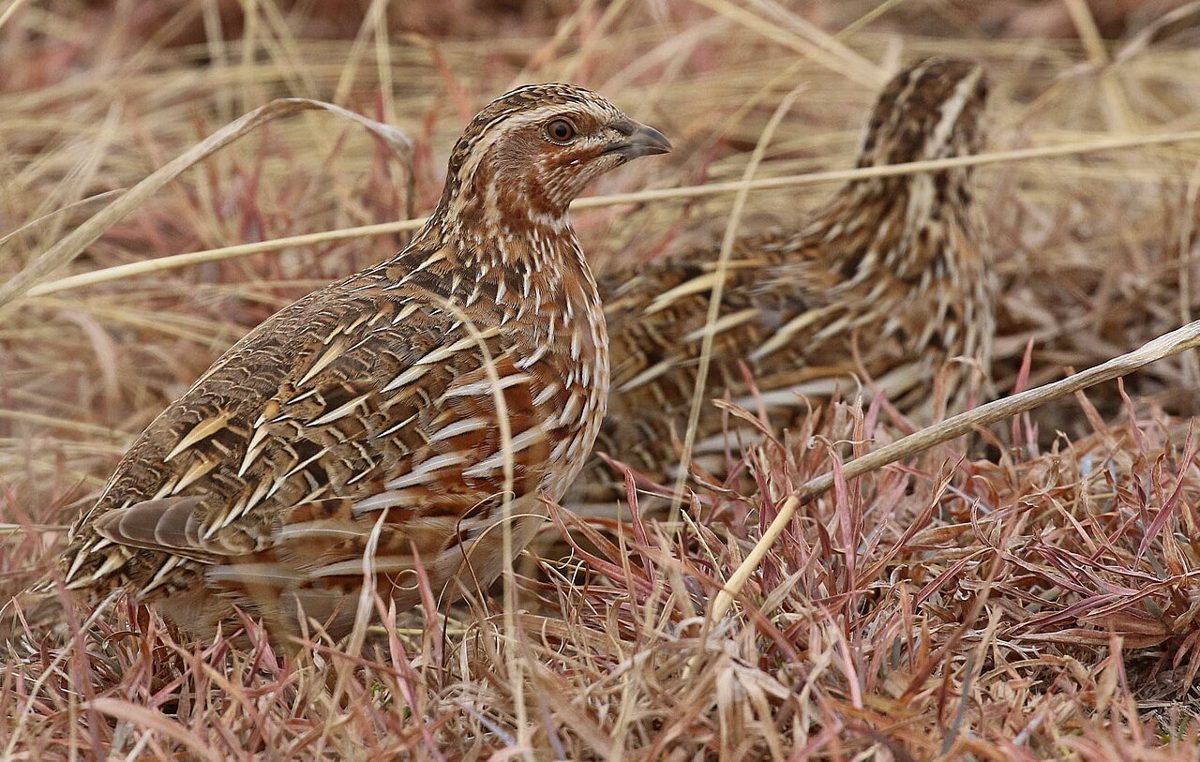

Why quail fight
- Males competing. NSW Department of Primary Industries describes Japanese quail as territorial and says that a ratio of one male to three females in colony pens “reduces fighting among males.”
- Sexual maturity. Cooperative Extension explains that 8 hours of light a day is not enough to start sexual maturity, so males kept on short days do not waste energy fighting and mating. Long days switch that behavior on.
- New birds. NSW DPI notes that quail defend their home against intruders and advises combining groups in an unfamiliar cage or pen.
- Crowding and boredom. Texas A&M AgriLife Extension and NSW DPI link pecking and cannibalism to crowding, bright light and poor ventilation.
What the research says about males in groups
The clearest study we found is Wechsler and Schmid (1998, British Poultry Science). They kept breeding groups with two, three or five males and tested five changes: visual barriers, age at which birds were put together, hens per five males, males per 14 hens, and light intensity.
| Finding | Result |
|---|---|
| Effect of the five changes on aggressive pecking between males | None was significant |
| Males removed for serious head injuries | 20%, 17.5% and 12.5% in the three multi-male experiments |
| Single-male groups with 8, 12, 16 or 20 hens | No males seriously injured |
| Fertile eggs in those single-male groups | 92%, 84%, 77% and 69% |
| Authors’ conclusion | Multi-male breeding groups cannot be recommended for welfare reasons |
The practical lesson: you cannot decorate or dim your way out of a pen with several males. Cutting to one male per group works; extra hens per male cost some fertility, as the numbers show. Our quail breeding ratio guide compares other studies.
Fighting or mating?
Not every scuffle is a fight. A male mating a hen grabs the feathers on her head or neck, and with a pushy male the hens can end up with bald patches; that is a keeper observation rather than a research finding. Fighting looks different: two males squaring up, repeated chasing of one bird, pecking at the head and eyes, and blood.
| What you see | Most likely | First step |
|---|---|---|
| Two males sparring, chasing | Male competition | Remove or separate extra males |
| One hen bald on the back of the head, others fine | Rough mating | Rest her apart or add hens |
| One bird pecked raw by many | Bullying or cannibalism | Separate the victim at once |
| Scabbed tops of heads after a scare | Flushing into the roof, not fighting | Soft or higher roof |
| Feather pulling across the flock | Crowding, light, boredom | More space, lower light, things to peck |
Scalped heads after a fright are usually caused by birds jumping into a hard ceiling rather than by fighting. Our quail health guide covers wound care and other injuries.
Step-by-step plan to stop quail fighting
- Separate injured birds now. Blood draws more pecking. Keep the victim alone until fully healed.
- Count and sex your birds. Our guide to telling coturnix males from females shows the breast feathers and the foamy vent gland of males.
- Cut to one male per group. Put spare males in the freezer, rehome them, or house them apart. If you raise meat birds, this is the moment to process extras; see when to butcher quail.
- Shorten the day for spare males. NSW DPI and Extension both say males not needed for breeding can be given about 8 hours of low-intensity light per day.
- Add space and cover. Check your numbers against how many quail per square foot. Add hides, low cover or cut branches; SPCA New Zealand recommends giving quail places to hide and rest.
- Lower light intensity and give them things to peck. NSW DPI lists lower light intensity, fewer birds per pen and extra fibre and grit as measures against feather picking. Texas A&M suggests clumps of foliage or leafy alfalfa hay.
- Reintroduce carefully. When birds go back together, use a cleaned or unfamiliar pen so nobody owns the territory.
Can you keep male quail together?
Sometimes, as a bachelor pen on short days, but expect squabbles once days lengthen. The breeding-group study above found serious injuries even with visual barriers and dim light. If you try it, watch daily, keep the pen roomy and remove any male that keeps drawing blood. Most backyard keepers have fewer problems by keeping only the males they need.
Troubleshooting
| Problem | Likely cause | Fix |
|---|---|---|
| Fighting started at 6–8 weeks | Males maturing | Separate males; 8-hour light for spares |
| Fighting after adding birds | Territory | Combine in an unfamiliar pen |
| One male attacks everyone | Individual temperament | Remove him |
| Hens bald, males fine | Too few hens per male | Add hens or rest the hens |
| Pecking even with one male | Crowding, bright light, boredom | More space, dimmer light, forage |
| Wounds keep reopening | Victim returned too soon | Wait for full healing |
Frequently asked questions
Why are my female quail fighting?
Hens squabble less than males, but crowding, bright light, boredom and new birds can start pecking. Add space and cover, dim the light and separate any injured bird.
How many male quail can live together?
There is no safe number for breeding groups. Wechsler and Schmid found serious head injuries in groups with two to five males; single-male groups had none.
Will quail stop fighting on their own?
Sometimes after a pecking order settles, but with several mature males it often escalates. Do not wait if blood is drawn.
Does reducing light stop quail fighting?
Shorter days help spare males: Extension and NSW DPI say 8 hours of light keeps them from maturing. In breeding groups, the study above found light intensity alone made no difference.
Should I put the injured quail back?
Only after the wound has fully healed, and preferably by putting the whole group into a cleaned or unfamiliar pen.
Sources
- Wechsler, B. and Schmid, I. 1998. Aggressive pecking by males in breeding groups of Japanese quail (Coturnix japonica). British Poultry Science 39(3):333–339.
- Randall, M. and Bolla, G. Raising Japanese Quail. NSW Department of Primary Industries Primefact, republished by The Poultry Site.
- Cooperative Extension. Raising Japanese Quail in Small and Backyard Flocks.
- Thornberry, F. D. Producing Quail for Home Consumption (L-5215). Texas A&M AgriLife Extension.
- SPCA New Zealand. Caring for quail.