
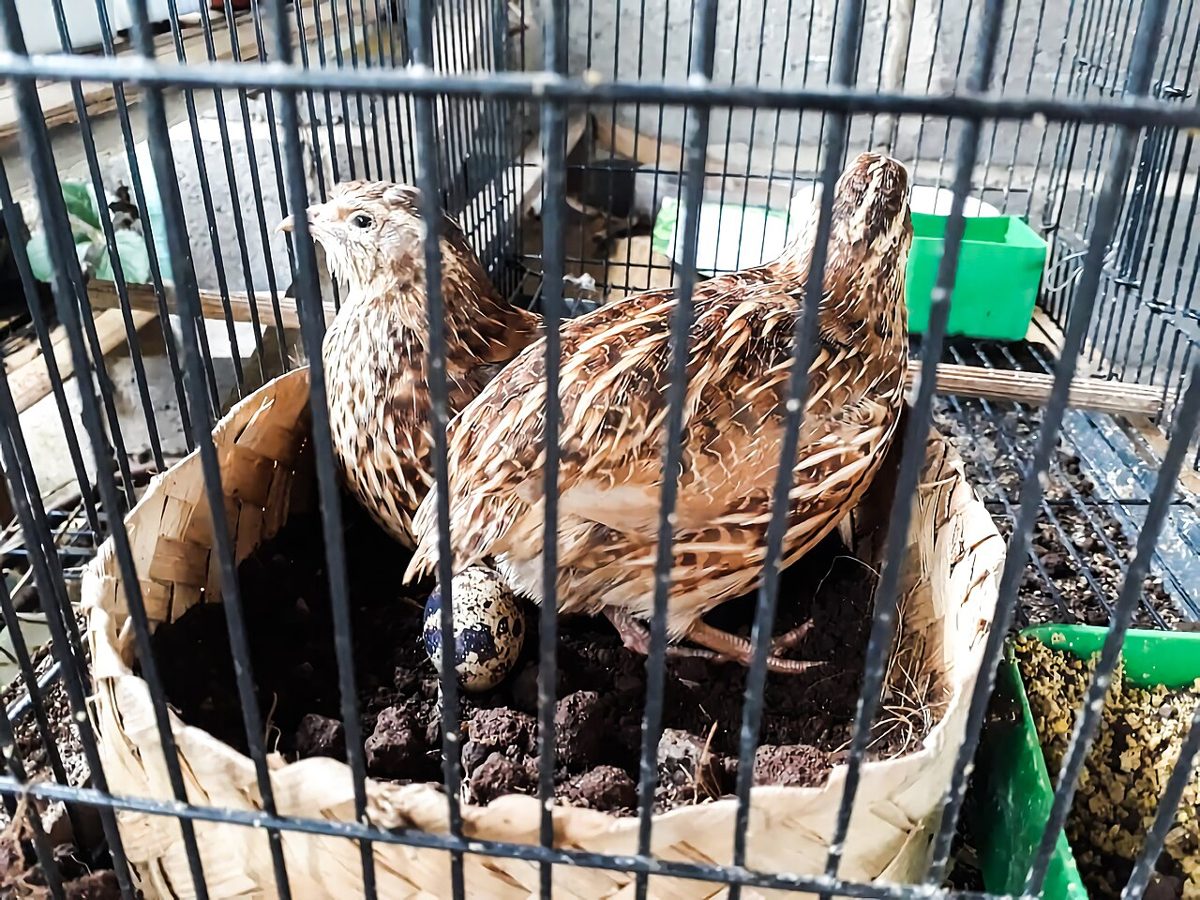
Quick answer: To tell coturnix quail male vs female, look at the breast first. On Pharaoh and other wild-colored birds, males have an even rusty-brown breast and hens have a tan breast with black speckles, visible from about 3–4 weeks. For white and other solid colors, wait until about 6 weeks: males crow and have a swollen foam gland above the vent, and hens start laying eggs.
Coturnix quail male vs female is the first big question in every new flock, usually around week three, when the chicks stop looking identical. Getting it right matters. Too many males means crowing, chasing and torn hens; too few means infertile eggs. This guide covers the five ways to sex coturnix, when each one works, which colors you can and cannot sex by feathers, and how to do a vent check safely.

The five ways at a glance
| Method | What to look for | Earliest age | Works on | Reliability |
|---|---|---|---|---|
| 1. Breast feathers | Male: even rusty-brown breast. Female: tan breast with black speckles | About 3–4 weeks | Pharaoh, jumbo Pharaoh and other wild-pattern colors | High on well-marked birds |
| 2. Vent and foam gland | Male: red, swollen bulb above the vent that gives white foam. Female: no bulb, no foam | About 5–6 weeks | All colors | High once birds are mature |
| 3. Crowing | Loud, repeated call | About 6 weeks | All colors | A crow is close to proof of a male |
| 4. Size | Females are heavier | Trend from about 2 weeks | All colors | A hint only |
| 5. Eggs | An egg in the pen from a single bird | About 6–7 weeks | All colors | Proof of a female |
Method 1: Breast feathers
This is the easiest and fastest method, and it is the one most keepers use. Cooperative Extension describes the adult female as having light tan feathers on the throat and upper breast with black stippling, and the male as having rusty brown throat and breast feathering. NSW Department of Primary Industries and ICAR-CCARI in India describe the same pattern.
When can you see it? A 1966 study in Poultry Science noted that the difference does not become obvious until the contour feathers come in at about 2 to 3 weeks of age. Researchers in Egypt who checked 827 chicks found feather sexing was about 95% accurate at 24 days (about 3.5 weeks). Tamil Nadu Agricultural University reports that wild-colored birds can be sorted at about 4–5 weeks. In practice:
- Start looking at about 3 weeks, in good daylight.
- Look at the upper breast, just below the throat.
- Speckles or spots on a pale breast mean a hen. A plain, warm, rusty breast with no spots means a male.
- Mark birds you are unsure of (a dab of nail polish on a toe, as NSW DPI suggests) and check again a week later.
Trust the breast; the back and wings look much the same in both sexes.
Which colors can be feather-sexed?
Feather sexing depends on the wild breast pattern. The 1966 Poultry Science paper notes that in some color mutants, such as albinos, the feathers stay identical in both sexes even after maturity. Here is how the common US varieties usually behave. This is our summary of how much breast pattern each color shows, not a breed standard:
| Variety | Feather-sexable? | Notes |
|---|---|---|
| Pharaoh (wild type), jumbo Pharaoh | Yes | The classic choice for easy sexing |
| Italian or golden (Manchurian) | Usually, on well-marked birds | Pattern is paler; look closely at the breast spots |
| Rosetta, red-brown types | Often | Depends on how much wild pattern remains |
| Tibetan, dark or chocolate | Hard | Dark feathers hide the speckles |
| Tuxedo | Hard | The white bib hides the breast pattern |
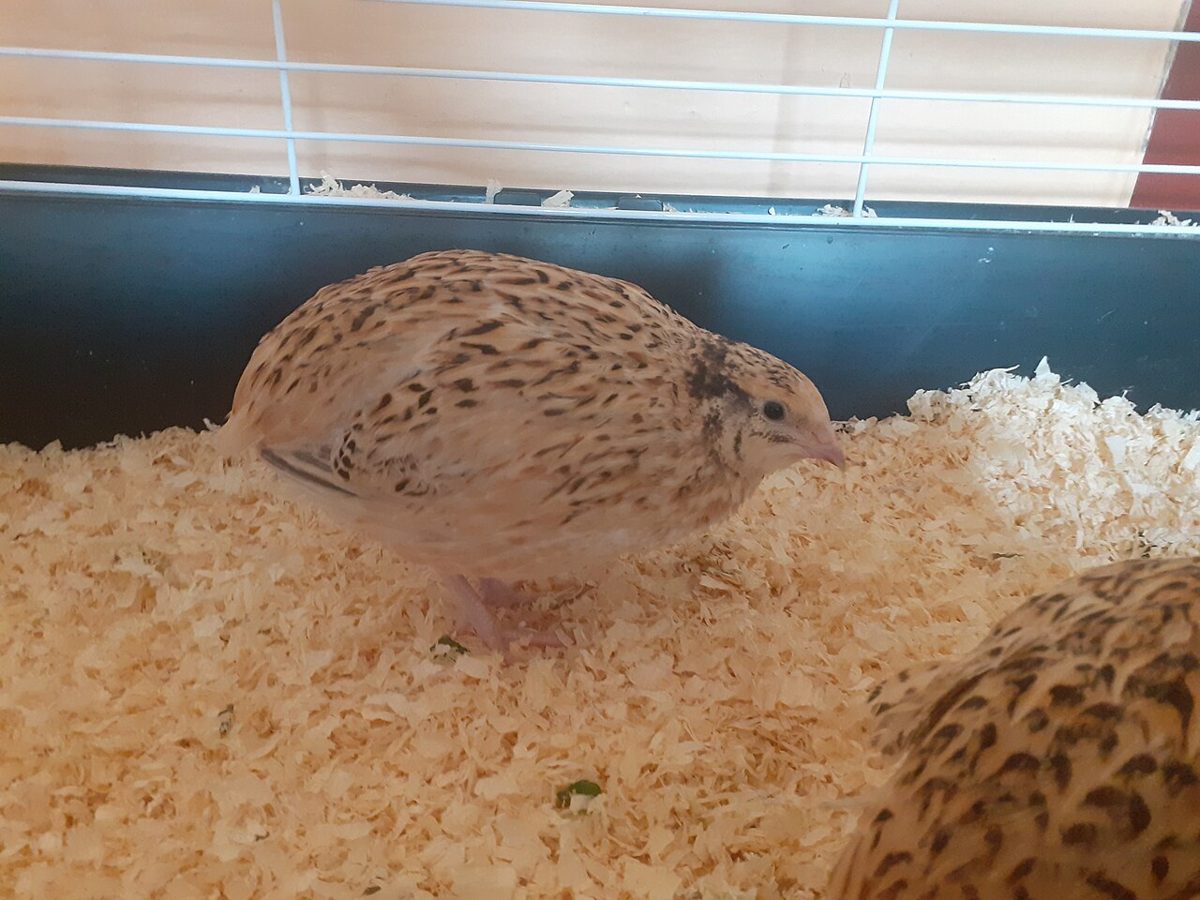
| Texas A&M, jumbo white, English white | No | Use the vent, crowing or eggs |
| Celadon (egg color) | Depends on feather color | Celadon is an egg-color gene, not a feather color |
Names vary between sellers, so judge your own birds. Our guide to coturnix quail breeds explains each variety.

Method 2: The vent check
The vent check works on every color, but only on mature birds. Cooperative Extension explains that the sexually mature male has a cloacal gland that looks like a bulbous structure at the upper edge of the vent and secretes a white, foamy substance. NSW DPI adds that this gland can be used to judge a male’s reproductive fitness. Research published in Poultry Science in 1975 by Siopes and Wilson describes the gland as an external indicator of testicular development, and the 1966 paper used its growth to sex color mutants from about 4 weeks.
How to check a bird safely:
- Work over a table or a soft towel in case the bird slips.
- Hold the quail on its back in one hand, with its legs between your fingers. Do not squeeze the breast or belly; quail are fragile.
- Use your other thumb to gently part the feathers around the vent.
- Male: you will see a swollen, rounded bulb at the upper edge of the vent. A gentle press on the bulb usually brings out white foam that looks like shaving cream.
- Female: the area is flat, with no bulb and no foam.
- Keep it to a few seconds, then put the bird back.
A few cautions. A young male’s gland is small before about 6 weeks, so “no foam” on a 4-week-old bird proves nothing. A male that has just mated may give little foam. And any swelling, blood or crusting around the vent is a health question, not a sexing one; see our quail diseases guide.
Methods 3–5: Crowing, size and eggs
Crowing. Males start crowing around sexual maturity, which Extension puts at about six weeks. The call is loud and repeated, very different from a hen’s quieter chirps. Our guide to coturnix quail behavior describes the calls and courtship in more detail.
Size. Hens are a little heavier. Extension lists males at 100–140 grams and females at 120–160 grams, and Alabama Extension’s growth table shows females ahead from about 4 weeks (100 g versus 90 g). A Turkish study found that heavier, longer chicks were more likely to be female from week 2, but warned that size never gives certainty. Use size to make an educated guess, not a final call.
Eggs. Extension says Japanese quail can produce eggs by seven weeks. If you isolate a bird overnight in a small pen and find an egg in the morning, you have a hen.
Can you sex day-old quail chicks?
Not reliably at home. Vent sexing of day-old chicks is a hatchery skill that takes long training, and a review published in the Fayoum Journal of Agricultural Research notes it is unsuitable for most small flock owners. For most keepers, waiting until 3–6 weeks is the honest answer.
What to do once you know
- Laying flock: keep hens only. Hens lay without a male.
- Breeding flock: keep one male with a small group of hens. Research cited by NSW DPI supports one male to two or three hens for high fertility; many keepers use one to four or five. See quail breeding ratio.
- Extra males: move them out before they start fighting. Extension recommends only about 8 hours of light for males not kept for breeding and for meat birds, because that is not enough to trigger sexual maturity. Many keepers raise extra males for the table; our guide to raising quail for meat covers that path.
Troubleshooting
| Problem | Likely reason | What to do |
|---|---|---|
| A “hen” crowed | Pattern misread, or a pale male | Re-check the breast and vent; move him out |
| No eggs from “hens” at 9–10 weeks | Short days, poor feed, or some are males | Vent-check, then see why quail stop laying |
| All birds look the same at 3 weeks | Solid or dark color variety | Wait for 6 weeks and use the vent, crowing or eggs |
| Bald, bloody hens’ heads and backs | Too many males | Remove males until hens recover; see why quail fight |
| Unsure after the vent check | Bird too young or just mated | Check again in a week |
Frequently asked questions
At what age can you tell male and female coturnix apart?
On wild-colored birds, usually at about 3–4 weeks from the breast feathers. For white and other solid colors, wait until about 6 weeks for the vent check, crowing or eggs.
Do female quail crow?
No. Hens call, but the loud, repeated crow is a male trait. If a bird crows, treat it as a male.
Do female quail have the foam gland?
No. The foam-producing cloacal gland is a male feature. Hens have a flat vent area with no bulb and no foam.
Can Texas A&M or white coturnix be feather-sexed?
No. Solid white birds have no breast pattern to read. Use the vent check from about 6 weeks, listen for crowing, or wait for eggs.
How many males should I keep?
None for eggs only. For fertile eggs, one male per two to five hens, depending on how much crowing and over-mating you can accept.
Sources
- Jacob, J. and McCrea, B. Raising Japanese Quail in Small and Backyard Flocks. Cooperative Extension.
- Randall, M. and Bolla, G. Raising Japanese Quail. NSW Department of Primary Industries Primefact, republished by The Poultry Site.
- ICAR-Central Coastal Agricultural Research Institute. Japanese Quail.
- Tamil Nadu Agricultural University. Quail: Care and Management. TNAU Agritech Portal.
- Identification of Sex of Day-Old Quail (Coturnix coturnix japonica) by Cloacal Examination. 1966. Poultry Science 45(3):469–472.
- Siopes, T. D. and Wilson, W. O. 1975. The Cloacal Gland: An External Indicator of Testicular Development in Coturnix. Poultry Science 54(4):1225–1229.
- Results of Two Morphological Practical Methods for Sex Determination in Japanese Quail. 2005. Fayoum Journal of Agricultural Research and Development 19(1).
- Sex Determination of Japanese Quails Using Zoometric Measurements. 2017. Turkish Journal of Agriculture: Food Science and Technology 5(9):1002–1005.
- Alabama Cooperative Extension System. Feeding Game Birds: Pheasant, Quail, and Partridge (ANR-1343).