
Quick answer: How to candle quail eggs: take a few eggs at a time into a dark room, hold a bright LED candler against the fat (air cell) end, and tilt the egg slowly. Candle at about day 7 to spot clears and early deaths, and again at day 14 just before lockdown. A developing egg shows a dark spot with red, spider-like veins; a clear egg shows only the yolk shadow; a dark blood ring means the embryo started and died. Keep each egg out briefly, the batch out for no more than 5 minutes, and when in doubt, leave the egg in.
Knowing how to candle quail eggs saves your hatch from rotten eggs and tells you why a hatch failed. It is harder than candling chicken eggs: coturnix shells are small and heavily speckled, so the early signs that are obvious in a white chicken egg can hide under the spots. This guide covers the tools that work on speckled shells, a day-by-day guide to what you should see, how to read the air cell, how to spot blood rings and late deaths, and what your results say about your incubator and breeders.
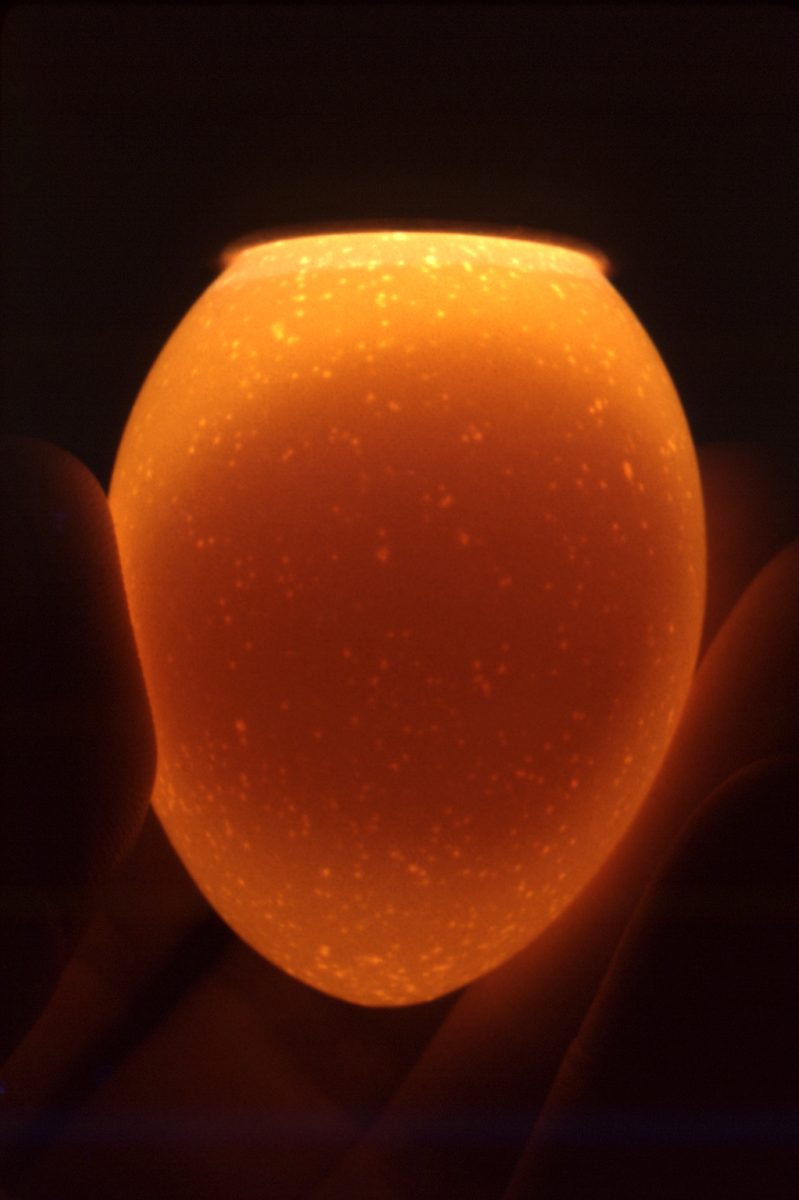

Why candle quail eggs at all?
- Remove clears and dead eggs. University of Maine Extension says infertile and early-dead eggs, including blood rings, should be removed. Dead eggs can rot and contaminate the others.
- Check humidity. Missouri Extension notes that candling shows the air cell, and that a too-large air cell means you need more humidity, a too-small one less.
- Diagnose problems. The pattern of clears, blood rings and late deaths points to fertility, storage or incubator faults.
- Plan the hatch. Knowing how many eggs are developing tells you how much brooder space you need.
You do not have to candle often. Illinois Extension’s incubation training suggests candling once between days 6 and 10, and only a few eggs if your main goal is live chicks. Each extra check adds handling and cooling.
What you need
| Tool | Why it matters for quail |
|---|---|
| Bright LED candler or high-lumen flashlight | Speckled quail shells need more light than chicken eggs |
| Your fingers or a soft collar around the light | Seals light so it goes through the egg, not around it |
| Dark room | Even a lamp in the room washes out the view |
| Pencil (not marker) | Mark clears, unsure eggs and dates |
| Clean, dry hands | Protects the shell coating and limits germs |
| Notebook or phone | Record day, result and egg count |
A phone flashlight works for a first look, but a dedicated LED candler with a narrow opening that fits small eggs is much easier on coturnix. UMaine also describes a homemade box candler: a box with a 60-watt bulb inside and a one-inch hole in the end near the bulb.
How to candle quail eggs, step by step
- Get the room dark and set the candler on a stable surface.
- Wash and dry your hands.
- Take out only a few eggs at a time. Illinois Extension says not to keep eggs out of the incubator for more than 5 minutes.
- Hold the egg with the fat end against the light, where the air cell sits. Tilt and rotate slowly.
- Look for veins, a dark embryo spot, movement and the air cell line.
- Mark the egg in pencil: a tick for developing, an X for clear, a ? for unsure.
- Return eggs quickly in the same position.
- Remove only eggs you are sure are clear or dead. Recheck “?” eggs a few days later.
- Write down your counts for each check.
Do not candle during lockdown. Opening the incubator after day 14 or 15 drops humidity just when chicks are getting ready to pip. See our quail lockdown guide.
Quail egg candling timeline: what you should see
Coturnix usually hatch in about 17 to 18 days. The day counts below treat the day you set the eggs as day 0. Speckling varies, so treat the timing as a guide.
| Day | What to expect | What to do |
|---|---|---|
| 1–4 | Little or nothing visible on speckled shells | Don’t candle yet; it’s too early to judge |
| 5–7 | Dark spot with thin red veins spreading out, like a spider; maybe movement | First check: mark clears and blood rings |
| 8–10 | Thicker web of veins; dark mass gets bigger | Optional check; good for unsure eggs |
| 11–13 | Egg darker; veins harder to see | Usually no check needed |
| 14 | Mostly dark except the air cell; you may see movement near its edge | Final check; remove dead eggs, then lockdown |
| 15–18 | Lockdown and hatch | Do not open the incubator |
UMaine describes the late picture the same way: toward the end of incubation, the egg looks dark except for the air cell as the embryo fills the egg, and you may see movement. It also says candling will not hurt embryo development or hatching.
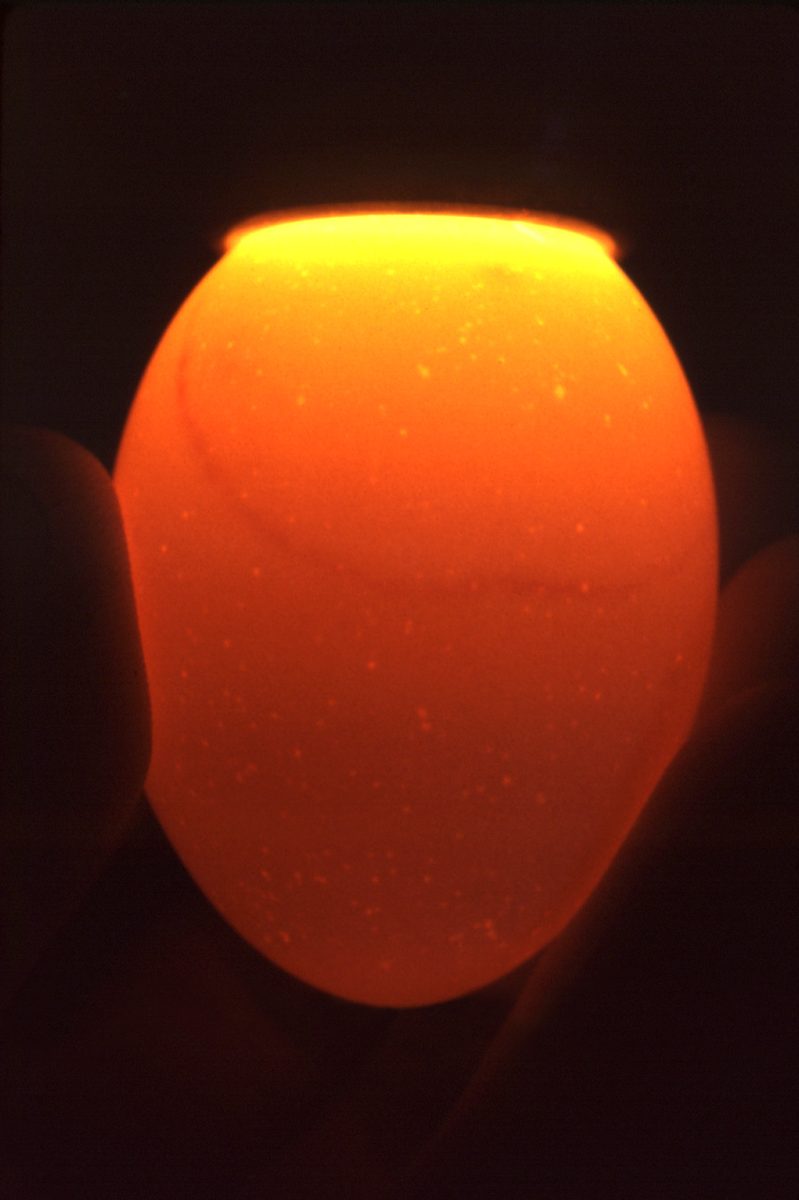

How to read what you see
| What you see | What it means | Action |
|---|---|---|
| Reddish, spider-like veins around a dark spot | Fertile and developing | Return to incubator |
| Even glow with only the round yolk shadow | Clear: infertile or died very early | Remove after a second look |
| A dark ring or loop inside the shell | Blood ring: embryo started, then died | Remove |
| A dark blob with no veins at day 10 or later | Probably dead | Recheck in 2–3 days, then remove |
| Mostly dark at day 14 with a sharp air cell line | Healthy late embryo | Lockdown |
| Cloudy or murky egg, bad smell or oozing | Rotting egg | Remove at once, wash hands |
| Air cell that wobbles or moves when you turn the egg | Loose air cell, often from shipping | Keep still; hatch is less likely |
UMaine says a blood ring shows as a black loop extending down from the bottom edge of the air space, and means the egg was fertile and the embryo started to develop, then died. Missouri Extension says clear eggs with a formed blood ring or small embryo point to death in the first three days, often from incubator problems in days 1 to 3 or poor storage before setting.
Reading the air cell
The air cell should grow steadily as the egg loses moisture. UMaine’s bulletin includes a drawing of normal air cell sizes at 7, 14 and 18 days. In practice:
- Day 7: a small cap at the fat end.
- Day 14: clearly larger than at day 7.
- At hatch: large, with a slanted lower edge as the chick turns toward it.
If the air cell barely grows, the eggs are losing too little water, so lower humidity. If it grows very fast, raise it. Weighing eggs is a more precise check; our quail incubation temperature and humidity guide explains how.
Candling dark and speckled quail eggs
- Use the brightest light you have and a candler opening that fits small eggs.
- Darker room, longer look. Give your eyes a minute to adjust.
- Look through the pale patches between speckles.
- Rotate the egg so the embryo spot moves into view.
- Wait until day 7 or later for dark eggs.
- Blue (celadon) and white eggs are easier to read than heavily speckled ones; see our celadon quail guide. UMaine also notes embryos show more easily in white or light-colored eggs.
- When unsure, leave the egg in and check again at day 14.
What your candling results tell you
Track the share of clears and early deaths. UMaine’s troubleshooting table links them to these causes:
| Result | Possible causes (UMaine) |
|---|---|
| Many clears, no blood rings | Male problems (too old, not fertile, or too many males fighting); eggs stored below 40°F, too old or chilled before gathering |
| Clears with blood rings | Incubator too hot; eggs stored below 40°F or above 80°F; eggs stored too long; rough handling or shipping; breeder feed low in vitamins |
| Dead embryos just before pipping | Later-incubation problems with turning, humidity or temperature |
For fertility fixes, see quail breeding ratio. For whole-hatch failures, see why quail eggs don’t hatch.
Shipped quail eggs
UMaine notes that well-packed, clearly labeled shipped eggs have hatched at rates of up to 90 percent, but mailed eggs often suffer breakage or floating air cells from being shaken in transit. Candle shipped eggs before setting to check for hairline cracks and air cells that move.
Troubleshooting
| Problem | Likely cause | Fix |
|---|---|---|
| Can’t see anything | Light too weak, room too bright, too early | Brighter LED, darker room, wait until day 7 |
| Every egg looks “clear” at day 5 | Speckles hide early veins | Recheck at day 7–10 before removing |
| An egg you removed was alive | Removed too early | Recheck unsure eggs; when in doubt, leave it in |
| Temperature drops after candling | Lid open too long | Fewer eggs at a time; 5 minutes at most |
| Smelly or weeping egg | Rotting | Remove at once and clean the area |
| Hairline crack found | Handling or shipping | UMaine reports some success covering cracks with tape, but bacteria can still get in |
Frequently asked questions
When should I candle quail eggs?
Around day 7 for the first check and day 14 before lockdown. One check between days 6 and 10 is enough if you prefer to handle the eggs less.
Can candling hurt quail embryos?
UMaine says candling will not hurt embryo development or hatching. The risks are cooling and rough handling, so work quickly and gently.
What does an infertile quail egg look like when candled?
It glows evenly with only the round shadow of the yolk and no veins or dark spot.
What is a blood ring in a quail egg?
A dark ring or loop inside the shell. It means the embryo started to develop and then died, usually early.
Can I candle during lockdown?
No. Keep the incubator closed after day 14 or 15 to hold humidity.
What candler is best for quail eggs?
A bright LED candler with a small opening that fits quail eggs. Speckled shells need more light than chicken eggs.
Sources
- University of Maine Cooperative Extension. Incubating Eggs (Bulletin #2072e).
- University of Missouri Extension. Incubating Poultry Eggs (G8353).
- University of Illinois Extension (Koelkebeck). Incubation and Embryology.
- NSW Department of Primary Industries (Randall and Bolla). Raising Japanese quail, via The Poultry Site.
- Images: CDC Public Health Image Library (Dr. Joseph McDade), via Wikimedia Commons. They show chicken eggs, which read the same way.