
Quick answer: The most common quail beginner mistakes are: chicks drowning in open water, a brooder that is too hot or too cold, feeding low-protein chicken feed, overcrowding, too many males, a hard low roof that causes head injuries, chicken wire instead of hardware cloth, too little light for laying, wet or dirty bedding, buying birds before checking local rules, and mixing new birds without quarantine. Most are cheap to prevent: marbles in the waterer, a thermometer at chick level, 24%+ protein game bird feed, about 1 square foot per adult, 1 male to 3–5 hens, a soft roof, 1/4-inch hardware cloth and 14–18 hours of light.
Quail beginner mistakes are usually small decisions that cost birds weeks later: an open water dish on day one, a cage that was fine for six chicks but not for six adults, or one extra male “just in case”. Coturnix grow fast, so a problem in week one shows up as losses by week three. This guide lists the mistakes new keepers make most often, why each one matters, and the fix, with a checklist you can run before your first birds arrive.
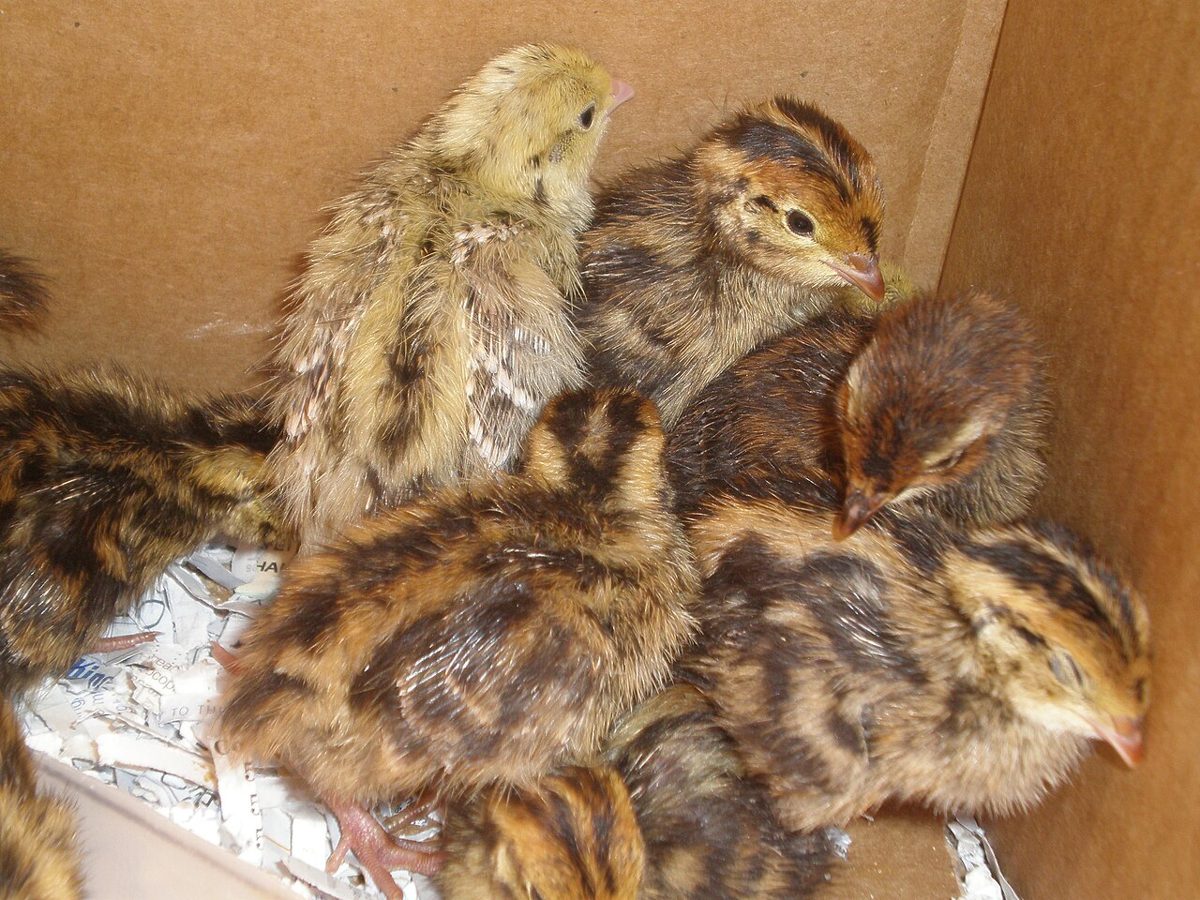

The 15 biggest quail beginner mistakes at a glance
| Mistake | What happens | Quick fix |
|---|---|---|
| 1. Open water for chicks | Chicks drown or get chilled | Marbles or pebbles in the tray for the first 1–2 weeks |
| 2. Wrong brooder heat | Piling, chilling or overheating | About 95°F at chick level in week 1, then down about 5°F a week |
| 3. Square corners and no guard | Chicks pile up and smother | Round corners, brooder guard |
| 4. Low-protein chicken feed | Slow growth, poor feathering | 24–30% protein game bird or turkey starter |
| 5. Layer feed for chicks | Too much calcium for growing birds | Starter until about 5–6 weeks |
| 6. Overcrowding | Fighting, feather loss, dirty birds | About 1 sq ft per adult in cages |
| 7. Too many males | Scalped and bald hens, fighting | 1 male to 3–5 hens, or all-female groups |
| 8. Hard, high roof | Head injuries from vertical flight | Soft or flexible roof, at least 12 in of headroom |
| 9. Chicken wire | Raccoon and weasel losses | 1/4-inch welded hardware cloth, buried or with a floor |
| 10. Too little light | Hens don’t start or stop laying | 14–18 hours of light a day |
| 11. Wet, dirty bedding or no droppings tray | Ammonia, foot problems, disease | Dry litter, scheduled cleaning |
| 12. No quarantine for new birds | Disease enters the flock | Quarantine at least 2–4 weeks |
| 13. Escapes when opening cages | Birds flush and are gone | Open cages slowly, work inside a closed room or run |
| 14. Skipping the legal check | Fines or forced rehoming | Check city, HOA and state rules first |
| 15. No plan for extra males | Too many roosters crowing and fighting | Plan to sell, separate or harvest them |
Brooder mistakes
1. Letting chicks drown
Cooperative Extension says young quail tend to drown in shallow water and recommends a screen over the waterer or small marbles in the water trays for the first week or two. NSW Department of Primary Industries suggests a jar-base or mini chick drinker filled with pebbles or marbles, removed once the chicks reach about one week.
2. Getting the temperature wrong
Start at about 95°F at chick level in week one, then lower it about 5°F a week until the chicks are fully feathered at around 5–6 weeks. Measure at chick height, not at the top of the brooder, and watch behavior: huddling under the heat means cold; birds spread to the edges and panting means hot. Our week-by-week brooder temperature chart has the full schedule.
3. Square corners and startle piles
Extension notes that startled chicks crowd on top of one another and smother the birds underneath. It recommends rounded corners and brooder guards for the first week or two, removed once chicks begin to fly so none get stranded on the wrong side.
4. Slick floors
Newspaper or slick plastic can splay chicks’ legs in the first days. Use paper towels, rubber shelf liner or rough paper over litter for the first week.
Feeding mistakes
5. Feeding chicken feed to chicks
Quail chicks need much more protein than chickens. Extension guides recommend about 24–30% protein for coturnix chicks, while most chicken starter is 18–20%. See our quail feed protein guide.
6. Feeding layer feed too early
Layer feed carries a lot of calcium for eggshells. Growing chicks should stay on starter or grower until hens are close to laying, at about 5–6 weeks. Then switch layers to a game bird layer ration and give oyster shell on the side.
7. Running out of feed or water
Quail eat and drink constantly and a small feeder empties fast. Check twice a day in hot weather, use a feeder with a lip or grid to reduce waste, and keep a backup waterer.
Housing mistakes
8. Overcrowding
Plan on about 1 square foot per adult coturnix in a cage or hutch, and 2 square feet or more in a ground pen. Commercial cages pack birds much tighter, but those are production minimums, not good backyard welfare. See how many quail per square foot.
9. A hard, tall roof
Quail flush straight up when startled. The RSPCA warns that this vertical escape flight can cause serious, sometimes fatal head injuries. Its guidance is at least 30 cm (12 inches) of headroom with a soft or flexible roof, plus cover so birds feel safe. Read our quail scalping guide for how to fix a scalped bird.
10. Chicken wire
Chicken wire keeps quail in but not raccoons out, and quail are small enough that a raccoon can pull them through wide mesh. Use 1/4-inch welded hardware cloth on every side, since weasels can squeeze through larger holes, a solid floor or buried apron, and latches a raccoon can’t open. Our predator-proof coop guide has the details.
11. Letting droppings build up
Quail produce a lot of manure for their size. Without a pull-out tray or dry litter changed often, ammonia builds up, feet cake with droppings and disease follows. Plan cleaning before you buy birds, not after.
Flock mistakes
12. Keeping too many males
Too many males means fighting, scalped heads and hens with bare backs. Use 1 male to 3–5 hens, or keep all-female groups for eggs. Our quail breeding ratio guide explains the research.
13. Too little light
Extension says Japanese quail need 14 to 18 hours of light a day to maintain egg production. Meat birds and males not kept for breeding can get only 8 hours, which reduces fighting and mating. Many beginners buy hens in fall and wonder why they never start laying.
14. Mixing new birds straight in
New birds can bring disease and set off fights. Quarantine them away from your flock for at least two weeks, and longer if you can; USDA’s biosecurity workbook suggests 30 days. Then introduce them gradually. See how to introduce new quail.
15. Opening the cage carelessly
Quail flush fast and don’t come home like chickens. Open cages slowly, keep a hand over the gap, and do cage work inside a garage or closed run.
Planning mistakes
- Skipping the legal check. Rules vary by city, HOA and state. Check before you buy; our quail legality guide shows how.
- Not planning for extra males. About half of hatched chicks will be males. Decide in advance whether you will sell, separate or harvest them.
- Buying the wrong type. Jumbo strains are bred for meat; smaller strains often lay well. Pick by goal.
- Expecting quail to act like chickens. Quail are flighty, rarely tame, and don’t free-range safely.
- Underestimating noise. Males crow. Hens are quiet.
Extension also notes that quail are fairly disease resistant. Most losses in beginner flocks come from management problems like these, not mystery illnesses.
Before-you-buy checklist
- Local rules checked (city, HOA, state).
- Brooder set up and holding temperature for 24 hours.
- Thermometer at chick height.
- Marbles or pebbles in the chick waterer.
- Game bird starter, 24% protein or more.
- Non-slip floor for the first week.
- Adult housing ready: about 1 sq ft per bird, soft roof, hardware cloth.
- Light timer for 14–18 hours.
- Quarantine space for any new birds.
- A plan for extra males.
Troubleshooting
| Problem | Likely beginner mistake | Fix |
|---|---|---|
| Chicks piled in corners | Cold brooder or square corners | Check temperature at chick level; round corners |
| Chicks wet and chilled | Open water dish | Add marbles; dry chicks under heat |
| Slow-growing, ragged chicks | Low-protein feed | Switch to 24–30% game bird starter |
| Bloody heads | Hard roof or aggressive male | Soft roof; remove extra males |
| Hens bald on the back | Too many males | Widen the ratio or split the males |
| No eggs at 10 weeks | Short days | Add light to reach 14–18 hours |
| Birds missing overnight | Predator through mesh or a gap | Hardware cloth and secure latches |
Frequently asked questions
What is the most common mistake with quail chicks?
Drowning in open water, closely followed by wrong brooder heat. Use marbles in the waterer and a thermometer at chick level.
Can quail eat chicken feed?
They can survive on it, but chicks grow better on 24–30% protein game bird or turkey starter.
How much space do quail need?
About 1 square foot per adult in a cage, and 2 square feet or more in a ground pen.
How many males should I keep?
One male for every 3–5 hens, or none if you only want eggs.
Are quail easy for beginners?
Yes, if you set up the brooder, housing and feed correctly from the start. Most early losses come from setup mistakes, not disease.
Do quail need light to lay?
Yes. Extension says 14–18 hours a day keeps them laying.
Sources
- Cooperative Extension (Jacob, University of Kentucky; McCrea, Delaware State University). Raising Japanese Quail in Small and Backyard Flocks.
- NSW Department of Primary Industries (Randall and Bolla). Raising Japanese quail, via The Poultry Site.
- RSPCA. Quail: Good practice for housing and care.
- Mississippi State University Extension. Brooding Chickens and Quail (Information Sheet 1338).
- Alabama Cooperative Extension System. Feeding Game Birds: Pheasant, Quail, and Partridge (ANR-1343).
- USDA APHIS. Defend the Flock biosecurity workbook.