
Quick answer: Introducing new quail safely takes three stages. First, quarantine new birds well away from your flock for 30 days, as USDA advises, to catch disease. Second, house them side by side behind wire for 5 to 7 days so both groups get used to each other. Third, mix them in a cleaned, rearranged pen with more space, extra feeders and hiding spots, ideally at dusk, and watch closely for a few days. Add hens, not males, and add several birds at once. Remove any bird that keeps attacking or gets scalped.
Introducing new quail to an existing flock is one of the riskiest jobs in quail keeping. Coturnix form a pecking order, and a newcomer can be chased, scalped or killed within hours, while new birds can also bring disease that wipes out the old flock. This guide gives a step-by-step plan that handles both risks, explains which introductions work and which rarely do, and shows what to do when things go wrong.
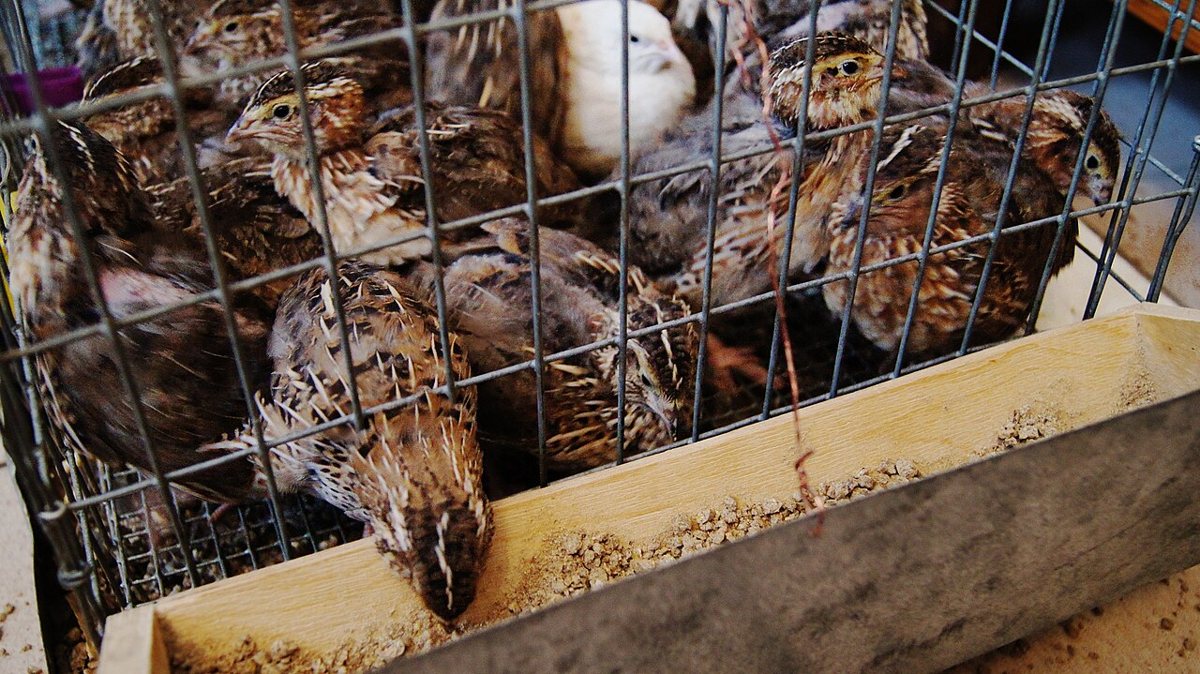

Why introductions go wrong
The RSPCA’s good practice guide for quail housing is blunt: quail form stable pecking-order hierarchies, and adding new individuals to established groups or mixing groups will lead to aggression. It advises forming groups before sexual maturity, with enough space and enrichment, to prevent aggression.
For backyard keepers that means two things:
- The safest flock is one raised together from chicks. If you can, plan hatches so new birds grow up as their own group.
- When you must mix, reduce the reasons to fight: competition for space, food, water, mates and hiding places.
Disease is the second risk. Cooperative Extension’s small-flock biosecurity guide warns that new birds can carry disease even when they look healthy, because they may have recovered from an illness and remain carriers. It recommends not adding birds at all if you can avoid it, and quarantining for at least two weeks if you must. USDA’s Defend the Flock biosecurity workbook goes further and says to quarantine new additions for 30 days.
Which introductions work best
| Introduction | Success odds | Notes |
|---|---|---|
| Young birds (6–8 weeks) into a hen group | Good once close in size | USDA advises waiting until birds are about the same size; still watch for bullying |
| Several hens into a hen group | Fair to good | Add at least 2–3 at once so no single bird takes all the pecking |
| Hens into a group with one male | Fair | The male may welcome hens; resident hens may not |
| A single new hen | Poor | All attention lands on one bird |
| A new male into a group with a male | Poor | Fights are likely; usually avoid |
| Two groups of adults merged | Fair if done carefully | Merge into a new, larger pen |
| Chicks into adults | Poor | Wait until chicks are fully feathered and close in size |
The ratio still matters after mixing. RSPCA guidance says the male-to-female ratio in mixed groups should never be more than 1 to 4. See quail breeding ratio for ratios for breeding.
Step 1: Quarantine (at least 30 days)
- Set up a separate cage as far from your flock as practical, ideally in another building, so birds do not share air, dust, water or droppings.
- Care for the quarantine birds last each day, with separate shoes or boot covers and your own feeder and waterer for them.
- Watch for signs of illness: sneezing, eye or nose discharge, swollen faces, diarrhea, lameness, feather loss, mites or lice. Check vents and under wings.
- Treat parasites if you find them, and wait until the birds are clear.
- Do not add birds that get sick, even if they seem to recover. Talk to a vet or your state diagnostic lab instead.
Many quail guides suggest 2 to 4 weeks, and Extension’s minimum is two weeks. This guide uses USDA’s 30 days, because some infections, such as mycoplasma, can be slow to show. USDA also says not to let birds that had respiratory signs in quarantine join the flock, even if they recover, and to check your original birds daily after mixing, because the stress can bring out hidden illness. Buying from NPIP sources lowers the risk but does not replace quarantine; see NPIP certification for quail.
Step 2: See but don’t touch (5–7 days)
- Put the new birds’ cage right next to the flock’s pen, separated by wire or mesh, so they can see and hear each other but not peck.
- Give each side its own food and water.
- Watch behavior. Curiosity and some posturing through the wire are normal. Constant charging at the divider means wait longer.
- Swap a little bedding between sides near the end of this stage so each group smells familiar to the other.
Step 3: Mix in a reset pen
- Clean and rearrange the pen before you mix. Move feeders, waterers and hides so no bird “owns” its old spots.
- Add space. A bigger pen, or the same pen with fewer birds, cuts fights. See how many quail per square foot.
- Add extra feeders and waterers, at least one more of each than usual, spaced apart.
- Add hiding spots and visual barriers: grass tufts, upturned boxes, wooden A-frames or a leaning board.
- Add a dust bath as a distraction; see quail dust bath setup.
- Mix at dusk or in low light, when birds are calmer, and put all newcomers in at the same time.
- Scatter a little feed or treats on the floor to give everyone something else to do.
- Watch for the first hour, then check several times a day for 3 to 5 days.
What is normal and what is not
| Behavior | Normal? | Action |
|---|---|---|
| Brief chasing and a few pecks | Yes, pecking order forming | Watch |
| Birds standing tall, chest to chest, then one backs off | Yes | Watch |
| One bird chased constantly, cannot eat or drink | No | Remove the victim or the bully |
| Blood on heads or backs | No | Separate injured birds at once |
| A bird hiding in a corner all day | Warning sign | Check it is eating; give more cover |
| Repeated mounting of new hens by a male | Common | Check hens’ backs and heads for wounds |
Blood attracts more pecking. Remove injured birds immediately and treat wounds before they return. Our guide to quail scalping covers wound care, and why are my quail fighting covers ongoing aggression.
Introducing a new male
Bringing in a new male to refresh breeding lines is the hardest introduction, because males fight each other and resident hens may gang up on a stranger. The safer way is to build a new group around him rather than add him to an old one:
- Quarantine him for 30 days like any new bird.
- Remove the old male first, if you are replacing him, and give the hens a few days without a male.
- Move the male and 3 to 4 hens into a fresh, rearranged pen together, rather than putting him into the hens’ home pen.
- Watch the hens’ heads and backs for the first week. Some feather loss from mating is normal; open wounds are not.
- Never put two adult males into one small breeding pen. If you need two males, give each his own group.
A new male’s fertility takes time to show. Collect eggs for incubation only after he has been with the hens for at least a week or two, and check fertility by candling at about day 7; see how to candle quail eggs.
A sample introduction timeline
| Week | Stage | What you do |
|---|---|---|
| 1–4 | Quarantine | Separate building, separate tools, daily health check, treat parasites |
| 5 | Side by side | Cages next to each other, swap a little bedding at the end of the week |
| 6, day 1 | Mix | Clean and rearrange the pen, add feeders and hides, mix at dusk |
| 6, days 2–7 | Watch | Check several times a day; separate any bird with a wound |
| 7 onward | Settled | Return to normal routine; keep the extra feeder for another week |
If the flock is calm by the end of week 6, you are done. If the same bird keeps getting picked on, see the next section.
If it still fails
The RSPCA advises removing the aggressor if it is just one bird and reviewing husbandry. In practice:
- Remove the main bully for a few days, then return it; it often loses rank and calms down.
- Add more space and cover, then try again.
- Keep the groups separate. Two stable groups are better than one bloody one.
- For males, accept that some will never mix. Keep them with their own hens, rehome them, or process them.
Introducing quail to other birds
Mixing quail with chickens adds disease and injury risks. See can quail live with chickens before you try it.
Troubleshooting
| Problem | Likely cause | Fix |
|---|---|---|
| New hen scalped within hours | Single newcomer, small pen | Separate; reintroduce with 2–3 others in a reset pen |
| Fights at the feeder | Too few feeders | Add feeders and waterers |
| Newcomers lose weight | Being kept from food | Add stations; watch at feeding time |
| Flock sneezing a week after mixing | Disease brought in, quarantine too short | Isolate sick birds; call a lab; quarantine 30+ days next time |
| Males fighting nonstop | Two males competing | Separate males |
| Egg laying dropped | Normal stress after mixing | Wait 1–2 weeks; keep conditions steady |
Frequently asked questions
How long should I quarantine new quail?
USDA’s Defend the Flock workbook says 30 days; Extension’s minimum is two weeks. Use a separate area and separate equipment.
Can I add one new quail to my flock?
It often goes badly, because one newcomer takes all the pecking. Add two or three at once.
Can I introduce a new male quail?
Adding a male to a group that already has a male usually causes fights. Add hens instead.
What age is best to introduce quail?
Young birds of about 6 to 8 weeks, fully feathered and close in size to the residents, usually mix best.
Why do my quail attack new birds?
Quail keep a pecking order; a newcomer upsets it. Space, extra feeders and cover reduce fighting.
Should I introduce quail at night?
Mixing at dusk or in low light helps, because birds are calmer, but still check them early the next morning.
Sources
- RSPCA Research Animals Department. Quail: Good practice for housing and care, 4th edition, 2011.
- Cooperative Extension. Biosecurity for Small Poultry Flocks.
- USDA APHIS Defend the Flock. Biosecurity Workbook.
- Cooperative Extension. Mycoplasmas in Poultry.