
Quick answer: Quail noises and meanings, for coturnix: the loud three-part “crow” is a male advertising for hens; soft, rolling chirps and trills are hens and contented birds keeping in touch; a fast, high “cricket” or purring call often comes from hens and from birds settling; sharp, rapid notes mean alarm; and loud, constant peeping from chicks means cold, hunger or separation. Researchers have described about 28 call types in Japanese quail. If a quiet flock suddenly goes silent or screams, check for a predator, a stuck bird or heat.
Quail noises and meanings are worth learning, because coturnix talk all day and their calls tell you a lot about how the flock is doing. Most guides online describe wild American quail such as bobwhite, California or Gambel’s quail, which sound completely different from the Japanese quail most backyard keepers raise. This guide is about coturnix: what each common sound is, who makes it, what it usually means, and what, if anything, you should do.
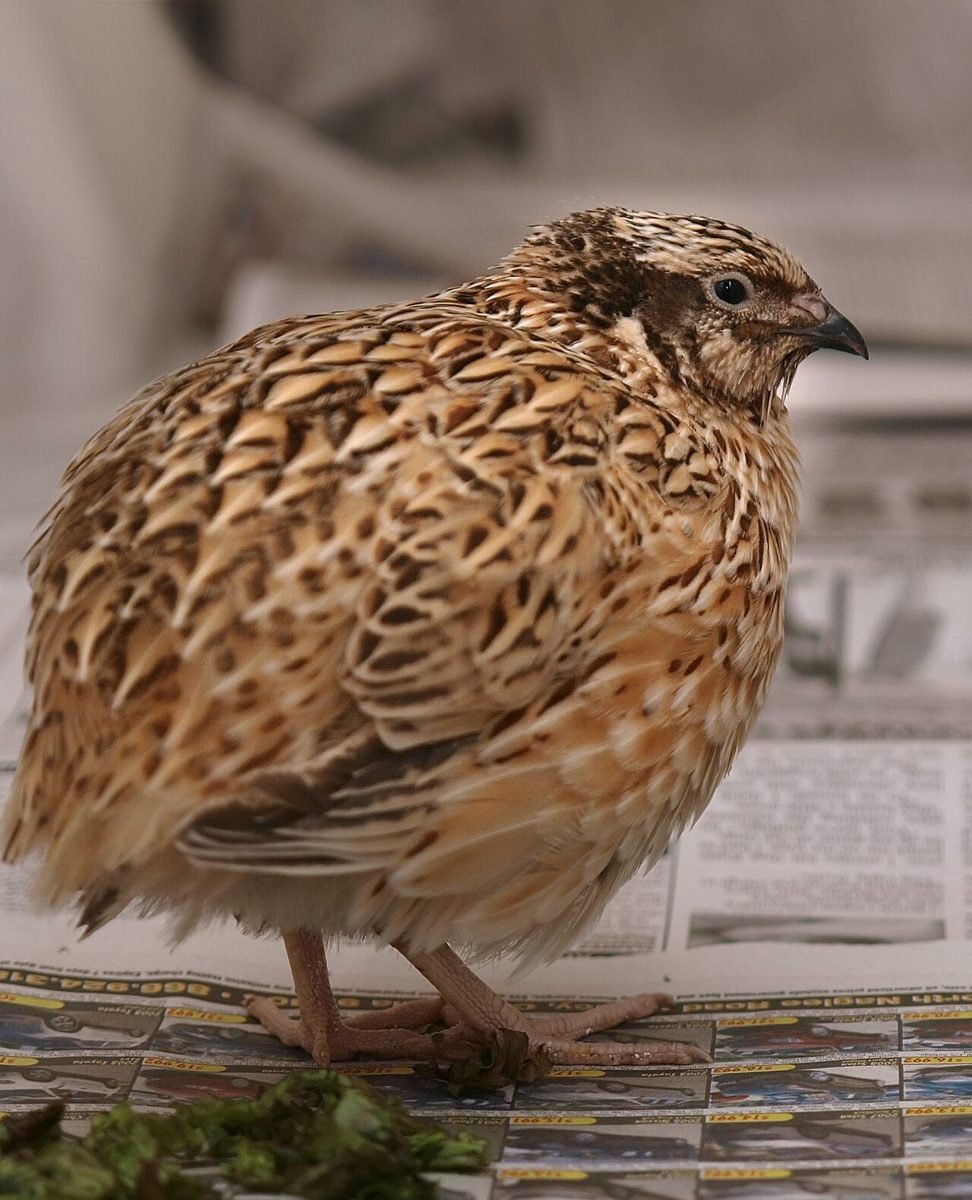

How quail communicate
Japanese quail have a large vocal repertoire. Wikipedia’s Japanese quail article, summarizing the research literature, says about 28 call types have been distinguished, that males and females use different calls in response to the same situation, and that most calls appear by about five weeks of age but stay changeable until sexual maturity.
A 2010 study by Sébastien Derégnaucourt in PLoS ONE adds three useful facts:
- Japanese and European quail share a common repertoire of calls used in different social and sexual situations. Only the male crow differs between them.
- Call structure in quail develops mostly under genetic control, not by learning, so your birds will make the same sounds whether or not they hear other quail.
- The Japanese quail’s crow is individually distinctive, which may help birds recognize each other.
Coturnix sounds and what they mean
| Sound | Who makes it | What it usually means | What to do |
|---|---|---|---|
| Loud three-part crow (“wee-wee-weeeer”) | Mature males | Advertising for hens, claiming space | Nothing; reduce males if noise is a problem |
| Soft chirps and short trills | Both sexes | Contact and contentment | Nothing |
| Purring, cricket-like rapid trill | Often hens; settling birds | Calm, often near nest or dust bath | Nothing |
| Low, rapid clucks while scratching | Both, often males to hens | Food found (“tidbitting”) | Nothing |
| Sharp, rapid notes, birds freeze or flush | Any adult | Alarm: predator, hawk shadow, sudden noise | Check for predators and secure the pen |
| Shrill scream or squeal | Bird being grabbed or attacked | Pain or panic | Check immediately |
| Loud, repeated peeping | Chicks | Cold, hungry, thirsty or separated | Check brooder heat, water and feed |
| Soft, quiet twitter | Chicks | Comfortable | Nothing |
| Hissing or growling sounds | Defensive or broody birds | Threat display | Give space |
Names like “cricket call” are keepers’ words. Different breeders describe the same sounds differently, so listen to your own flock and match the sound to what the birds are doing.
The male crow
The crow is the sound new keepers notice first. Derégnaucourt describes the Japanese quail crow as three syllables, or three parts separated by silences, with a rhythm different from the European quail’s calls. Wikipedia describes it as two short parts followed by a final, major trill.
What the research says about crowing:
- It attracts females. Derégnaucourt notes that quail live in grassland where they cannot see far, so partners use sound to find each other, and that crow playback has clear effects on female sexual behavior.
- It affects hens’ development. Wikipedia cites research showing that young females exposed to male crowing reach sexual maturity earlier than those that are not.
- Paired and unpaired males crow differently. Differences in crow patterns have been observed between males with mates and unmated males. Keepers often notice that a lone male, or a male that can hear but not reach hens, crows the most.
How loud is a coturnix crow?
Louder than you would expect from a bird this size, but much quieter than a rooster. It carries across a small yard and through walls. If neighbors are close:
- Keep the fewest males you need; hens alone are quiet. See how to tell males from hens.
- Keep each male with hens. A male with company usually crows less than a lone male.
- Keep males on shorter days if they are not breeding. Cooperative Extension recommends 8 hours of light for males not kept for breeding and for meat birds.
- House birds in a garage or shed at night.
- Check local rules; some towns treat quail like poultry. See is it legal to keep quail.
Hen sounds
Hens make many soft sounds: chirps, rolling trills and a quick, purring “cricket” call that many keepers hear when hens are calm, dust bathing or about to lay. They do not crow. A hen that suddenly calls loudly and repeatedly may be separated from the group or stressed, so check that she has not slipped out or been trapped.
Because only males crow, a crowing bird in a group you thought was all hens is almost certainly a male. That is a quick way to catch sexing mistakes in white or dark birds that cannot be sexed by feathers.
Chick sounds
Chicks peep constantly. The tone tells you what they need:
| Chick sound and behavior | Likely meaning | Fix |
|---|---|---|
| Soft, quiet peeping, chicks spread out | Comfortable | Nothing |
| Loud, shrill peeping, chicks piled under the heat | Too cold | Raise heat; see brooder temperature by week |
| Loud peeping, chicks crowded at the edges, panting | Too hot | Lower or move the heat |
| Loud peeping at an empty feeder or waterer | Hungry or thirsty | Refill; check access |
| One chick peeping loudly alone | Separated or stuck | Find it and return it |
| Sudden silence in a busy brooder | Possible smothering, chilling or a problem | Check right away |
Texas A&M AgriLife notes that chick behavior is a better guide to brooder temperature than a thermometer alone: chicks piling near the heat are too cold, and chicks moving away from it are too hot. Our quail brooder setup guide covers the rest.
Sounds that mean trouble
- Sudden alarm calls at night: a predator may be at the cage. Check for rats, raccoons, cats or snakes and look for gaps. See how to predator-proof a quail coop.
- Repeated screaming from one bird: a bird being scalped or pecked, or caught in wire. Separate injured birds; see why quail fight.
- Wheezing, clicking or rattling breathing: these are breathing sounds, not calls, and can mean a respiratory problem. See quail respiratory infection.
- Open-mouth panting and silence on a hot day: heat stress. Cool the pen.
- A normally chatty flock gone quiet: illness, cold, heat or fright. Look before you assume all is well.
How to keep a quail flock quieter
If neighbors are close, noise control is mostly about males and light.
- Keep a hens-only flock if you don’t need fertile eggs. Hens make soft contact calls, but they do not crow.
- If you breed, keep as few males as you can, about one for every four or five hens. Each extra male adds crowing and fights.
- Use shorter days for males you are not breeding. Cooperative Extension says males not kept for breeding, and meat birds, should get only eight hours of light a day, which is not enough to bring on sexual maturity. Immature males crow far less.
- Keep the pen dark until a sensible hour. Crowing peaks around dawn, so a covered pen or a light timer set for a later “sunrise” can shift the noise to a better time. Keep total light at 14 to 18 hours a day for laying hens.
- Move the pen away from shared fences and bedroom windows, and put it against a solid wall or hedge, which absorbs some sound.
- Calm the flock. Fewer scares from predators, pets or rough handling means fewer alarm calls.
Sounds and the law
Most noise rules focus on roosters, but some cities write their bird ordinances to include any crowing fowl. Check before you keep males; our quail legality guide explains where to look.
How wild American quail differ
If you search for quail sounds you will mostly hear North American species. The Cornell Lab of Ornithology’s All About Birds pages for California and Gambel’s quail describe their loud assembly calls, and Texas A&M Natural Resources Institute explains bobwhite calls, including the famous “bob-white” whistle and covey calls. None of these sound like a coturnix. Our coturnix vs bobwhite comparison covers other differences between the two.
Troubleshooting noisy or silent quail
| Problem | Likely reason | What to do |
|---|---|---|
| Constant crowing at dawn | Mature male, long days | Fewer males; shorter light for males; move pen |
| One male crowing far more than others | Unpaired or separated from hens | Pair him with hens or rehome him |
| Hens suddenly loud and restless | Stress, missing birds, predator, egg-laying site disturbed | Check security and nest areas |
| Chicks loud all night | Too cold or too hot | Fix brooder heat |
| Flock silent and fluffed | Cold, illness | Check temperature and health |
| Alarm calls every evening | Predator visiting | Strengthen the pen; check for gaps |
Frequently asked questions
Do female quail make noise?
Yes, but softly: chirps, trills and a purring call. Only males crow.
Why does my male quail crow so much?
Crowing advertises for hens. Males without hens, or that can hear but not reach them, often crow most.
Are coturnix quail loud?
Males are louder than their size suggests but much quieter than roosters. A flock of hens is quiet.
What does it mean when quail chirp quietly?
Soft chirps and trills are contact calls between flock members and usually mean the birds are calm.
Why are my quail chicks so loud?
Loud, constant peeping usually means they are cold, hungry, thirsty or separated. Check the brooder.
Do quail make noise at night?
Usually little. Night calls or panic often mean a predator or disturbance; check the pen.
Sources
- Derégnaucourt, S. 2010. Interspecific hybridization as a tool to understand vocal divergence: the example of crowing in quail (Genus Coturnix). PLoS ONE 5(2):e9451.
- Wikipedia. Japanese quail: Vocalizations.
- Cooperative Extension. Raising Japanese Quail in Small and Backyard Flocks.
- Thornberry, F. D. Texas A&M AgriLife Extension. Quail: Producing for Home Consumption (L-5215).
- Cornell Lab of Ornithology, All About Birds. California Quail sounds.
- Texas A&M Natural Resources Institute. The sounds a quail makes.