
Quick answer: Coturnix vs bobwhite quail comes down to purpose. Coturnix (Japanese quail) hatch in about 17 days, start laying at around 6–8 weeks, lay through the year under long days, reach table size in 6–8 weeks and usually need no state wildlife license. Bobwhite are a native North American game bird: eggs take 23–24 days, birds are raised to about 15–16 weeks for hunting preserves, they breed seasonally, and many states require a game breeder license. For eggs, meat or a first backyard flock, choose coturnix; choose bobwhite for dog training, release programs or a native bird.
Coturnix vs bobwhite quail is the first fork in the road for many new keepers. Both are small, both lay speckled eggs, and both end up in the same hatchery catalogs. But they are different birds from different continents, raised for different reasons, and treated differently by state wildlife law. This comparison uses Extension and state agency figures to show where each one fits. (If you already know you want coturnix, our coturnix quail breeds guide covers the colors and lines.)
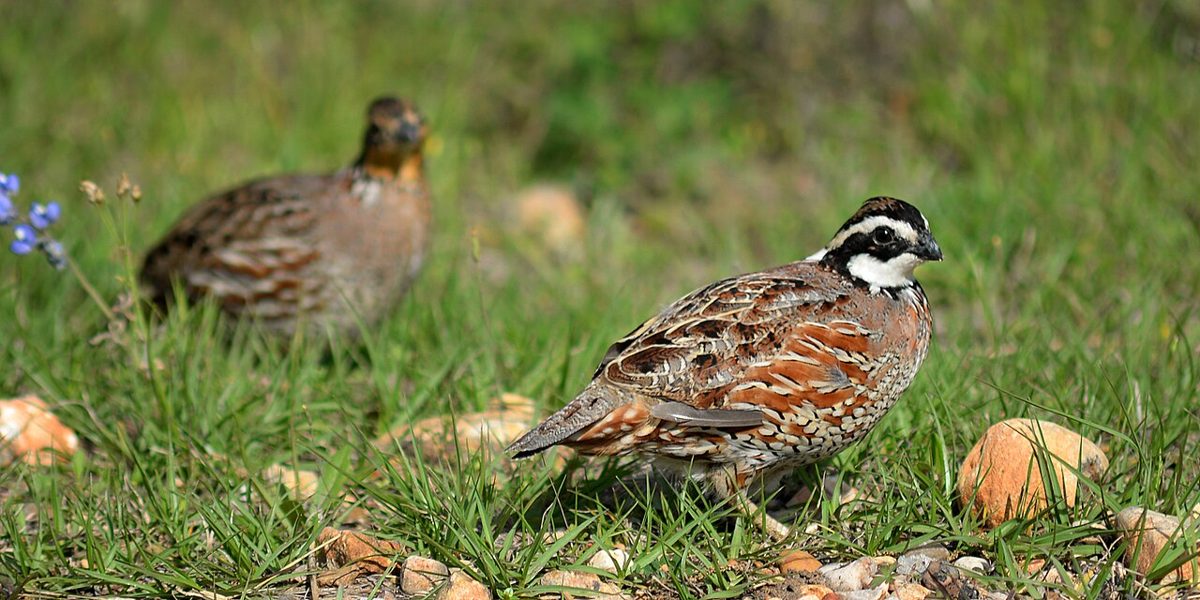

Side-by-side comparison
| Trait | Coturnix (Japanese) quail | Northern bobwhite |
|---|---|---|
| Scientific name | Coturnix japonica | Colinus virginianus |
| Origin | Domesticated from an Asian wild quail | Native to North America |
| Incubation | 17 days | 23–24 days (Penn State uses 24) |
| Adult weight | 100–160 g standard; 250–300 g jumbo | Penn State does not list a weight; ADW gives length of 20.3–24.7 cm |
| Start of laying | About 6–7 weeks (ICAR) | Seasonal breeders; Penn State starts breeder feed 4–6 weeks before breeding season |
| Market age | Table size at about 6–8 weeks; Texas A&M strain 10–13 oz at 7 weeks | Preserves buy at 15–16 weeks; Penn State’s meat budget sells at 13 weeks |
| Main uses | Eggs, meat, beginner backyard flocks | Hunting preserves, dog training, release, specialty meat |
| State license | Usually none for coturnix in the states we checked | Often required (examples below) |
| Starter protein | About 25% (NSW DPI) | 28% for the first 6–8 weeks (Penn State) |
Sources for each row are listed at the end. Bobwhite weights vary widely by strain, and we did not find a single Extension figure, so we have left a number out rather than guess.
Eggs
Coturnix are the egg bird. ICAR describes Japanese quail laying 280–300 eggs a year and maturing at 6–7 weeks, and NSW DPI says they need 14–18 hours of light to keep laying. Bobwhite breed seasonally: in the wild, the Animal Diversity Web records breeding from February to October, depending on the region. In captivity, Penn State’s guide plans breeder feed around a breeding season rather than year-round laying. If eggs for the kitchen are the goal, coturnix win easily; our quail eggs guide covers what to expect.
Meat
Texas A&M AgriLife Extension says large coturnix strains are hardier and reach slaughter weight much earlier than most bobwhite strains, and its heavily muscled Texas A&M coturnix reaches 10–13 ounces live at 7 weeks. Cooperative Extension’s bobwhite page adds that most producers raising quail for meat prefer Japanese quail because they grow more efficiently and produce larger carcasses. Bobwhite meat has a loyal market, but Penn State’s meat budget sells bobwhite at 13 weeks, roughly twice the coturnix timeline. See raising quail for meat and when to butcher quail for coturnix timing.
Hunting, dog training and release
This is where bobwhite are the right choice. Cooperative Extension says bobwhite are most commonly raised for release into hunting preserves, that preserves and dog trainers want strong, fast-flying birds, and that chicks should move to flight pens at about 2 square feet per bird at six weeks. Penn State recommends flight pens with vegetation, a mesh top and wire buried along the base, and notes that most preserves buy birds at 15 to 16 weeks. Both sources stress that release is controlled by state wildlife regulations. Coturnix are domestic birds and should not be released.
Temperament and housing
Coturnix are bred for cages and small pens and tolerate handling well. Bobwhite raised for release are deliberately kept away from people: Extension advises placing flight pens away from people, children, pets and traffic so the birds do not get used to them. Bobwhite also need far more room if they are to fly; coturnix space needs are in how many quail per square foot, and housing styles in our quail housing guide.
The legal difference
Because bobwhite are a native game bird, state wildlife agencies often regulate them:
| State | Bobwhite | Coturnix |
|---|---|---|
| Texas (TPWD) | Commercial game bird breeder license needed to possess game birds such as wild bobwhite for propagation or sale | Non-native quail, including Japanese and Pharaoh coturnix, do not need the license |
| Indiana (DNR) | Game breeder’s license required to sell bobwhite or possess them more than five days, including all color varieties | No DNR license needed |
| Florida (FWC) | No license for 100 or fewer kept for personal, not-for-sale use | Same exemption; coturnix are defined as game birds in Florida |
Check your own state’s wildlife agency before buying bobwhite, and your city code for either bird. Our guide to whether it is legal to keep quail walks through it.
Incubation and chicks
The Clemson incubation table reproduced by Virginia Tech gives the same temperatures for both species (99.5°F forced air) but different timelines: coturnix stop turning after day 15 and hatch around day 17; bobwhite stop turning after day 21 and hatch at 23–24 days. Brooding is similar for both. Penn State’s bobwhite guide brooders at around 95°F under the heat source and lowers room temperature 5°F a week to 70°F, close to the coturnix schedules in our brooder temperature chart.
Which should you choose?
| Your goal | Better choice |
|---|---|
| Eggs for the kitchen | Coturnix |
| Fast, efficient meat | Coturnix (jumbo or Texas A&M lines) |
| First quail, small yard | Coturnix |
| Training bird dogs, stocking a preserve | Bobwhite |
| Raising a native species, release programs | Bobwhite (with the right permits) |
| Selling birds to hunters | Bobwhite, after checking licensing |
Frequently asked questions
Can coturnix and bobwhite live together?
We do not recommend it. They differ in size, behavior and growth rate, and mixing species makes disease control harder. The same applies to chickens; see can quail live with chickens.
Do bobwhite lay as many eggs as coturnix?
No. Bobwhite are seasonal breeders, while coturnix lay through the year with enough light.
Which tastes better, coturnix or bobwhite?
Taste is personal. Texas A&M notes that bobwhite are the best-known quail and preferred by many consumers; coturnix produce more meat faster.
How long do bobwhite eggs take to hatch?
About 23–24 days, compared with about 17 days for coturnix.
Do I need a permit for bobwhite quail?
Often. Texas and Indiana require game breeder licenses in many cases; Florida exempts 100 or fewer kept for personal use. Check your state.
Sources
- Penn State Extension. Bobwhite Quail Production, via the Agricultural Marketing Resource Center.
- Cooperative Extension. Raising Bobwhite Quail Small and Backyard Flock.
- Thornberry, F. D. Producing Quail for Home Consumption (L-5215). Texas A&M AgriLife Extension.
- Animal Diversity Web. Colinus virginianus (northern bobwhite).
- Virginia Cooperative Extension. Beginning of Life (4-H 408-029), including Clemson University’s incubation table.
- Randall, M. and Bolla, G. Raising Japanese Quail. NSW Department of Primary Industries Primefact, republished by The Poultry Site.
- ICAR-Central Coastal Agricultural Research Institute. Japanese Quail.
- Cooperative Extension. Raising Japanese Quail in Small and Backyard Flocks.
- Texas Parks and Wildlife Department. Commercial Game Bird Breeder License Information.
- Indiana Department of Natural Resources. Game Breeder’s License Information.
- Florida Fish and Wildlife Conservation Commission. Game Animals (Captive Wildlife).