
Quick answer: Selling quail eggs is legal in many places, but the rules come from your state, not one federal law. FDA’s egg safety rule and the federal egg inspection law define “egg” in ways that leave quail out, so states decide. Illinois’ egg license law does not list quail; Colorado now regulates quail eggs (licensing, storage temperature, cleaning and labeled cartons, with an exemption for producers selling under 250 dozen a month); Georgia requires a food sales license, an egg candling certificate, clear labeled cartons and refrigeration at 45°F or below. Call your state department of agriculture before your first sale, refrigerate eggs, and find buyers before you add birds.
Selling quail eggs looks like easy money: hens lay almost daily and a dozen eggs fits in your hand. The catch is that quail eggs fall into gaps in egg law, so the rules change at the state line, and demand is local and limited. This guide explains the federal picture, shows how three states handle quail eggs, and gives practical steps for pricing, packing and finding buyers.

The federal picture
Two federal definitions matter, and neither includes quail:
- FDA’s egg safety rule (21 CFR part 118), which targets Salmonella Enteritidis on farms, defines a shell egg as “the egg of the domesticated chicken.” It also applies only to producers with 3,000 or more laying hens who do not sell all their eggs directly to consumers.
- The Egg Products Inspection Act defines “egg” as the shell egg of the domesticated chicken, turkey, duck, goose or guinea.
That does not mean quail eggs are unregulated. It means states fill the gap, and they do it differently. Food safety still applies; FSIS advice that eggs be refrigerated promptly and kept cold is good practice whatever the species.
How three states handle quail eggs
| State | Approach to quail eggs | Key details |
|---|---|---|
| Illinois | Egg license law covers chicken, turkey, duck, goose and guinea eggs | Quail are not on the list (410 ILCS 615/3.13); ask your local health department about other food rules |
| Colorado | Regulates eggs of other species, including quail | Licensing, storage and transport temperatures, cleaning and sanitizing, labeled cartons; no grading or sizing; producers selling under 250 dozen a month are exempt from licensing |
| Georgia | Quail egg producers are licensed by the Department of Agriculture | Food Sales Establishment license, Egg Candling Certificate, inspection, refrigeration at 45°F or below, clear cartons labeled “nest run,” expiration no more than 45 days from packing |
These three examples were current when we checked them in November 2026, and they show the range: one state’s egg law does not mention quail, another treats quail like chicken eggs, and a third has a dedicated quail egg program. Do not assume your state matches any of them.
Steps before your first sale
- Call your state department of agriculture. Ask: do quail eggs need a license, inspection, candling, grading or labeling? Does it matter where I sell (farm, market, store, online)?
- Ask your local health department about farmers markets and selling to restaurants or shops.
- Check your city rules for keeping birds; see is it legal to keep quail.
- Set up refrigeration. Georgia requires 45°F or below; FSIS advises refrigerating eggs as soon as possible after gathering.
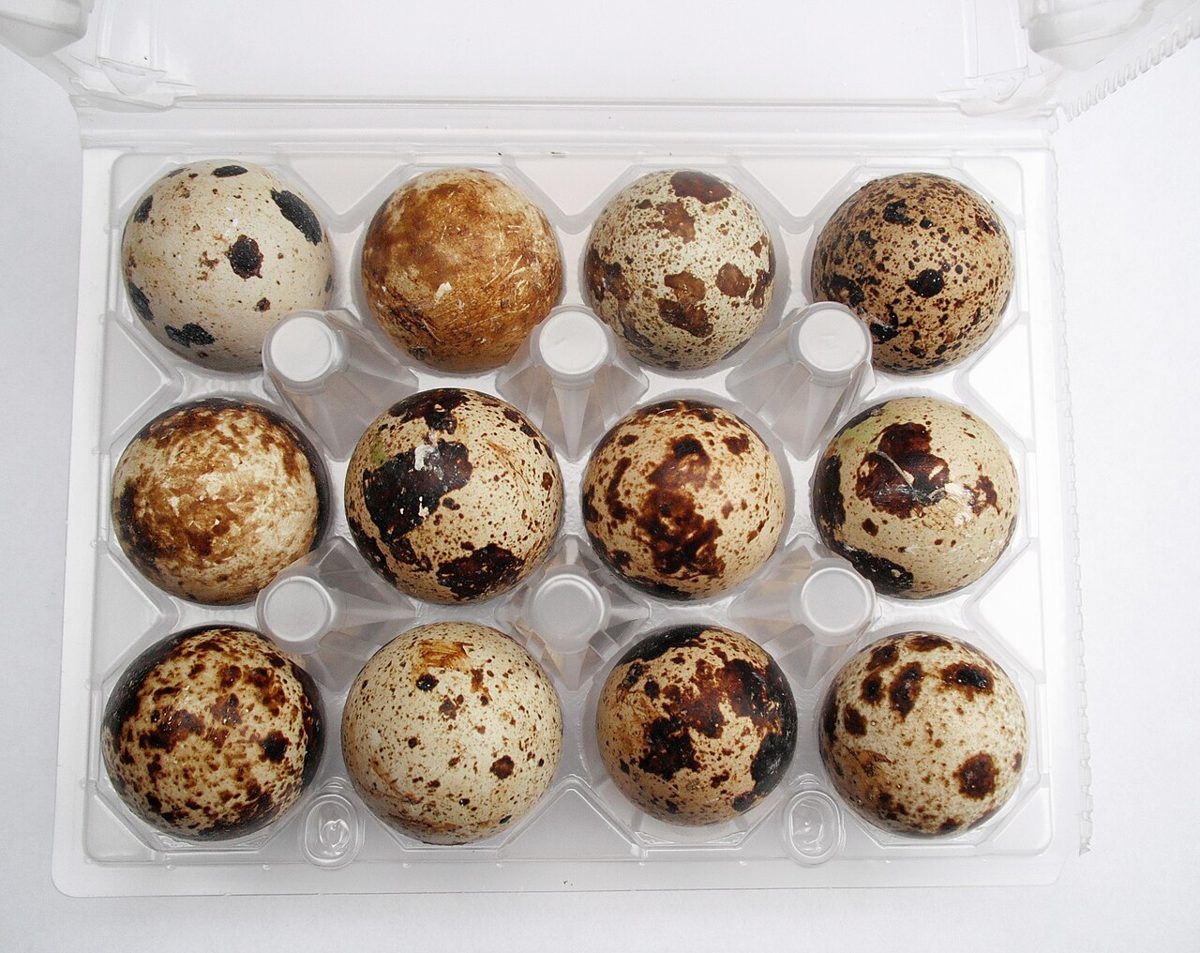
- Plan cartons and labels. Clear quail egg cartons let buyers see the eggs. Include your name, address and pack date even if your state does not require it.
- Keep records of eggs collected, sold and the dates.
Collecting and handling eggs for sale
- Collect at least twice a day so eggs stay clean and cool. Our quail eggs guide covers collecting and storage.
- Keep nests and pens clean. Clean eggs are easier than cleaned eggs. FSIS advises consumers not to wash eggs at home, because wash water can be drawn through the shell; Colorado, however, includes cleaning and sanitizing in its rules for sellers, so follow your state’s method if it sets one.
- Refrigerate quickly and keep eggs cold during transport.
- Candle or check for cracks; Georgia requires a candling certificate for quail egg producers.
- Date every carton. Georgia’s limit is 45 days from packing.
Pricing quail eggs
There is no official price series for quail eggs. The US Bureau of Labor Statistics tracks only chicken eggs; Grade A large averaged $2.32 a dozen in October 2026. By weight, Extension notes that about five quail eggs equal one chicken egg, so a dozen quail eggs is roughly two and a half chicken eggs’ worth of food. Quail eggs sell as a specialty item rather than a staple, and the price is whatever your local buyers will pay.
A practical way to set a price:
- Work out your cost per dozen from feed and cartons; our cost to raise quail breakdown shows how.
- Check what specialty grocers, Asian markets and farmers markets near you charge.
- Price at or slightly below local retail for direct sales, and lower for wholesale to a shop.
- Offer a “mixed dozen” or bulk tray to regular customers.
Where to sell
| Channel | Pros | Watch out for |
|---|---|---|
| Farm gate or porch stand | Simple, no fees | State rules may still apply |
| Farmers markets | Food-curious buyers | Market rules, insurance, health department permits |
| Restaurants and chefs | Regular orders | They may require a licensed source |
| Asian and specialty grocers | Existing demand | Wholesale prices; licensing likely required |
| Hatching egg buyers | Higher value per egg | Fertility, shipping; NPIP for interstate sales |
FSIS notes that National Poultry Improvement Plan participation is necessary for producers who ship interstate. Hatching eggs are a different product from table eggs, so ask your state about both if you plan to sell either.
Is it worth it?
A 2023 Poultry Science study by Adom, Bir and Lambert compared small-scale quail and laying hen enterprises and found quail had the highest returns, but warned that results depend heavily on local markets. That matches what small sellers find: the birds are easy, the buyers are the hard part. Our honest look at whether raising quail is worth it runs the numbers, and pickling extras, as in our pickled quail eggs guide, is a good use for unsold eggs at home (home-pickled eggs are not something to sell without checking food laws).
Frequently asked questions
Do I need a license to sell quail eggs?
It depends on your state. Georgia requires a food sales license and candling certificate; Colorado regulates quail eggs but exempts producers selling under 250 dozen a month; Illinois’ egg license law does not list quail.
Do quail eggs need to be refrigerated for sale?
Keep them refrigerated. Georgia requires 45°F or below, and FSIS advises refrigerating eggs as soon as possible after gathering.
Can I sell quail eggs at a farmers market?
Often, but markets and health departments set their own rules. Ask both before your first market day.
How much should I charge for quail eggs?
There is no official price. Base it on your costs and on what local specialty grocers and markets charge.
Does the FDA regulate quail eggs?
FDA’s egg safety rule defines a shell egg as a chicken egg, so it does not cover quail. States set the rules for quail eggs.
Sources
- eCFR. 21 CFR 118.3, Definitions, and 21 CFR 118.1, Persons covered.
- Office of the Law Revision Counsel. 21 U.S.C. § 1033, Definitions (Egg Products Inspection Act).
- Illinois Department of Agriculture. Egg License Flow Chart.
- Colorado Department of Agriculture. Eggs.
- Georgia Department of Agriculture. Basic Regulatory Requirements for Licensing a Quail Egg Producer.
- USDA Food Safety and Inspection Service. Shell Eggs from Farm to Table.
- US Bureau of Labor Statistics. Eggs, Grade A, Large, per doz. in U.S. city average (APU0000708111).
- Cooperative Extension. Raising Japanese Quail in Small and Backyard Flocks.
- Adom, E., Bir, C. and Lambert, L. H. 2023. A financial comparison of small-scale quail and laying hen farm enterprises. Poultry Science. doi:10.1016/j.psj.2023.102507.