
Quick answer: How to quarantine new quail: keep new birds completely separate from your flock for 30 days, which is the period USDA’s Defend the Flock biosecurity workbook gives for new additions. Use a different pen, different shoes or boot covers, and different feeders and waterers. Handle the resident flock first each day, then the new birds, then wash up. Watch for sneezing, swollen eyes, diarrhea, droopiness or sudden deaths. Cooperative Extension’s small-flock biosecurity guide also warns that birds can look healthy and still carry disease, and it recommends at least two weeks if you quarantine at all — USDA’s 30-day standard is the safer target. Only after a clean quarantine should you move to the side-by-side introduction steps in introducing new quail.
How to quarantine new quail is a biosecurity job, not a “let them peck through the wire for a minute” job. The introduction article on this site already names a 30-day quarantine as stage one. Use what follows as the full setup: where the pen should go, what “separate” actually means, a day-by-day watch list, what to do if someone gets sick in quarantine, and how to end the period without undoing it. It is written for backyard coturnix, including birds from a farm store, a swap, a friend, or a shipped box.
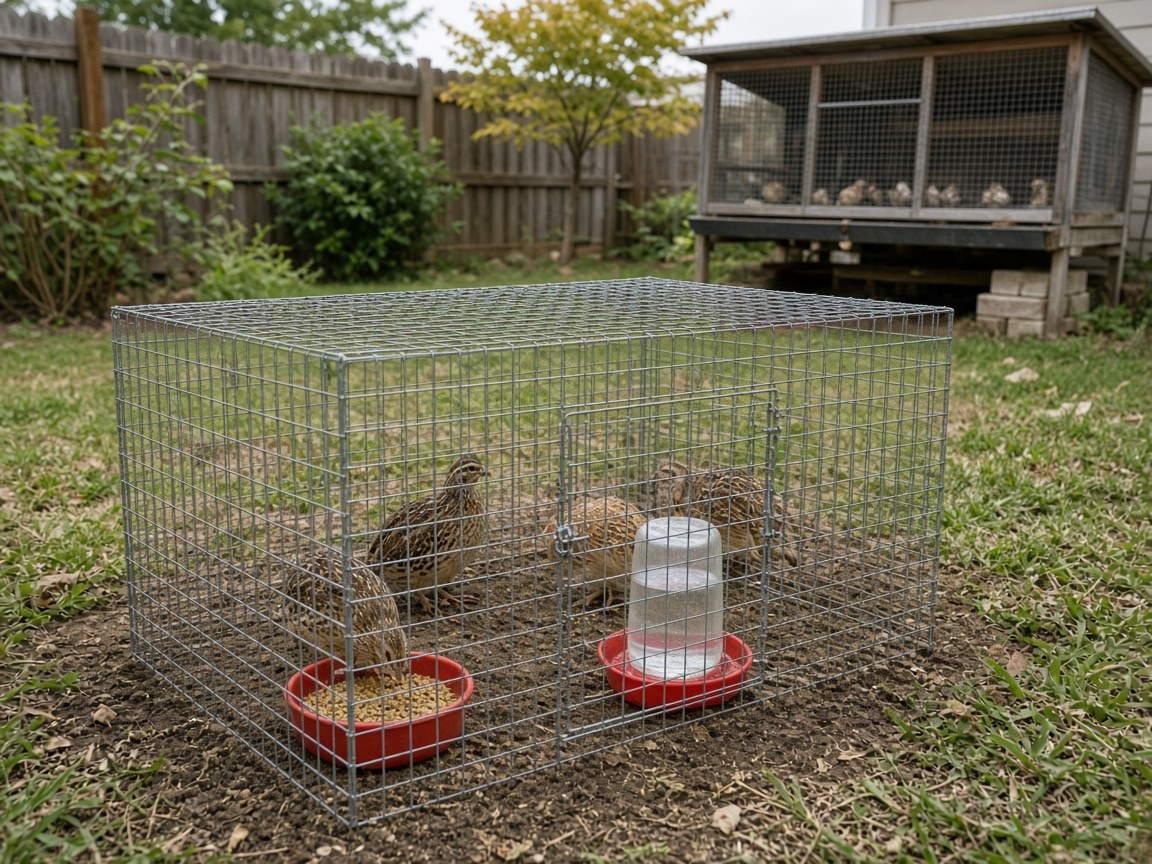
Why a visual check is not enough
Cooperative Extension’s small-flock biosecurity guide is blunt: new birds can carry disease even when they look fine, because they may have recovered and still be carriers. It prefers that you not add birds at all if you can avoid it, and it recommends quarantining for at least two weeks if you must add them. USDA’s Defend the Flock workbook goes further: quarantine new additions for 30 days.
Some respiratory diseases, and some fecal-borne problems, do not announce themselves on the car ride home. A 48-hour “they seem okay” period is how a stable flock gets a new pathogen. If you have ever read why are my quail dying or respiratory infection after a new purchase, quarantine is the step that was usually skipped.
NPIP-participating sellers, covered in NPIP certification for quail, lower some risks (such as certain tested diseases) but they do not replace a quarantine on your property. Truck rides, feed-store rooms and mixed shipments can still add stress and new exposures.
What “separate” has to mean
A second cage in the same unused rabbit hutch, sharing air, dust, shoes and a manure tray, is not a quarantine. Aim for as much of this list as you can actually do:
| Element | Minimum for a real quarantine | Better |
|---|---|---|
| Location | A different building or a distant run, not the next cubby in a stacked cage | Downwind, out of feather-dust range, with no shared floor drain |
| Air | No direct airflow from the new pen onto the old flock | Separate rooms or outdoor spacing |
| Equipment | Unique feeders, waterers, scoops and a dedicated brush | Color-code them; do not “just rinse and share” |
| People traffic | Resident flock first, new birds last | A coat or apron and shoes that stay at the quarantine pen |
| Manure | Stored and disposed of away from the main pen | Do not compost new-bird litter against the main run during the 30 days |
| Pests | Feed in sealed cans; no wild-bird access | Rats and flies should not commute between pens |
Young chicks need a proper brooder, not a cold isolation cage. Quarantine does not cancel brooder needs. It only means that brooder is not in the same airspace as the adult flock.
If you only have one building, put the new pen as far as you can from the old one, raise a solid barrier, change shoes, and be honest that this is a compromise. In that case, stretching the full 30 days and being strict about equipment matters even more.
A 30-day routine
Before the birds arrive
- Set up and heat-test or weather-test the quarantine pen.
- Put feed, water, litter, a catch box, and a trash bag or litter pail at that pen so you are not walking back to the main shed mid-job.
- Write down the source, date, number of birds, and any medications or claims the seller made.
Days 1–3
- Let shipped or moved birds settle. Offer water and the right feed. Minimize extra handling.
- Look for gasping, crusted nostrils, swollen or closed eyes, bloody or very loose droppings, injuries, and birds sitting fluffed and still.
- Remove and, if appropriate, bag dead birds and call a veterinarian or diagnostic lab if losses start immediately. Do not carry a dead bird through the main coop.
Days 4–14
- This is when many latent shipping and respiratory problems show.
- Clean the quarantine pen with its own tools. Do not start a deep clean of the main house right after, in the same clothes.
- If you must treat for a diagnosed problem, finish the treatment and then restart or extend the clock so the birds are healthy and off a problem period before they meet the flock.
Days 15–30
- Keep watching, including at dawn, when respiratory noise is easier to hear.
- Do not “visit” the new birds to the main cage for a look. You can look through the wire of their own pen.
- If everything has been normal, use the last days to get the introduction housing ready: a side-by-side pen, extra feeders, and hides.
Day 30, if all birds stayed well
- Move to a neighbor pen for visual contact, then mix as the introduction guide describes. Do not dump them into a crowded bachelor group or a tight breeding cage on day 30 and call the job done.
If any bird showed illness during the month, do not celebrate the calendar. Reset the healthy period, get advice, and do not merge flocks just because you are tired of two pens.
What to watch for (and what to record)
- Sneezing, clicking, foam in the eye, swollen sinuses
- Diarrhea, pasty vents, droppings with blood
- Sudden deaths, even one, in a group that was eating
- Head shaking, twisted neck, or inability to stand
- Lice or mites (treat the quarantine pen; do not discover them after mixing)
- Weight loss or birds that never start eating well
A cheap notebook beats memory. If you end up at a diagnostic lab, dates and signs matter. Our disease guide can help you describe what you see; it is not a stand-in for a lab report.
Common quarantine failures
- Using the same glove or towel on both groups
- Letting children “show the new babies” to the old hens
- Borrowing a carrier from a friend and setting it in the main coop
- Adding a second new bird on day 20 and not restarting the clock
- Sharing a dust-bath bowl
- Ending quarantine early because a swap meet is Saturday
USDA’s broader biosecurity advice also includes limiting visitors and keeping wild birds out. Those habits protect the quarantine and the home flock at the same time.
Frequently asked questions
Is two weeks enough?
Extension’s small-flock guide says at least two weeks. USDA’s workbook says 30 days. If you can only do one, do 30. Two weeks is better than zero, and it is not the stricter standard.
Can I quarantine in a bathroom or spare room?
You can, in terms of distance from the flock, but poultry in the house raises the human hygiene issues in quail diseases to humans: dust, ammonia, and Salmonella risk. A garage, unused shed, or distant outdoor pen is a better default.
Do chicks from a mail-order hatchery still need this?
Yes, if you already have birds. A hatchery box is not a sterile object. If the chicks are your only birds, the “quarantine” is simply their brooder, and you should still avoid adding a second source later without a new separation period.
What if I have nowhere to put a second pen?
Then this may not be the week to add birds. A cardboard box beside the main cage is not enough. Borrow or build a temporary setup first.
Should I give preventive antibiotics during quarantine?
Not as a routine. Unneeded drugs can mask symptoms until after you mix the flocks and can be the wrong or illegal product. Use a veterinarian if birds are ill.
Sources
- USDA APHIS. Defend the Flock and the Defend the Flock biosecurity workbook (30-day quarantine for new additions; equipment and visitor controls).
- Cooperative Extension. Biosecurity for Small Poultry Flocks (carriers that look healthy; at least two weeks; prefer not to add birds).
- Centers for Disease Control and Prevention. Backyard Poultry (human hygiene around live birds).