
Quick answer: Can humans catch diseases from quail? Yes, some illnesses can move from poultry — including backyard quail — to people. The ones to take seriously in a US backyard are Salmonella and Campylobacter from droppings, feathers and dirty eggs, and, in an outbreak year, avian influenza in rare cases. The CDC’s backyard-poultry advice is the right standard: wash hands after contact, do not kiss or snuggle birds or hold them near your face, keep birds out of the house, and keep high-risk people (children under 5, older adults, pregnant people, and anyone with a weak immune system) away from the coop chores when you can. Most keepers stay well by treating quail as livestock, not as lap pets.
Quail diseases to humans are often overstated in casual conversation (“they make you sick if you look at them”) or understated (“they’re cleaner than chickens”). The accurate middle is that coturnix are poultry. They can carry bacteria that cause foodborne and contact illness in people, even when the birds look healthy. This article is about zoonotic risk and hygiene, not a full veterinary list of bird diseases. For illnesses that mainly harm the flock, use the quail diseases guide.
What can actually pass from quail or their eggs to people
| Hazard | How people are usually exposed | How common a concern in a backyard | What lowers the risk |
|---|---|---|---|
| Salmonella | Hands, clothing, dirty eggs, uncooked or undercooked eggs and meat; sometimes a living area contaminated by birds | The main, year-round risk CDC emphasizes for backyard poultry | Handwashing; birds kept out of kitchens; eggs refrigerated and cooked; no kissing birds |
| Campylobacter | Similar fecal-oral routes; undercooked meat | Real, less often discussed than Salmonella | Same hygiene and cooking rules |
| Avian influenza (bird flu) | Close contact with infected or dead birds, or heavily contaminated environments, in outbreak conditions | Human cases remain uncommon, but poultry keepers should follow USDA/CDC outbreak guidance | Report unusual deaths; use biosecurity; do not handle sick or dead wild birds casually |
| Respiratory dust and ammonia | Cleaning dry, dusty, or dirty housing | Irritation is common if you clean without ventilation; this is not an “infection” by itself | Ventilate; avoid kicking up dry manure dust; do not let ammonia build up (see cage cleaning) |
| Allergies or asthma triggers | Feathers, dust, mite debris | Individual | Limit exposure; a dust mask for deep cleans |
This is not a complete medical catalog. Chlamydia psittaci (psittacosis) is classically linked to pet birds such as parrots, though other birds can be involved in unusual cases; it is not the first thing to emphasize for a typical coturnix flock. Exotic “quail fever” stories on social media are not a substitute for CDC or USDA guidance.
USDA-inspected meat and properly handled eggs are about food safety. Live-bird contact is about barn safety. You need both.
What the CDC asks backyard poultry keepers to do
The CDC’s backyard poultry page is written for chickens, ducks and other poultry, and the habits transfer cleanly to quail:
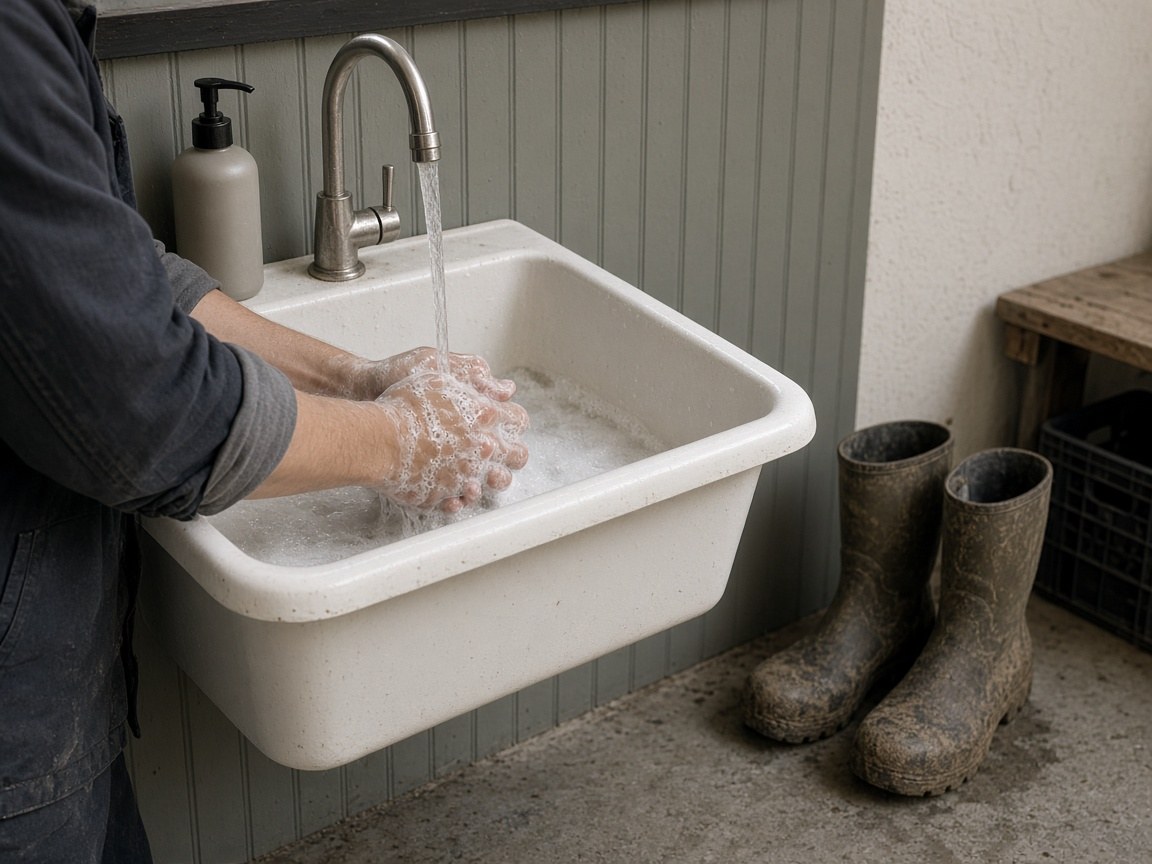
- Wash hands with soap and water right after touching birds, eggs, feed or equipment, and after leaving the pen. Use hand sanitizer only if soap is not available, then wash when you can.
- Do not kiss birds, snuggle them near your face, or touch your mouth or food before washing.
- Keep birds and their equipment out of the house, especially kitchens and bathrooms. Do not wash feeders in the kitchen sink.
- Wear boots or shoes that stay at the coop, and change or clean them before you go inside.
- Supervise children, and do not let children under 5 handle chicks or clean pens. The CDC flags young children as higher risk for serious Salmonella illness.
- Stay out of the coop if you are especially vulnerable, or have someone else do the dirty work.
Chicks and even “clean-looking” adults can shed bacteria. A cute week-old coturnix is not a low-risk toy.
Eggs, meat and the kitchen
Quail eggs and meat are foods, not a special exception.
- Refrigerate eating eggs at 40°F or below and cook them thoroughly, as laid out in whether quail eggs need to be refrigerated and FDA egg-safety advice.
- Do not eat raw or lightly cooked eggs if you need to be cautious, and do not taste raw batter made with backyard eggs.
- Process meat in a clean space, keep raw carcasses away from salads and bread, and cook to a safe doneness. Leftover cooked dishes should be reheated to 165°F.
- Wash hands and boards after handling raw birds, just as you would with chicken.
A healthy-looking hen can still lay an egg that carries Salmonella. Cooking and refrigeration are the controls, not a visual “clean shell” test.
Bird flu: stay current, do not panic
Highly pathogenic avian influenza has circulated in US wild birds and poultry in recent years. Human infections are still rare, but they are taken seriously. Practical steps for a small quail keeper:
- Reduce contact between your flock and wild waterfowl, their droppings, and shared ponds.
- Use the biosecurity habits in how to quarantine new quail and USDA’s Defend the Flock materials: dedicated shoes, limited visitors, and no borrowed crates.
- If many birds die suddenly, or you see swelling, severe respiratory signs, or a sharp drop in egg production in an outbreak area, contact your veterinarian, state veterinarian, or USDA (the Defend the Flock pages list current routes). Do not take obviously sick birds to a swap meet.
- Follow public health advice about domestic birds and raw milk or other odd “preventive” products; they are not a substitute for biosecurity.
This article cannot give a live outbreak map. Check CDC and USDA for the current situation if you hear of cases near you.
What is unlikely, and what not to fear in the wrong way
- You do not “catch coccidiosis” from quail the way a chick does. Coccidia are generally host-adapted; hygiene still matters because droppings are droppings.
- Ordinary quail noise and a well-kept outdoor cage are not a respiratory disease for the neighborhood.
- Cooking quail correctly does not require strange folk methods. Use normal poultry kitchen hygiene.
- If you are bitten or scratched, wash the wound with soap and water and seek medical care if it is deep, dirty, or becomes infected. That is wound care, not a special “quail venom” problem.
If a person in the house has diarrhea, fever, or flu-like illness after contact with the flock or with undercooked eggs or meat, tell a clinician about the poultry exposure. Do not rely on this page as a diagnosis.
A simple hygiene routine
- Park a boot brush, soap, and a towel at the exit from the pen.
- Do egg collection in a dedicated basket, not a kitchen colander that goes back in a cupboard dirty.
- Clean cages outdoors or in a utility space, not in the bathtub.
- Keep a pair of “coop clothes” or an apron, especially for deep cleans.
- After processing day, sanitize surfaces and tools that touched raw birds.
- Wash your hands again before you eat.
Frequently asked questions
Can I keep quail in the house?
It is a bad fit for zoonotic risk and for ammonia, dust and escape. CDC advice is to keep poultry out of the home. A garage or outdoor hutch is the better default.
Are quail safer than chickens because they are smaller?
No. Size does not cancel Salmonella. Handle them with the same habits.
Do I need a mask?
A dust mask or respirator is reasonable for dry, dusty clean-outs, especially if you have asthma. It is not a substitute for handwashing.
Can my dog or cat get sick from the quail?
Pets can pick up bacteria from eating droppings or raw scraps, and they can also harass or kill birds. Do not let pets clean up raw processing waste. Ask a veterinarian if a pet becomes ill after coop access.
Should I take antibiotics “just in case”?
No. Preventive antibiotics for the household are not a backyard hygiene plan, and they are a medical decision for a clinician, not for a blog post.
Sources
- Centers for Disease Control and Prevention. Backyard Poultry (handwashing; no kissing or snuggling poultry; keep birds out of the house; higher risk for children under 5 and other groups; Salmonella).
- U.S. Food and Drug Administration. What You Need to Know About Egg Safety.
- USDA APHIS. Defend the Flock (biosecurity; outbreak-ready habits).
- Cooperative Extension. Biosecurity for Small Poultry Flocks.