
Quick answer: How much meat do you get from a quail? A processed (dressed) coturnix is a small bird. Texas A&M AgriLife Extension reports that a meat quail dresses out at about 72% of live weight, and that the Texas A&M-type meat strain reaches about 10 to 13 ounces live at 7 weeks. At 72%, that is roughly 7 to 9 ounces of carcass. A standard (non-jumbo) adult is smaller, often in the 4 to 6 ounce dressed range once you start from Extension’s 100–160 g live weights. Plan on two regular quail per adult diner, or one larger jumbo or meat-strain bird for a lighter plate.
Quail meat yield is the gap between the live bird you have been feeding and the amount of food that actually lands on the plate. People are often surprised by how small a dressed coturnix is, even when the live bird felt substantial in the hand. This guide uses published live weights and the Texas A&M dressing percentage to build a yield table, then translates that into meals, freezer space and a fair comparison with chicken. It is not a slaughter tutorial; for that see processing quail at home and when to butcher quail.
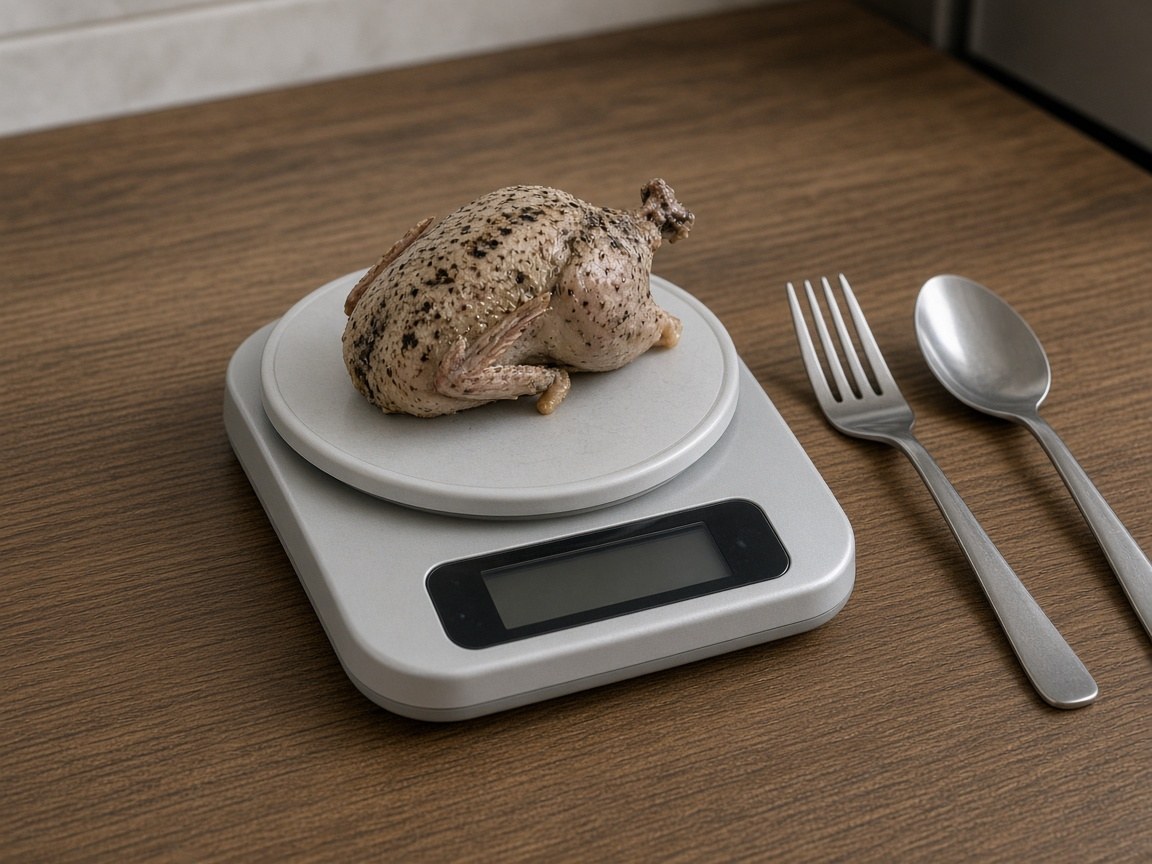
Live weight, dressing percentage and edible meat
Dressing percentage here means the carcass after slaughter and removal of feathers or skin (depending on how you process), head, feet and organs, divided by live weight. Texas A&M AgriLife’s home-production bulletin puts that figure at about 72% for meat quail.
Not every ounce of that carcass is boneless meat. You still have bones, and if you leave the skin on you also have skin and a little fat. For meal planning, treat the dressed weight as “what goes in the pan,” not as a pile of boneless breast.
| Type of bird (published live weight) | Approx. live weight | Approx. dressed weight at 72% | What that means on a plate |
|---|---|---|---|
| Standard adult male, Extension range 100–140 g | 3.5–5 oz | About 2.5–3.5 oz | Very small; better as two birds per person or as an appetizer |
| Standard adult female, Extension range 120–160 g | 4–6 oz | About 3–4 oz | Still small; two per adult diner is realistic |
| Jumbo Japanese, Cooperative Extension 250–300 g | 9–11 oz | About 6–8 oz | One bird can be a modest entrée |
| Texas A&M meat strain, 10–13 oz live at 7 weeks | 10–13 oz | About 7–9 oz | One bird per lighter appetite; two for a large meal |
These are planning numbers, not a promise from every hatchery box. “Jumbo” is a size claim, not a regulated grade. Weigh a few birds at processing time and keep your own average. Lines and feeding, described in jumbo vs regular and Texas A&M vs coturnix, change the result more than any kitchen trick.
How many quail per person
| Meal style | Regular-size dressed birds | Jumbo or TAMU-type dressed birds |
|---|---|---|
| Appetizer or first course | 1 per person | 1 may be large for a starter |
| Standard dinner with sides | 2 per adult; 1 for a small child | 1 per adult is often enough |
| Big appetite, few sides | 3 regular birds, or add another dish | 2 |
| Boneless meat only (breasts pulled off) | You will need more birds than the table above; a quail breast is small | Still plan extra if you will not serve the whole carcass |
If you are used to chicken quarters, think of one regular quail as closer to a large chicken wing plus a little meat than to a Cornish hen. Cooking methods that keep the bird whole — roasting, grilling, braising — make the most of the yield. See how to cook quail.
What cuts into yield
- Age and line. Processing too early leaves a tiny carcass. Waiting past the usual 6–8 week meat window on a non-layer diet can add some weight, but feed cost rises; the butcher-age guide covers the trade-off.
- Skin-on vs skin-off. Skinning is faster for some keepers and removes skin weight from the plated bird. Plucking leaves more on the carcass. Neither changes the live weight you started with.
- Crop, organs and “giblets.” Hearts and livers are edible if you keep them clean and cook them well; they are a bonus, not a large part of yield.
- Shot, bruises or poorly bled birds. Damaged parts get trimmed. Calm, clean processing helps.
- Water and chill. A well-chilled carcass is what you should weigh for freezer records, after the bird has drained, not a dripping bird straight from the rinse.
Feed input for a meat bird, per Texas A&M, is about 3 to 3.5 lb of feed in the grow-out. That is useful when you compare meat yield to cost in raising quail for meat and cost to raise quail.
A simple way to record your own yield
- Weigh the bird alive, if you can do it calmly, the morning of processing (empty crop is more consistent).
- Process, chill, and pat dry.
- Weigh the carcass.
- Divide dressed weight by live weight. If you are far below about 70%, look at whether you skinned the bird, trimmed heavily, or processed much smaller birds than you thought.
- After a cooked meal, you can optionally weigh leftover bones to estimate how much was edible, but you do not need that for everyday planning.
A kitchen scale that reads ounces or grams is enough. Keep a notebook of line, age, live weight and dressed weight. After a dozen birds you will know your flock better than a generic table.
Comparing quail yield with chicken
A whole small chicken or Cornish-type bird in a US store is often 1.5–2 lb or more, several times a jumbo quail and many times a standard coturnix. Per-pound, quail is a different product: more bone relative to a big chicken breast, a richer presentation, and a much shorter grow-out. Our quail meat vs chicken article compares nutrition and taste; this page is only about how much carcass you get.
If your goal is bulk family meat at the lowest cost per pound, a heavy chicken is still the more efficient animal. If your goal is a small-footprint bird you can raise in 7 weeks, quail yield is “small but fast,” not a turkey replacement.
Troubleshooting
| Problem | Likely cause | What to do |
|---|---|---|
| Dressed birds look tiny | Standard line, or processed too early | Weigh live first; try a heavier line or a later, still-tender age |
| Dressing percent far under 72% | Skinning and heavy trim, or a very full crop when live-weighed | Weigh consistently; do not treat skinned weight as a failure of the 72% figure |
| Freezer filled with birds nobody wants to eat | Too many small carcasses, same recipe | Cook whole, or spatchcock; plan meals as two-bird plates |
| Feed bill high for the meat you got | Long grow-out, waste, or an egg-type bird used for meat | Review feed waste and butcher age; use a meat line if meat is the point |
Frequently asked questions
Is 72% dressing the same as 72% boneless meat?
No. It is carcass yield, including bones. Boneless meat is lower.
How much boneless meat is on one quail?
It varies by size and how closely you pick the carcass. On a regular bird it may be only a couple of ounces of picked meat. That is why most recipes serve the bird whole.
Do jumbo birds dress at a higher percentage?
The 72% figure is a meat-quail figure from Texas A&M, not a separate official jumbo percentage. A heavier bird gives a heavier carcass even at the same percentage. Keep your own records.
Should I process males only and keep hens?
That is a flock-management choice, not a yield law. Young males on a meat schedule can dress like their sisters at the same age. Older breeding males may be tougher. See raising quail for eggs and meat if you want both.
How many birds should I raise for a dinner party of six?
For regular coturnix, 12 birds is a reasonable dinner (two each). For jumbo or TAMU-type birds, 6 to 8 may be enough if sides are generous. Process a spare or two if you can.
Sources
- Texas A&M AgriLife Extension. Quail Production for Home Consumption (about 72% dress-out; 10–13 oz live at 7 weeks for the meat strain; about 3–3.5 lb feed per bird).
- Raising Japanese Quail in Small and Backyard Flocks, Jacob and McCrea, Poultry Extension (standard and jumbo live-weight ranges).
- Randall, M. and Bolla, G. Raising Japanese quail. NSW DPI, via The Poultry Site (adult male and female weight ranges).