
Quick answer: How to cook quail: dry the birds, season well (a short brine helps lean, skinned birds), then cook fast and hot. Butterflied quail grill or pan-sear in about 8 to 12 minutes total; whole birds roast at 450°F in about 15 to 20 minutes. USDA FSIS lists 165°F as the safe internal temperature for all poultry, so check the thickest part of the breast and thigh with a thin probe thermometer. Plan on 2 birds per adult for standard coturnix, or 1 jumbo bird. Older layers and breeders are tougher; braise them low and slow instead.
How to cook quail is simple once you know that a quail is a tiny, lean bird that goes from juicy to dry in a couple of minutes. Store-bought quail are usually 4 to 5 ounces each and plucked with the skin on. Home-raised birds vary much more: small coturnix, jumbo or Texas A&M birds, skinned or plucked, young cockerels or retired layers. This guide shows how to prep and cook each kind, with times, temperatures and fixes for the usual problems.
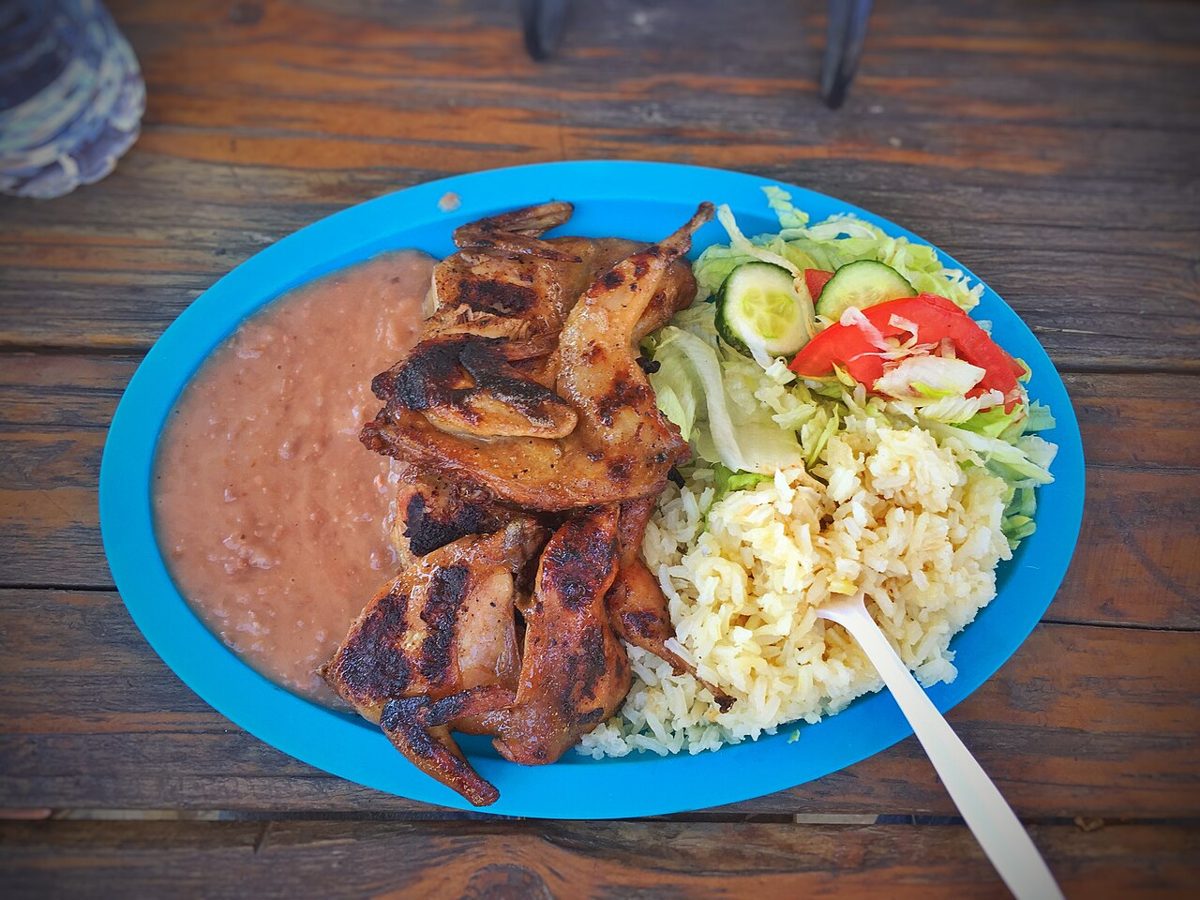

Before you cook: know your bird
| Your bird | Typical dressed weight | Best methods | Per adult |
|---|---|---|---|
| Standard coturnix, 6–8 weeks | About 3–4 oz | Grill, pan-sear, roast | 2–3 birds |
| Jumbo or Texas A&M, about 7 weeks | About 7–9 oz | Roast, grill, pan-sear | 1–2 birds |
| Store-bought quail | About 4–5 oz | Any | 2 birds |
| Spent layer or breeder over a year old | Varies | Braise, stew, pressure cook | 2 birds or use in a stew |
| Skinned bird (any size) | Slightly less | Brine first; braise or protect with butter or oil | Same as above |
Dressed weights come from Texas A&M AgriLife’s dressing rate of about 72% of live weight; see when to butcher quail for how age and line change yield. For comparisons with chicken, see quail meat vs chicken.
Prep: thaw, rest, dry and season
Thaw safely
Thaw frozen quail in the refrigerator overnight, or in sealed bags under cold water. Small birds thaw fast; a bag of four standard coturnix is usually ready in a few hours in the fridge and well under an hour in cold water. Cook soon after thawing.
Rest fresh birds
Freshly processed birds go through rigor mortis, which makes meat tough if you cook it right away. Chill fresh birds in the fridge for at least several hours, and ideally a day, before cooking. Our guide to processing quail at home covers the ice-water chill that comes first.
Brine (optional but worth it for skinned birds)
A short brine seasons the meat and helps it hold moisture. A simple wet brine is about 2 tablespoons of table salt dissolved in 1 quart of cold water. Soak standard birds for 1 to 2 hours, jumbo birds for 2 to 3 hours, in the fridge. Rinse, then pat completely dry. A dry brine also works: salt the birds all over and leave them uncovered in the fridge for 4 to 12 hours.
Dry and butterfly
Dry skin browns; wet skin steams. Pat birds dry with paper towels. For grilling and pan-searing, butterfly (spatchcock) them: cut down both sides of the backbone with kitchen shears, remove it, and press the bird flat. America’s Test Kitchen and Serious Eats both butterfly quail because flat birds cook faster and more evenly. Some cooks thread two crossed skewers through each flat bird to keep it rigid on the grill.
Method 1: Grilling
Grilling is the classic way to cook quail. America’s Test Kitchen butterflies 5-ounce quail, brushes them with olive oil, salts and peppers them, and grills them skin-side down over a very hot gas grill, covered, for 6 to 7 minutes until well browned, then turns them for about 5 more minutes. On charcoal it uses a medium-hot fire and 5 to 6 minutes skin-side down, then about 5 minutes on the second side.
- Preheat the grill hot, clean and oil the grate.
- Brush butterflied birds with oil and season.
- Grill skin-side down until well browned; move birds away from flare-ups.
- Turn and finish until a thermometer in the thickest part reads 165°F.
- Rest 3 to 5 minutes, then serve.
For standard home coturnix, which are smaller than store birds, start checking after about 4 minutes on the first side.
Method 2: Pan-searing
Serious Eats pan-roasts butterflied quail in a skillet, then builds a quick pan sauce with plums, shallots and thyme. The same idea works with any fruit or wine sauce.
- Heat a heavy skillet over medium-high with a thin layer of neutral oil.
- Lay butterflied birds in skin-side down. Press with a spatula for the first 30 seconds so the skin stays in contact.
- Cook until deep golden, about 4 to 5 minutes. Do not crowd the pan.
- Flip, add a knob of butter, garlic and thyme, and baste for 2 to 4 minutes until the birds reach 165°F.
- Rest on a plate while you make a pan sauce: shallot, a splash of wine or stock, a spoon of jam or chopped fruit, and a little butter.
Method 3: Roasting whole
Whole birds look best on the plate and suit jumbo or Texas A&M quail.
- Heat the oven to 450°F.
- Dry and season the birds inside and out. Tuck a little butter, herbs or a lemon slice into the cavity, and tie the legs with string so they cook evenly.
- Rub the skin with oil or soft butter.
- Sear the birds briefly in an ovenproof skillet, breast-side down then on each side, about 3 to 4 minutes in total.
- Turn them breast up and roast about 10 to 15 minutes for store-size birds, 15 to 20 for jumbo birds, until 165°F in the thigh and breast.
- Rest 5 minutes.
Skinned birds dry out in a hot oven. Rub them with butter and roast them covered, or choose braising instead.
Method 4: Braising (best for older birds)
Laying hens and breeders past their first year have firmer meat. Slow, moist heat makes them tender.
- Brown the birds in a little oil in a heavy pot.
- Remove them, then soften onion, carrot and garlic in the fat.
- Add enough stock, wine, tomatoes or coconut milk to come halfway up the birds.
- Return the birds, cover and simmer gently, or cook at 325°F in the oven, for about 45 minutes to 1½ hours until the meat pulls from the bone.
- Pull the meat for tacos, pasta sauce, soup or a pot pie if you prefer no bones.
A pressure cooker cuts braising time a lot; about 15 to 20 minutes at high pressure softens most old birds.
Method 5: Frying and other ideas
- Fried quail: brine, dip in buttermilk and seasoned flour, and fry at about 350°F for 4 to 6 minutes for halves, until 165°F.
- Smoked quail: brine, then smoke at 225 to 250°F until 165°F, usually about 1 to 1½ hours for standard birds.
- Stuffed quail: cook stuffing separately and fill after, or make sure the stuffing also reaches 165°F; FSIS advises not stuffing whole poultry for best safety.
- Wrapped quail: wrap birds in grape leaves or thin slices of lean cured beef to protect the breast on the grill.
Doneness and food safety
USDA FSIS lists 165°F as the safe minimum internal temperature for all poultry, including whole birds and parts. Some restaurants serve quail breast pink; that is a chef’s choice, not the federal safety guidance.
- Use an instant-read thermometer with a thin probe. Check the thickest part of the breast and the inner thigh, avoiding bone.
- Small birds carry over a few degrees while resting, but they also cool fast; serve promptly.
- Keep raw poultry and its juices away from salads and cooked food.
- Refrigerate leftovers within 2 hours.
Flavor pairings
| Style | Season with | Serve with |
|---|---|---|
| Mediterranean | Lemon, garlic, oregano, olive oil | Couscous, grilled vegetables |
| Southern | Buttermilk brine, paprika, cayenne | Grits, collards, biscuits |
| Asian-style | Soy, ginger, five-spice, honey | Rice, quick pickles |
| French | Thyme, shallot, butter, red wine | Mashed potatoes, a fruit pan sauce |
| Fall | Sage, maple, apple cider | Roasted squash, wild rice |
For a two-quail plate, top the birds with a jammy quail egg; see how long to boil quail eggs.
Troubleshooting
| Problem | Likely cause | Fix |
|---|---|---|
| Dry, stringy meat | Overcooked, or a skinned bird cooked dry | Pull at 165°F; brine; baste with butter |
| Tough meat | Cooked right after processing, or an old bird | Rest a day in the fridge; braise older birds |
| Pale, flabby skin | Wet skin or a crowded pan | Pat very dry; cook in batches over high heat |
| Skin burned before meat cooked | Heat too high for a whole bird | Butterfly, or finish over indirect heat or in the oven |
| Gamy taste | Older bird or poor chilling | Brine or marinate; chill carcasses fast after processing |
| Hard to read the temperature | Tiny breast | Use a thin probe and check two spots |
Frequently asked questions
What temperature should quail be cooked to?
USDA FSIS lists 165°F as the safe internal temperature for all poultry.
How long does it take to cook quail?
About 8 to 12 minutes in total for butterflied birds on a hot grill or pan, and 15 to 20 minutes for whole birds roasted at 450°F.
How many quail per person?
Two standard birds per adult is typical, or one jumbo bird with sides.
Should you brine quail?
It is optional for skin-on birds and very helpful for skinned or home-raised birds, which can dry out.
How do you cook old quail?
Braise or stew them slowly, or use a pressure cooker, until the meat pulls from the bone.
Can you eat quail bones?
The tiny bones of young quail are often crunched by diners, but they can splinter; serve with care and never give cooked bones to pets.
Sources
- USDA Food Safety and Inspection Service. Safe Minimum Internal Temperature Chart.
- USDA Food Safety and Inspection Service. High Altitude Cooking (stuffing and poultry temperature guidance).
- America’s Test Kitchen. Charcoal-Grilled Quail and Gas-Grilled Quail.
- Gritzer, D. Serious Eats. Pan-Roasted Quail With Plums.
- Thornberry, F. D. Texas A&M AgriLife Extension. Quail: Producing for Home Consumption (L-5215).