
Quick answer: How long to boil quail eggs: lower fridge-cold eggs into water at a full, gentle boil and cook about 2 minutes for soft (runny yolk), 2½ to 3 minutes for jammy, and 4 minutes for hard-boiled. Clemson Extension uses 5 minutes for fully firm eggs. Move them straight into ice water for at least 2 to 5 minutes, then roll each egg on the counter to crack the shell and peel under water. Above 3,000 feet, add 30 to 60 seconds. FDA advises firm yolks for young children, older adults, pregnant people and anyone with a weak immune system.
How long to boil quail eggs is a question of seconds, not minutes. A quail egg weighs about 9 to 10 grams, a fifth of a large chicken egg, so 30 extra seconds can turn a runny yolk into a chalky one. Below are reliable timings, why each step matters, how to adjust for altitude and batch size, and how to peel these stubborn little eggs without losing half the white.
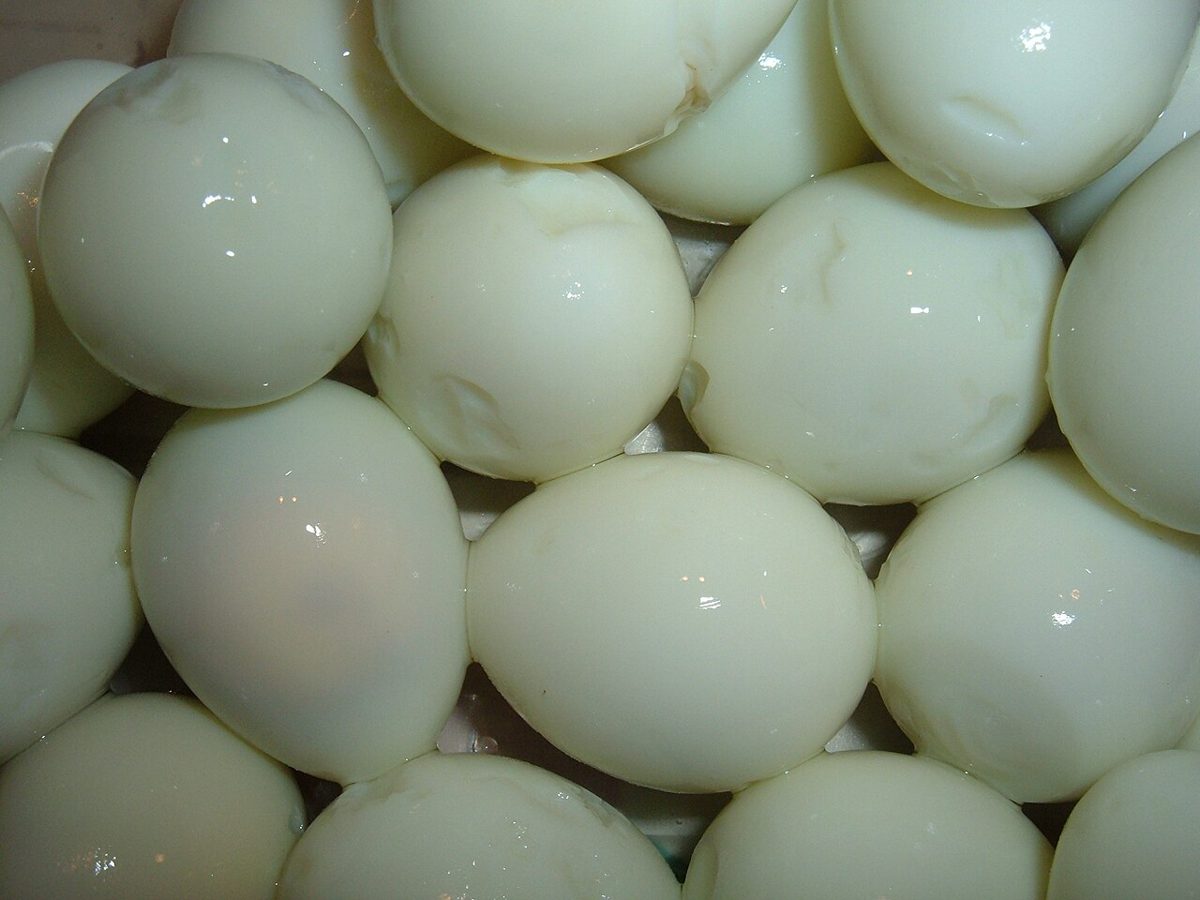

Quail egg boiling times
All times start when the eggs go into water that is already boiling, and assume eggs straight from the fridge.
| Doneness | Time | Yolk | White | Best for |
|---|---|---|---|---|
| Soft | 2 minutes | Runny, warm | Just set | Toast soldiers, eating from the shell |
| Jammy | 2½–3 minutes | Thick, glossy center | Firm | Ramen, salads, grain bowls |
| Medium | 3½ minutes | Fudgy, barely soft center | Firm | Platters, halved on toast |
| Hard | 4 minutes | Fully set, bright yellow | Firm | Snacks, lunchboxes, deviled eggs |
| Very firm | 5 minutes | Fully set and dry | Firm | Pickling, recipes that need a firm yolk; Clemson Extension’s method |
Popular cooking guides give 2 minutes for soft and 4 to 5 for hard, in line with this chart. If your eggs are at room temperature, take about 30 seconds off each time.
Step-by-step method
- Use eggs a few days old if you can. Very fresh eggs are harder to peel. Older eggs peel more easily.
- Fill a saucepan with enough water to cover the eggs by about an inch and bring it to a full boil. Lower the heat so it stays at a gentle rolling boil, not a violent one that knocks eggs against each other.
- Optional: add a teaspoon of vinegar or baking soda to the water. Clemson Extension suggests either to make peeling easier.
- Lower the eggs in gently with a slotted spoon or a small strainer, all at once, so they cook evenly.
- Start the timer immediately and keep the water boiling.
- Get the ice bath ready while they cook: a bowl of water with plenty of ice.
- When the timer goes off, move every egg into the ice water. This stops the cooking at once. Clemson leaves them in for 5 minutes.
- Peel using the method below.
How many eggs at a time?
Adding a dozen cold eggs to a small pan drops the water below a boil for a while, which lengthens cooking. Use a pan large enough that the water comes back to a boil within about 30 seconds, or cook in batches. If the boil stalls, add 15 to 30 seconds.
Altitude adjustments
Water boils at a lower temperature as you go up, so eggs cook more slowly. USDA FSIS says water boils at 212°F at sea level, about 208°F at 2,000 feet, and about 198°F at 7,500 feet, dropping just under 1°F for every 500 feet. FSIS says hard-cooked eggs will take longer at high altitudes, and that turning up the heat will not help.
| Elevation | Water boils at about | Add to hard-boil time |
|---|---|---|
| Sea level to 2,000 ft | 208–212°F | Nothing |
| 3,000–5,000 ft (much of Utah, Colorado plains, Wyoming) | 202–206°F | About 30 seconds |
| 5,000–7,500 ft (Denver, Santa Fe) | 198–202°F | About 45–60 seconds |
| Above 7,500 ft | Below 198°F | 60+ seconds; check one egg first |
The added times are our estimates from the lower boiling point, not FSIS figures. Test one egg the first time at a new elevation.
How to peel quail eggs
Quail eggs are famous for peeling badly. Cooperative Extension says the shell is thicker than a chicken egg’s for its size and tends to stick to the white when boiled, and recommends rolling the egg to break up the shell. A reliable routine:
- Chill fully in the ice bath, at least 2 minutes for soft eggs and about 5 minutes for hard ones.
- Roll the egg firmly but gently under your palm on the counter until the shell is crazed all over.
- Find the air cell at the wide end and start peeling there. Get under the thin membrane, not just the shell.
- Peel under a thin stream of water or in the bowl of cold water. Water gets under the membrane and lifts it.
- For soft eggs, crack the top with a spoon and eat from the shell, or peel very gently; the white is fragile.
Batch peeling trick
Some cooks put 10 to 20 boiled, cooled eggs in a lidded container with a little cold water and shake it gently for 10 to 20 seconds to crack the shells. It is fast but can tear soft eggs, so use it only for hard-boiled ones.
Vinegar soak trick
Soaking boiled eggs in white vinegar for a few hours softens the shell, because vinegar dissolves calcium carbonate. The eggs then peel easily but may pick up a sour taste, so rinse well. Use it for pickling batches; our pickled quail eggs guide covers safe pickling and storage.
Adjusting for egg size
Coturnix eggs vary more than most people expect. Cooperative Extension puts the average at about 10 g, while eggs from some heavier lines run nearer 12 to 13 g; a Romanian trial of a meat-type strain averaged 12.9 g. Weigh a few on a kitchen scale and adjust:
| Egg weight | Typical source | Change to the chart |
|---|---|---|
| Under 9 g | Small or young hens, first eggs of lay | Take off about 15 seconds |
| 9–11 g | Most standard coturnix | Use the chart as written |
| 12–14 g | Jumbo or meat lines | Add about 30 seconds |
| Mixed sizes | Backyard flocks | Sort by size, or cook in two batches |
These adjustments are kitchen estimates, not lab figures. For the most consistent results, check one egg from each batch the first time.
How many to cook
Extension says it takes about five quail eggs to equal one chicken egg. Use that to plan:
| Use | Quail eggs per person | Equals about |
|---|---|---|
| Snack | 3–4 | Two-thirds of a large egg |
| Breakfast | 5–6 | One large chicken egg |
| Salad or ramen topping | 2–3, halved | Half a large egg |
| Party platter or deviled eggs | 3–4 halves each, so 1½–2 eggs | Plan about 2 dozen per 12 guests |
Cooking ahead
Hard-boiled quail eggs are ideal for meal prep. Cook a batch, chill fully, and store them in a covered container in the fridge. Peeled or unpeeled, use them within one week, the FDA limit for hard-cooked eggs. Leave soft and jammy eggs for the day you serve them; their runny yolks do not keep as well.
Other ways to cook quail eggs in the shell
| Method | Time | Notes |
|---|---|---|
| Steaming (lid on, water boiling) | About 3 min jammy, 4–5 min hard | Gentler; less cracking |
| Cold start (eggs in cold water, bring to boil) | Remove when water boils; rest 1–3 minutes off heat | Less precise; size of pan changes results |
| Pressure cooker | Not worth it for quail eggs | Easy to overcook such small eggs |
| Air fryer | Varies widely by machine | Test one egg first |
For fried, poached or baked quail eggs, crack each egg into a small cup first; see the cooking tips in quail eggs vs chicken eggs.
Food safety
- FDA advises cooking eggs until both yolk and white are firm, and cooking egg dishes to 160°F. Serve runny quail eggs only to healthy adults who accept the small risk, and choose firm yolks for young children, older adults, pregnant people and anyone with a weak immune system.
- Refrigerate eggs at 40°F or below, and refrigerate boiled eggs promptly.
- FDA says to use hard-cooked eggs, in or out of the shell, within one week.
- Toss cracked or dirty raw eggs. Our quail eggs guide explains collecting and cleaning home eggs.
Serving ideas
- Halved jammy eggs on ramen, salads or avocado toast.
- Hard-boiled eggs with flaky salt and chili crisp as a snack.
- Mini deviled eggs (use 4-minute eggs and a piping bag).
- Hard eggs for pickling: boil, chill, peel and pickle.
- Soft eggs on top of roast or grilled quail for a two-quail plate.
Troubleshooting
| Problem | Likely cause | Fix |
|---|---|---|
| Shell sticks and tears the white | Eggs too fresh; not chilled enough | Use eggs a few days old; chill longer; peel under water |
| Grey-green ring around the yolk | Overcooked or cooled slowly | Cut time by 30 seconds; ice bath straight away |
| Yolk not set at 4 minutes | Water stopped boiling; high altitude; very large eggs | Use a bigger pan; add 30–60 seconds |
| Eggs cracked in the pan | Dropped in too hard; violent boil | Lower gently; reduce to a gentle boil |
| Rubbery white | Overcooked | Stick to the time chart; use a timer |
| Egg looks raw inside when peeled | Room-temperature timing used for cold eggs | Add 30 seconds for fridge-cold eggs |
Frequently asked questions
How long do you boil quail eggs for a runny yolk?
About 2 minutes in boiling water, then into ice water.
How long to hard boil quail eggs?
About 4 minutes, or 5 minutes for a very firm yolk, followed by an ice bath.
Do you put quail eggs in cold or boiling water?
Boiling water gives the most precise timing. Cold-start methods vary with pan size and stove.
Why are my quail eggs so hard to peel?
Fresh eggs and their tough membrane stick to the white. Use older eggs, chill well, roll to crack and peel under water.
How long do boiled quail eggs last?
FDA advises using hard-cooked eggs within one week, kept in the fridge.
Can you eat soft-boiled quail eggs safely?
FDA advises firm yolks for safety. Healthy adults sometimes choose soft eggs; higher-risk groups should not.
Sources
- Clemson Cooperative Extension, Home and Garden Information Center. Quail Eggs.
- Cooperative Extension. Raising Japanese Quail in Small and Backyard Flocks.
- USDA Food Safety and Inspection Service. High Altitude Cooking.
- US Food and Drug Administration. What You Need to Know About Egg Safety.
- USDA FoodData Central. Egg, quail, whole, fresh, raw (FDC 172191).