
Quick answer: Quail eggs vs chicken eggs, gram for gram: quail eggs have slightly more protein and fat, about twice the iron, more B12, riboflavin and folate, and more than twice the cholesterol, according to USDA FoodData Central. Chicken eggs have more choline, vitamin D and lutein. One quail egg weighs about 9 g and a large chicken egg about 50 g, so it takes about five quail eggs to replace one chicken egg. Neither is “healthier” overall; the differences per serving are small. Quail eggs cost more and take longer to peel, but taste richer because the yolk is a bigger share of the egg.
Quail eggs vs chicken eggs comes up whenever someone sees those speckled little cartons at the store or starts a backyard flock. The internet is full of big claims, from “three times the nutrition” to “lower cholesterol”. Most are wrong. This guide compares the two eggs on real USDA numbers per 100 g, per egg and per equal-sized serving, then covers taste, cooking swaps, cost, safety and allergies.
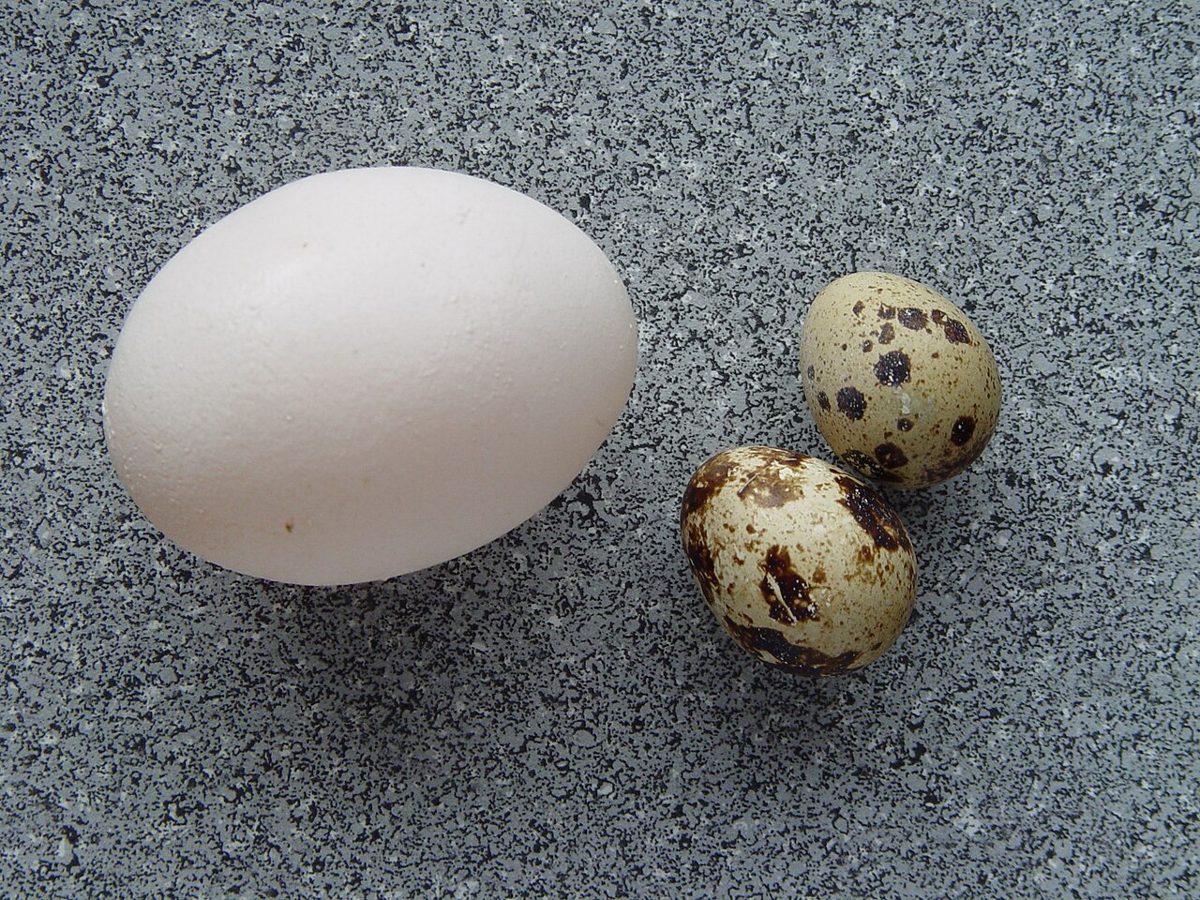

Size and weight
| Egg | Typical weight | Source |
|---|---|---|
| Quail egg | About 9–10 g | USDA FoodData Central (9 g); Cooperative Extension (about 10 g) |
| Small chicken egg | 38 g | USDA FoodData Central |
| Medium chicken egg | 44 g | USDA FoodData Central |
| Large chicken egg | 50 g | USDA FoodData Central |
| Extra-large chicken egg | 56 g | USDA FoodData Central |
| Jumbo chicken egg | 63 g | USDA FoodData Central |
Cooperative Extension sums it up: it takes about five quail eggs to equal one chicken egg. Eggs from jumbo quail lines are heavier, often 12 to 15 g or more, so you may need only four.
Nutrition per 100 g
This is the fair comparison, because it compares the same amount of egg. Figures are USDA FoodData Central values for whole, fresh, raw eggs (quail egg record 172191; chicken egg record 171287).
| Nutrient (per 100 g) | Quail egg | Chicken egg | Which has more |
|---|---|---|---|
| Energy | 158 kcal | 143 kcal | Quail, slightly |
| Protein | 13.1 g | 12.6 g | About the same |
| Total fat | 11.1 g | 9.5 g | Quail |
| Saturated fat | 3.6 g | 3.1 g | Quail |
| Cholesterol | 844 mg | 372 mg | Quail, more than double |
| Iron | 3.65 mg | 1.75 mg | Quail, about double |
| Zinc | 1.47 mg | 1.29 mg | Quail, slightly |
| Selenium | 32 µg | 30.7 µg | About the same |
| Riboflavin (B2) | 0.79 mg | 0.46 mg | Quail |
| Vitamin B12 | 1.58 µg | 0.89 µg | Quail |
| Folate | 66 µg | 47 µg | Quail |
| Choline | 263 mg | 294 mg | Chicken |
| Vitamin A (RAE) | 156 µg | 160 µg | About the same |
| Vitamin D | 55 IU | 82 IU | Chicken |
| Lutein + zeaxanthin | 369 µg | 503 µg | Chicken |
| Calcium | 64 mg | 56 mg | Quail, slightly |
| Phosphorus | 226 mg | 198 mg | Quail |
Two myths fall apart here. Quail eggs are not lower in cholesterol; they have more than twice as much per 100 g. And they are not several times more nutritious; most nutrients are within 20 to 30 percent, with iron, B12, riboflavin and cholesterol the notable gaps.
Per egg and per serving
Per egg, a chicken egg has more of everything, because it is five times bigger. A fairer kitchen comparison is five quail eggs (45 g) against one large chicken egg (50 g).
| Serving | Calories | Protein | Fat | Cholesterol | Iron |
|---|---|---|---|---|---|
| 1 quail egg (9 g) | 14 kcal | 1.2 g | 1.0 g | 76 mg | 0.33 mg |
| 5 quail eggs (45 g) | 71 kcal | 5.9 g | 5.0 g | 380 mg | 1.6 mg |
| 1 large chicken egg (50 g) | 72 kcal | 6.3 g | 4.8 g | 186 mg | 0.88 mg |
Calculated from the USDA per-100 g values above.
So a five-egg quail serving gives about the same calories, protein and fat as one large chicken egg, roughly double the iron and double the cholesterol.
What that means for your diet
- If you watch dietary cholesterol on medical advice, quail eggs are not a better swap.
- If you want a little more iron or B12 from the same amount of egg, quail eggs give it.
- For choline, vitamin D and lutein, chicken eggs are slightly ahead.
- For most healthy people, the difference is small enough that taste, price and convenience should decide.
Taste and texture
Quail eggs are often described as richer and creamier. The USDA data is consistent with that: quail eggs have more fat per 100 g, and egg fat sits almost entirely in the yolk, which suggests the yolk is a larger share of the egg. The white sets quickly and is a little firmer. Flavor is otherwise close. Feed, freshness and how you cook them matter more than species.
Because they are tiny, quail eggs shine where looks matter: halved on salads, fried on toast or sliders, in ramen, pickled, or on party platters. Our pickled quail eggs guide has a tested method.
Cooking swaps
| Recipe calls for | Use this many quail eggs | Tip |
|---|---|---|
| 1 large chicken egg | 5 (or 45–50 g) | Weigh for baking |
| 2 large eggs | 10 | Crack into a bowl first |
| 1 egg yolk | About 3–4 quail yolks | Yolks are fragile; use a small spoon |
| 1 hard-boiled egg for a salad | 4–5 | Halve for a better look |
| Fried egg | 2–3 per slice of toast | Cut the shell with a serrated knife |
Quail shells are thicker for their size and have a tough inner membrane, and Extension notes they are harder to crack and that shells stick to the whites when boiled. Snip or saw through the shell with a small serrated knife instead of tapping. For boiled eggs, use our timings in how long to boil quail eggs.
Cooking times are shorter, too. A fried quail egg sets in about a minute; scrambled quail eggs cook like chicken eggs. Cook eggs until whites and yolks are firm for anyone at higher risk from foodborne illness, as FDA advises.
Cost: store-bought and home-raised
There is no national price series for quail eggs, so compare by weight. The US Bureau of Labor Statistics put a dozen Grade A large chicken eggs at $2.32 on average in October 2026. A dozen quail eggs is only about 2.4 large chicken eggs’ worth of food, so store-bought quail eggs nearly always cost far more per pound.
Raising your own changes the math. Our cost to raise quail breakdown puts feed at about $0.40 to $1.15 per dozen quail eggs, before equipment. If you want to sell them, read selling quail eggs for state rules first.
Safety, storage and allergies
- Salmonella: Any egg can carry it. FDA says to keep eggs refrigerated at 40°F or below, cook them until firm, and cook egg dishes to 160°F. Symptoms usually start 12 to 72 hours after eating contaminated food.
- Storage: Quail eggs store like chicken eggs. FDA says hard-cooked eggs should be used within a week. Our quail eggs guide covers collecting, cleaning and storing home eggs.
- Allergies: Egg proteins are similar across bird species, and researchers who study egg allergens include quail eggs among the eggs that carry them. If you or your child has an egg allergy, do not try quail eggs as a substitute unless an allergist says it is safe.
Which should you choose?
| If you want | Choose | Why |
|---|---|---|
| Cheapest protein from the store | Chicken eggs | Far lower price per pound |
| Lower dietary cholesterol | Chicken eggs | Less than half the cholesterol per 100 g |
| A little more iron and B12 | Quail eggs | About double the iron per 100 g |
| Party food and pretty plates | Quail eggs | Size and speckled shells |
| Backyard eggs from a tiny space | Quail | Hens lay at about 7 weeks; see quail vs chickens |
| Easy everyday baking | Chicken eggs | Less cracking and peeling |
Troubleshooting quail eggs in the kitchen
| Problem | Cause | Fix |
|---|---|---|
| Shell shatters into the bowl | Tough membrane under a thick shell | Cut the top with a serrated knife or quail egg scissors |
| Boiled eggs won’t peel | Very fresh eggs; membrane sticks | Use eggs a few days old; roll to crack; peel under water |
| Recipe came out dry | Too few quail eggs for the volume | Weigh eggs: 50 g per large egg |
| Grey ring around yolk | Overcooked | Shorten boiling time; chill in ice water |
| Yolks break when cracking | Thin yolk membrane | Crack each egg into a small cup first |
Frequently asked questions
Are quail eggs healthier than chicken eggs?
Not overall. Gram for gram they have more iron, B12 and cholesterol, and less choline and vitamin D. The differences per serving are small.
How many quail eggs equal one chicken egg?
About five quail eggs equal one large chicken egg, or about 45–50 g.
Do quail eggs have less cholesterol?
No. USDA data shows 844 mg per 100 g for quail eggs versus 372 mg for chicken eggs.
Can you eat quail eggs raw?
Raw eggs of any kind can carry Salmonella. FDA advises cooking eggs until yolks and whites are firm.
Do quail eggs taste different from chicken eggs?
Slightly richer, because the yolk is a bigger share of the egg. Otherwise they are very similar.
Can people allergic to chicken eggs eat quail eggs?
Do not assume so. Egg allergens are shared across bird species; ask an allergist first.
Sources
- USDA FoodData Central. Egg, quail, whole, fresh, raw (FDC 172191).
- USDA FoodData Central. Egg, whole, raw, fresh (FDC 171287).
- Cooperative Extension. Raising Japanese Quail in Small and Backyard Flocks.
- US Food and Drug Administration. What You Need to Know About Egg Safety.
- US Bureau of Labor Statistics. Average price: Eggs, grade A, large, per doz. (APU0000708111).
- Sibincic, N. et al. 2025. Insights into Isolation and Purification Strategies of Egg Allergens. Foods 14:1944.