
Quick answer: Quail egg production per year for a coturnix hen is roughly 200 to 300 eggs in her first year of lay. NSW Department of Primary Industries expects about 200 with proper care; ICAR in India reports 280–300 in well-run flocks. A good hen lays about 5 to 6 eggs a week at her peak, around week 8 of lay, then slowly tapers. Expect fewer eggs in year two. Hens need 14–18 hours of light, layer-level feed with calcium, and calm housing to hit these numbers. Plan on about four to five eggs per hen per week across the year.
Quail egg production per year is the number every new keeper wants before buying birds, and it is also the number most often exaggerated. “An egg a day” sounds great, but no hen keeps it up for 365 days. This guide shows what research flocks actually laid week by week, how age, light, line and season change the total, and how to work out how many hens you need for the eggs your household eats.
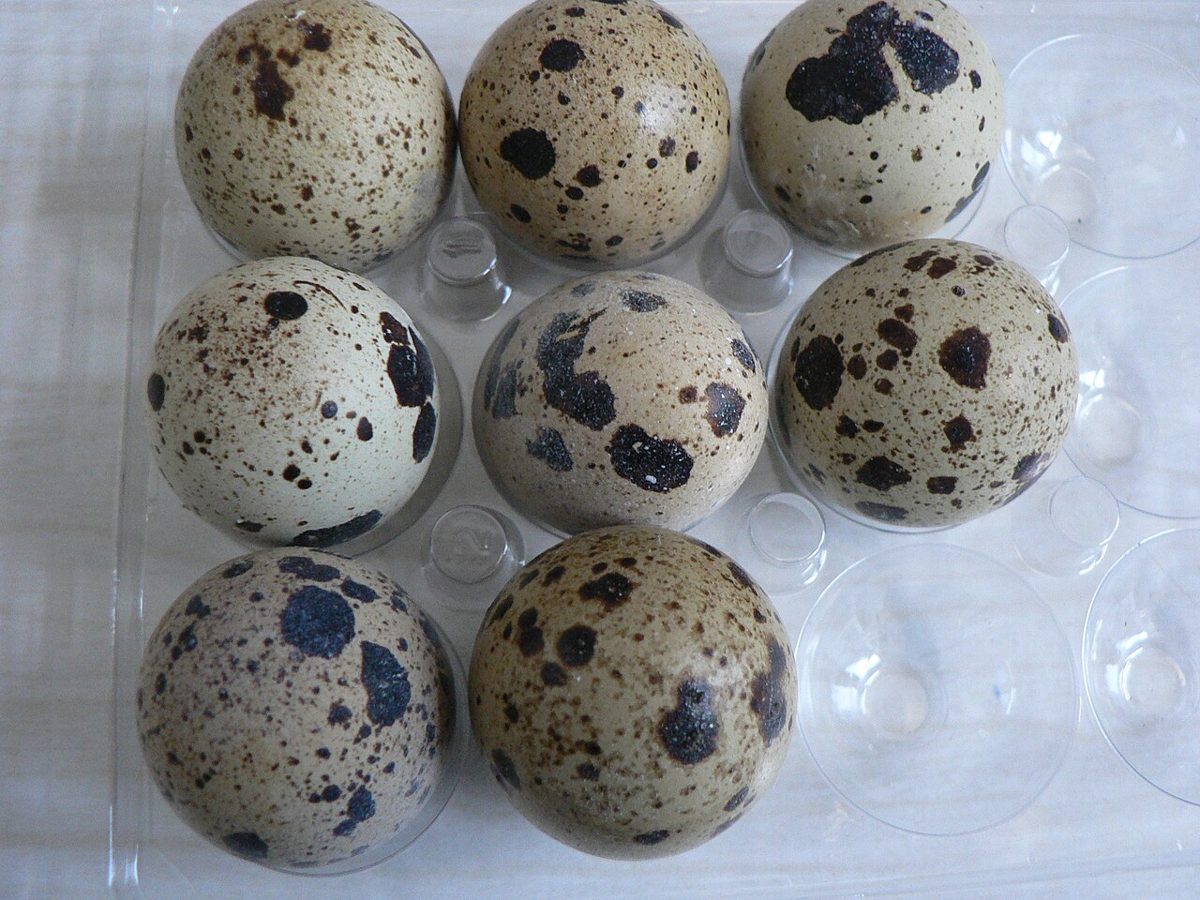

The numbers at a glance
| Measure | Typical figure | Source |
|---|---|---|
| Age at first egg | About 6–7 weeks | Cooperative Extension; NSW DPI |
| Full production | About 50 days of age | NSW DPI |
| First-year eggs per hen | About 200 with proper care | NSW DPI |
| Well-managed flocks | 280–300 eggs a year | ICAR-CCARI |
| Peak laying rate | About 85–92% of hens laying each day | Ioniță et al. |
| Egg weight | About 10 g (12 g in some lines) | Cooperative Extension; Ioniță et al. |
| Economical laying life | At least a year | Cooperative Extension |
| Light needed | 14–18 hours a day | Cooperative Extension |
The spread between 200 and 300 is real. It comes from differences in genetics, light, feed and how the eggs were counted (per hen alive, per hen housed, or best birds only).
What a laying year really looks like
The most useful public week-by-week data we found comes from a Romanian study by Ioniță and colleagues. They followed 900 quail on the country’s largest quail farm for the first 35 weeks of lay, with the same feed, cages, about 75°F and 65% humidity for every bird.
| Point in the laying cycle | Egg-type line | Meat-type Pharaoh line |
|---|---|---|
| Week 1 of lay | 15.8% laying | 8.2% laying |
| Peak (week 8 of lay) | 91.5% | 84.4% |
| Week 35 of lay | 75.5% | 58.0% |
| Average over 35 weeks | 78.9% | 65.9% |
| Eggs per hen per week | 5.5 | 4.6 |
| Total eggs per hen in 35 weeks | About 193 | About 161 |
| Feed per egg | 44.8 g | 47.5 g |
Three takeaways for backyard keepers:
- The first weeks are slow. Young hens start with a few eggs and odd shells. Production climbs for about two months.
- The peak is short. Even the egg line stayed above 80% for about 25 weeks; the meat line stayed above 70% for 11 weeks.
- Line matters. Over 35 weeks, the egg-type hens laid about 32 more eggs each on less feed per egg.
Ioniță and colleagues cite earlier work showing production starts to decline after about 26 weeks of lay. If you extend the egg line’s curve through a full year at a gently falling rate, you land in the 250 to 300 range that ICAR reports. A less selected backyard line, or one under shorter days, lands closer to NSW DPI’s 200.
Eggs per day, week and year
A hen lays at most one egg in a day. A “laying rate” of 80% means that on an average day, 8 out of 10 hens lay.
| Laying rate | Eggs per hen per week | Eggs per hen per year (if held all year) |
|---|---|---|
| 90% (peak) | 6.3 | About 330 |
| 80% | 5.6 | About 290 |
| 70% | 4.9 | About 255 |
| 60% | 4.2 | About 220 |
| 55% (NSW DPI’s 200 a year) | 3.8 | About 200 |
No hen holds a peak rate all year, so the right-hand column is a ceiling. For planning, use 4 to 5 eggs per hen per week.
How many hens do you need?
Extension notes that about five quail eggs equal one chicken egg. Use that to size your flock.
| Your household uses | Quail eggs needed per week | Hens to keep (at about 4.5 eggs per hen per week) |
|---|---|---|
| 6 chicken eggs a week | About 30 | 7 |
| 12 chicken eggs a week | About 60 | 13–14 |
| 18 chicken eggs a week | About 90 | 20 |
| A few quail eggs for snacks and salads | About 20 | 4–5 |
Add one or two extra hens to cover molts and older birds. Then check space; see how many quail per square foot.
What changes the yearly total
Light
Light is the main switch. Cooperative Extension says Japanese quail need 14 to 18 hours of light per day to maintain egg production. Natural day length in most of the lower 48 drops well below that from fall to early spring, so unlit flocks slow down or stop in winter. A cheap LED on a timer, adding morning light so total light reaches about 14–16 hours, keeps most flocks laying. Our seasonal quail care calendar shows when to switch the timer on and off.
Age
Production is highest in the first year. A 2024 Poultry Science study comparing young, mature and old laying quail found old hens laid fewer eggs, though their eggs were heavier, and their fertility and hatchability were lower. The authors linked the drop to fewer developing follicles and changes in the oviduct. In practice, many keepers replace layers after 12 to 18 months. See how long quail live in captivity for the full ageing picture.
Genetics
Egg lines lay more than meat lines, as the table above shows. Heavy jumbo and Texas A&M birds eat more feed and usually lay fewer eggs. Compare lines in jumbo vs regular coturnix and our Pharaoh quail profile.
Feed and calcium
Laying hens need a complete diet with enough protein and extra calcium for shells. Too many treats, chicken layer feed with too little protein, or no calcium source will cut production and shell quality. See quail feed protein percentage for the numbers.
Heat, stress and moving
Hot spells, predators at night, rough handling and moves all pause laying. NSW DPI notes that moving laying hens can stop production for a while. Our guide to why quail stop laying walks through each cause.
How to measure your own flock’s laying rate
Published numbers are averages. The only way to know whether your hens are doing well is to count. Poultry researchers use hen-day production:
Laying rate (%) = eggs collected ÷ (number of hens × number of days) × 100
For example, 10 hens that lay 58 eggs in a week have a laying rate of 58 ÷ (10 × 7) × 100 = 83%. That is close to the peak rates in the Romanian trial in the table above.
| Week | Hens | Eggs collected | Laying rate | Notes |
|---|---|---|---|---|
| 1 | 10 | 58 | 83% | Normal |
| 2 | 10 | 52 | 74% | Hot spell |
| 3 | 10 | 44 | 63% | Light timer failed; fixed day 20 |
| 4 | 10 | 57 | 81% | Back to normal |
Keep a tally on the cage door or a phone note. A sudden drop of 10 points or more in one week is your early warning to check light, water, feed, heat and pests before you lose a month of eggs.
Quail vs chicken egg output by weight
Egg count flatters quail; egg weight tells you how much food you get. Cooperative Extension says the average Japanese quail egg weighs about 10 g, roughly 8% of the hen’s body weight, and that it takes about five quail eggs to equal one chicken egg. A hen laying 250 eggs a year produces about 2.5 kg (5.5 lb) of egg. So if someone in your house wants the equivalent of one chicken egg a day (five quail eggs), plan on about 7 hens laying at 70%.
How to get the most eggs from your flock
- Start with an egg line. Ask the breeder how many eggs a week their hens lay at peak.
- Light 14–16 hours a day on a timer, every day, with lights added in the morning.
- Feed a complete game bird or layer ration with enough protein, and offer oyster shell or limestone on the side.
- Keep water clean and never let it run out. Laying stops fast without water.
- Collect eggs daily. Hens that find eggs piling up are more likely to break or eat them.
- Keep the right ratio. About one male to four or five hens, or no male at all if you do not need fertile eggs. Hens lay without a male.
- Avoid moves and changes while hens are in lay.
- Plan replacements. Hatch or buy a few new hens each year so older birds are not your whole flock.
Troubleshooting low egg numbers
| What you see | Likely cause | First fix |
|---|---|---|
| Hens 8+ weeks old, no eggs | Short days or low-protein feed | Light to 14–16 hours; check feed label |
| Eggs dropped in fall | Natural day length falling | Add morning light on a timer |
| Thin or soft shells | Low calcium or heat | Offer oyster shell; cool the pen |
| Sudden stop after a move | Stress | Keep conditions steady; wait 2–3 weeks |
| Fewer eggs at 12–18 months | Age | Add younger hens |
| Fewer eggs in a heat wave | Heat stress | Shade, airflow, cool water |
| Eggs missing or broken | Egg eating or hidden nests | Collect more often; add a dark corner |
Frequently asked questions
How many eggs does a quail lay a day?
At most one. At peak about 85 to 90 percent of healthy hens lay on a given day.
How many eggs does a quail lay a week?
About 5 to 6 at peak, and about 4 to 5 averaged across the year.
Do quail lay eggs all year?
Only with 14–18 hours of light. Without added light, most US flocks slow or stop in late fall and winter.
When do quail start laying?
At about 6 to 7 weeks of age; see our quail egg laying age guide.
Do quail lay fewer eggs as they age?
Yes. Production, fertility and hatchability fall in older hens, while egg weight rises.
Do quail need a male to lay eggs?
No. Hens lay without a male. You only need one for fertile eggs to hatch.
Sources
- Cooperative Extension. Raising Japanese Quail in Small and Backyard Flocks.
- Randall, M. and Bolla, G. NSW Department of Primary Industries. Raising Japanese Quail.
- ICAR-Central Coastal Agricultural Research Institute. Japanese quail.
- Ioniță, L., Popescu-Micloșanu, E., Custură, I. and Tudorache, M. Average production performances of the “Pharaoh” and “Balotești” laying quail populations. Scientific Papers, Animal Science Series, vol. 53, University of Agricultural Sciences and Veterinary Medicine Iași.
- Taghipour-Shahbandi, M., Zhandi, M., Ansari-Pirsaraei, Z. and Yousefi, A. R. 2024. Exploration of age-related changes in reproductive parameters of female Japanese quail (Coturnix japonica). Poultry Science 103:104499.