
Quick answer: Pharaoh quail are Japanese quail (Coturnix japonica) in the original wild-type color: brown, buff and black barring, with males showing a rusty, unspeckled breast and hens a pale, black-speckled one. In the US, “Pharaoh” usually means that color pattern on a standard or jumbo bird. In Europe the name often means a heavier meat strain. Standard Pharaoh hens weigh about 120–160 g (4–6 oz), start laying at about 6–7 weeks, and can be feather-sexed at about 3 weeks. They are the easiest coturnix for beginners.
Pharaoh quail are the bird most people picture when they hear “coturnix”: small, brown, streaky and busy. The name sounds exotic, but the bird is simply the wild-type color of the domestic Japanese quail. This guide explains what the name means on each side of the Atlantic, what the research says about Pharaoh growth and laying, how to sex them, and how to choose a good line.

What “Pharaoh” means
“Pharaoh” is a market name, not a registered breed. There is no breed standard, so two sellers can use it for birds that differ in size and production. In practice it is used in two ways.
| Where | What “Pharaoh” usually means | Typical size |
|---|---|---|
| United States | Wild-type colored coturnix, standard or “jumbo” size | Standard hens 120–160 g; jumbo lines larger |
| Central and Eastern Europe | A heavier, meat-oriented strain, usually wild-type colored | About 250 g in one Romanian trial |
| Both | Same species as every other coturnix | Feed, housing and hatching are the same |
Our coturnix quail breeds guide shows how Pharaoh fits with the other colors and size lines.
How to recognize a Pharaoh
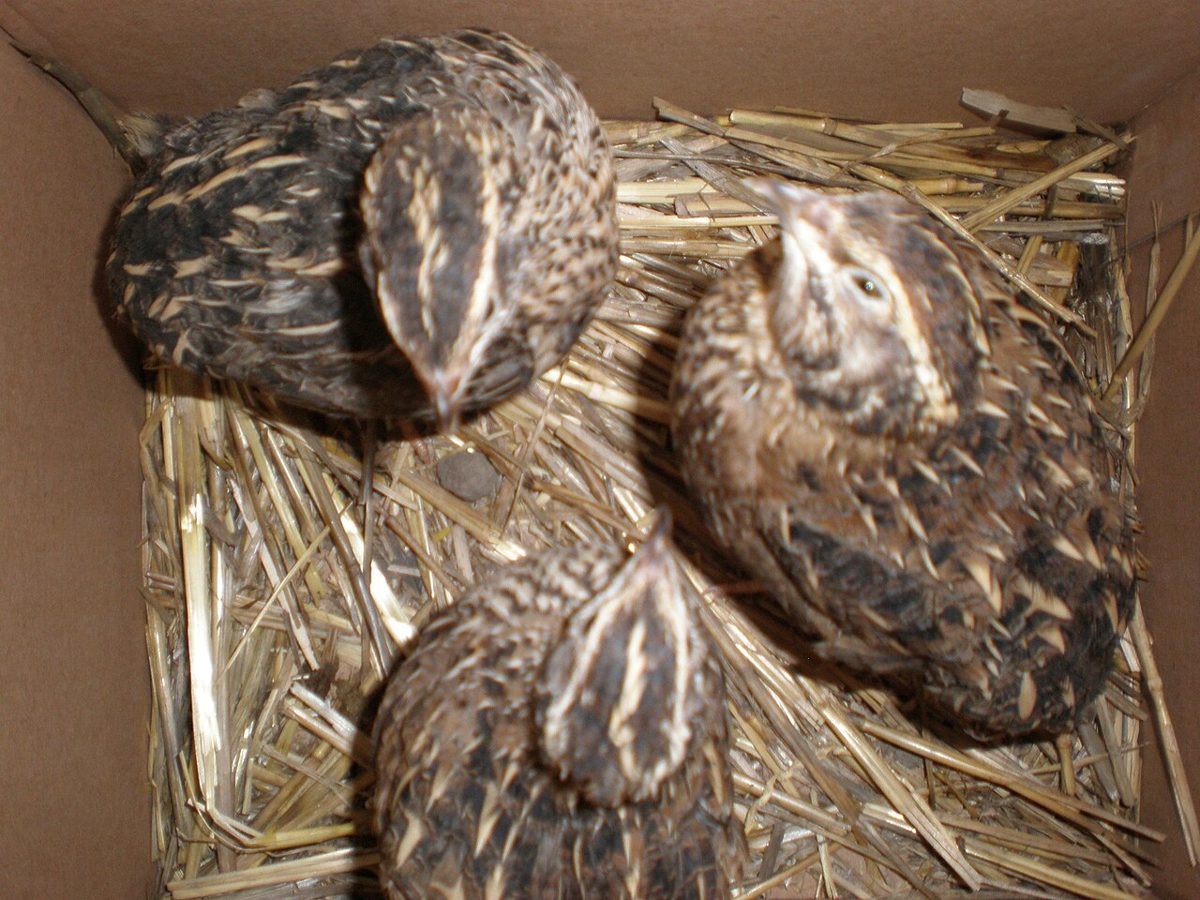
The Pharaoh is the wild-type pattern. Wikipedia’s Japanese quail entry describes wild birds as having brown and buff upperparts with darker streaks, with males developing a rusty breast in the breeding season.
- Male: rusty or cinnamon throat and breast with few or no speckles. Many have a darker brown face mask.
- Female: pale cream to buff breast covered in dark speckles, like a thrush.
- Chicks: brownish with yellow and dark stripes when they hatch, according to NSW Department of Primary Industries.
- Eggs: mottled brown on a cream or blue-tinged shell, often with a chalky bloom. Each hen tends to lay her own pattern.
Many color mutations look close to wild type, especially Italian (lighter, golden) and the darker Rosetta or Tibetan birds. If a seller’s “Pharaoh” chicks grow up a different color, they were probably mixed stock.
Size and weight
Domestic Japanese quail have been selected for size for centuries, and Pharaoh lines range from small to large.
| Bird | Adult weight | Source |
|---|---|---|
| Wild Japanese quail | About 90–100 g | Wikipedia, citing breeder literature |
| Standard domestic male | 100–140 g (3.5–4.9 oz) | Cooperative Extension |
| Standard domestic female | 120–160 g (4.2–5.6 oz) | Cooperative Extension |
| Jumbo coturnix | About 250–300 g (9–11 oz) | Cooperative Extension |
| European “Pharaoh” strain hens | About 250 g | Ioniță et al., Romanian trial |
Hens are heavier than males, which surprises a lot of new keepers. If you want bigger Pharaohs for the table, buy a line sold as jumbo Pharaoh and ask the breeder for 8-week weights. Our jumbo vs regular coturnix comparison explains what to expect from heavy lines.
Laying: how good are Pharaoh hens?
Standard Pharaoh hens are productive layers. Cooperative Extension says Japanese quail mature in about six weeks, can produce eggs by seven weeks, and continue to lay economically for at least a year, with eggs of about 10 g.
Meat-oriented Pharaoh strains lay fewer eggs. Ioniță and colleagues (University of Agronomical Sciences and Veterinary Medicine Bucharest) followed 900 quail on Romania’s largest quail farm for the first 35 weeks of lay. Both groups had the same feed, cages and climate (about 75°F and 65% humidity):
| Measure, weeks 1–35 of lay | Balotești (egg line) | Pharaoh strain |
|---|---|---|
| Peak laying rate (week 8) | 91.5% | 84.4% |
| Average laying rate | 78.9% | 65.9% |
| Eggs per hen per week | 5.5 | 4.6 |
| Eggs per hen in 35 weeks | About 193 | About 161 |
| Feed per bird per day | 33.9 g | 36.5 g |
| Feed per egg | 44.8 g | 47.5 g |
| Hen body weight | About 226 g | About 251 g |
| Average egg weight | 12.1 g | 12.9 g |
| Laying persistence | Above 80% for 25 weeks | Above 70% for 11 weeks |
The authors concluded that the Pharaoh strain suits meat production or use as a paternal line rather than egg production. That is a European meat strain; a US Pharaoh line selected for eggs may lay more. The lesson is to ask the seller what the line was selected for. Our guide to quail egg production per year explains realistic numbers.
Why beginners like Pharaohs
- Easy sexing. Breast color separates males from hens from about three weeks. That makes it simple to keep the right ratio and pull extra males. See how to tell male from female coturnix.
- Camouflage. Wild-type color hides dirt and looks natural in an aviary.
- Genetic breadth. In a 2023 genotyping study of eight quail breeds (Volkova et al., Animals), Japanese wild-type and Pharaoh birds had the fewest and shortest runs of homozygous DNA, a sign of lower inbreeding than heavily selected lines such as Texas White and Tuxedo.
- Price and availability. Pharaoh eggs and chicks are the most widely sold coturnix. In November 2026 Purely Poultry listed jumbo Pharaoh hatching eggs at $1.80 per egg in packs of 36. See what quail cost per bird.
- Dual purpose. Keep the hens for eggs and process extra males at 6 to 8 weeks.
The one cosmetic downside is meat appearance: dark pin feathers show on a plucked Pharaoh. If you plan to sell dressed birds, compare with the white line in Texas A&M quail vs coturnix.
Care: the same as any coturnix
Pharaohs need nothing special. The basics:
| Need | What to give | More detail |
|---|---|---|
| Brooding | About 95–100°F at first, lowered weekly | Brooder guide |
| Feed | Game bird starter (about 24–30% protein), then layer feed with calcium | Feed guide |
| Light | 14–18 hours a day for laying hens (Cooperative Extension) | Laying guide |
| Space | Enough floor area to prevent fighting | Stocking guide |
| Ratio | About 1 male to 4–5 hens for breeding | Breeding ratio guide |
Start with our complete guide to raising coturnix quail, which covers brooding, feeding, housing and laying step by step.
Pharaoh vs other coturnix types
| Type | Look | Best for | Feather-sexing | Main trade-off |
|---|---|---|---|---|
| Standard Pharaoh | Wild-type brown | Eggs, beginners | Yes, from about 3 weeks | Small carcass |
| Jumbo Pharaoh | Wild-type brown, bigger frame | Meat and eggs | Yes | Line quality varies a lot by breeder |
| Texas A&M | White feathers | Meat with clean-looking skin | No | Fewer eggs; higher inbreeding in one 2023 study |
| Celadon (any color) | Varies; lays blue eggs | Egg color | Depends on feather color | Needs both parents to carry the gene |
| Other color lines (Italian, tuxedo, etc.) | Varies | Looks, breeding projects | Often not reliable | Color can mask sex and line purpose |
If you are unsure, start with Pharaohs and add other colors once you know how your setup performs. Our celadon quail guide explains how the blue-egg gene is inherited.
A simple Pharaoh plan for eggs and meat
- Order or hatch 20 to 30 eggs or chicks of a line sold for the purpose you want.
- Sex them at 3 to 4 weeks by breast feathers and move extra males to their own pen.
- Keep the best hens for laying, plus 1 male for every 4 to 5 hens if you want fertile eggs.
- Give layers 14 to 18 hours of light; keep meat birds on shorter days so they put energy into growth instead of fighting.
- Weigh a few birds at 6 and 8 weeks. Process meat birds when they reach your target weight.
- Record eggs per day for the first 10 weeks of lay. Compare with the table above to see whether your line behaves like an egg line or a meat line.
- Hatch replacements from your best layers each year, since output falls in the second year.
How to choose a good Pharaoh line
- Ask what the line was selected for: eggs, meat or both.
- Ask for adult weights and roughly how many eggs hens lay per week at peak.
- Check that chicks are true to color. Wild-type chicks should look alike.
- Prefer NPIP-tested breeders, especially for shipped eggs or chicks.
- If you plan to breed, buy from more than one source to widen the gene pool.
Troubleshooting
| Problem | Likely cause | What to do |
|---|---|---|
| Some chicks grow up a different color | Mixed or mislabeled stock | Ask the seller; select true-colored birds for breeding |
| Hens lay fewer eggs than expected | Meat-type line, short days, young or old hens | Check the line’s purpose and give 14–18 hours of light |
| Birds smaller than “jumbo” listing | Line not selected for size, or underfed | Weigh at 8 weeks; feed high-protein starter early |
| Can’t tell sexes at 2 weeks | Too early | Wait until 3–4 weeks for breast feathers |
| Males fighting | Too many males | Keep about 1 male per 4–5 hens |
Frequently asked questions
Is the Pharaoh quail a separate species?
No. It is the wild-type color of the Japanese quail, Coturnix japonica.
Are Pharaoh quail good for eggs?
Standard US Pharaoh lines are good layers. Heavy European Pharaoh strains lay fewer eggs and suit meat.
How big do Pharaoh quail get?
Standard hens weigh about 120–160 g; males are a bit lighter. Jumbo Pharaoh lines can weigh about twice that.
When can you sex Pharaoh quail?
At about three weeks, when males grow rusty breast feathers and hens show a speckled breast.
What color eggs do Pharaoh quail lay?
Speckled brown eggs, usually on a cream or pale blue shell. Each hen tends to lay her own pattern.
Are Pharaoh quail good for beginners?
Yes. They are easy to sex, widely sold and as hardy as any coturnix.
Sources
- Cooperative Extension. Raising Japanese Quail in Small and Backyard Flocks.
- Randall, M. and Bolla, G. NSW Department of Primary Industries. Raising Japanese Quail.
- Ioniță, L., Popescu-Micloșanu, E., Custură, I. and Tudorache, M. Average production performances of the “Pharaoh” and “Balotești” laying quail populations. Scientific Papers, Animal Science Series, vol. 53, University of Agricultural Sciences and Veterinary Medicine Iași.
- Volkova, N. A. et al. 2023. Genotyping-by-Sequencing Strategy for Integrating Genomic Structure, Diversity and Performance of Various Japanese Quail Breeds. Animals 13:3439.
- Wikipedia. Japanese quail.
- Purely Poultry. Jumbo Pharaoh Coturnix Quail Hatching Eggs, checked November 2026.