
Quick answer: Why are my quail chicks dying? In the first week the usual causes are chilling or overheating, drowning, not eating or drinking (starve-outs), piling when startled, and shipping stress — not a rare disease. Mississippi State Extension calls improper brooding one of the most common stressors in poultry, and Poultry Extension warns that young quail drown in shallow water and smother when they pile in corners. Fix heat, water, feed and draft control first, then look at pasty vent, splay leg, coccidiosis or a contaminated brooder if deaths continue.
Why are my quail chicks dying is a panic question, and it should be treated like a checklist, not a mystery. Coturnix chicks hatch at only about 8–9 grams. They cannot hold their body temperature at first, they can slip through gaps, and they can drown in a waterer that would be harmless to a chicken chick. This guide starts with the first 48 hours, then walks through the most common patterns of loss, what to change immediately, and when a disease or a lab visit is more likely. It is about chicks, not adult die-off; for grown birds see why are my quail dying.
Act first, then sort the cause
When chicks are dying, do these four things before you reorder feed or start a medicine:
- Measure temperature at chick height, 1 inch above the litter, at the edge of the heat source. Mississippi State’s brooding guide starts chicks around 90–95°F at that spot.
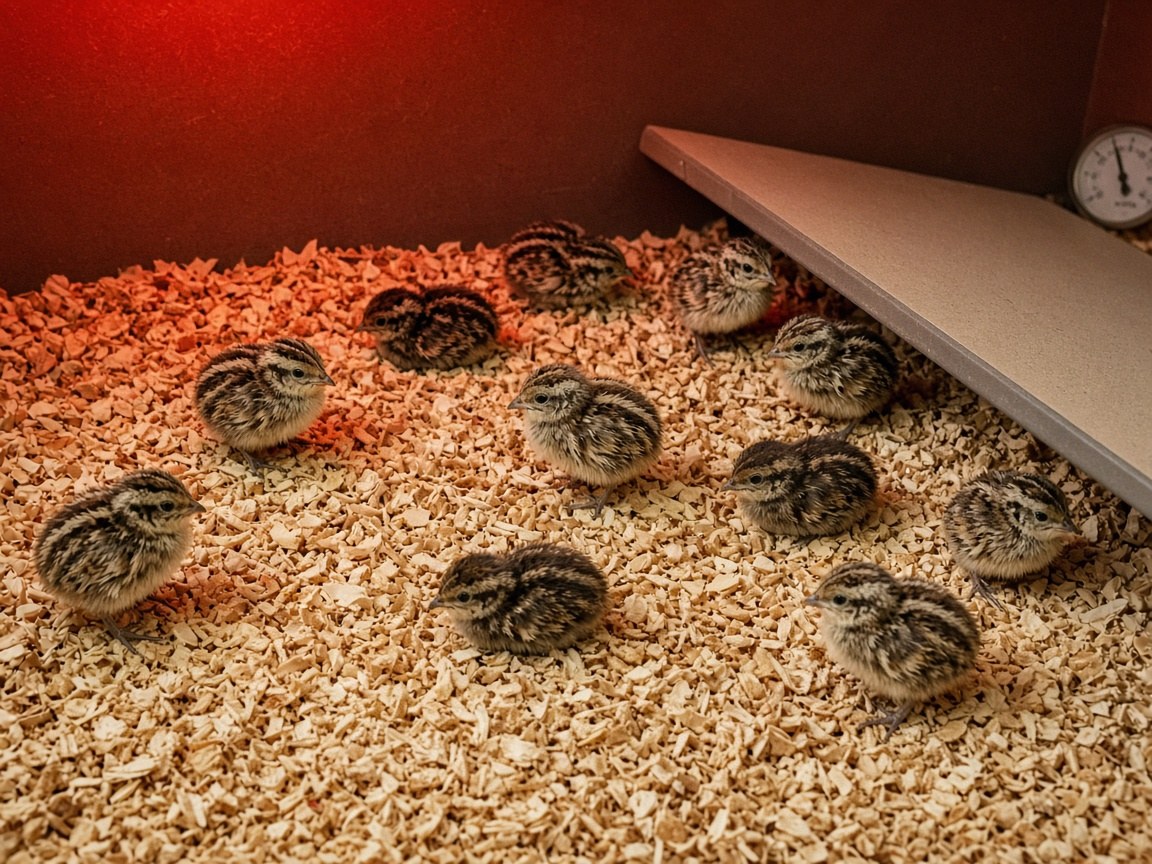
- Look at behavior. Tight huddles under the lamp mean cold. A ring of panting chicks on the edges, or chicks pressed to the walls, means too hot. Calm chicks evenly spread around the heat mean you are close.
- Check water. Is it full, clean and impossible to lie down in? Are there already wet, chilled chicks?
- Check crops. After the birds have had access to feed and water for a few hours, many crops should feel like a soft pea, not flat or tight as a drum.
Poultry Extension also recommends rounded corners and brooder guards for the first week or two because frightened chicks pile and smother the ones on the bottom. If you have a square box and a death in a corner, that is a leading clue.
The most common causes, by timing
| When it happens | Likely cause | What you see | First fix |
|---|---|---|---|
| Arrival day or night 1 | Shipping stress, dehydration, a cold box | Weak, floppy chicks, crusty vents, empty crops | Warm them first, then dip beaks in water, then offer starter; electrolytes for a short period if you use them |
| Days 1–3 | Chill, overheat, drowning, starve-out, escapes | Wet chicks, chicks in the waterer, dead chicks far from heat, missing chicks | Reset heat; marble the waterer; close every gap; put feed on a flat lid they will walk on |
| Days 2–5 | Pasty butt, slick-floor splay, piling | Soiled vents, chicks doing the splits, a pile in one corner | Clean vents, add traction, round corners, reduce startle |
| Days 5–14 | Coccidiosis or a dirty, wet floor | Bloody or very loose droppings, sudden deaths after the brooder got dirty | Dry clean bedding; see coccidiosis in quail; call a vet or extension lab if losses climb |
| Any day | Toxic bedding, chemical fumes, overheating from a lamp too low | Sudden cluster of deaths, red skin, scorched litter | Unplug unsafe heat; move to a clean, ventilated brooder; never use a heat lamp near a dry, loose fire risk without a ceramic fixture and a safety plan |
Mississippi State notes that in the South, overheating is a more frequent brooding error than too little heat. A 250-watt bulb in a small tote can cook chicks even when the room feels fine to you.
Starve-outs, drownings and pasty vent
Starve-outs. Chicks have a residual yolk, but they still need to learn to eat and drink quickly. If feed is in a deep trough they cannot reach, or only in a dark corner away from heat, they will wander and fade. NSW DPI suggests covering the papered floor with feed and filling troughs to overflowing at first. A shiny lid of crumble, plus tapping a finger in the feed, helps the group copy one eater.
Drownings. Poultry Extension is direct: young quail have a tendency to drown in shallow water. Use a narrow-lip chick font, or fill a wider base with marbles or clean gravel so they can only get a beak in. Change wet litter at once. A soaked chick chills even in a warm brooder.
Pasty vent. Droppings glue the vent shut, and the chick cannot pass more droppings. It is often tied to chilling or a sudden diet change. Warm water, a soft cloth, and very gentle cleaning can open the vent; pulling dry crust can tear the skin. Then fix the heat. This is not the same problem as splayed leg, which comes from slick flooring and needs traction and, sometimes, a temporary hobble.
Heat, space and “they were fine last night”
Chicks can look perfect at 8 p.m. and be down at midnight if the room temperature drops or a bulb fails. Put a thermometer where the birds stand, not on a shelf. Have a backup heat source. Mississippi State says chicks need 2 to 4 weeks to develop their own temperature control, and that brooder temperature is typically dropped about 5°F each week. The week-by-week numbers live in the brooder temperature by week chart; the duration question is in how long quail chicks need a heat lamp.
Crowding makes every other problem worse. A small storage tote that was fine for six chicks is a trampling hazard for 25. Give them room to leave the hot spot.
When it is probably disease
A single weak shipped chick is sad but common. A steady daily loss after the brooder is warm, dry and well fed is a different pattern.
Consider disease, including coccidiosis, bacterial infection or a contaminated incubator, when:
- Chicks were doing well, then several become droopy and die over a day or two.
- Droppings are bloody, sharply foul, or very watery in many birds.
- There is gasping, sneezing or crusted eyes. See respiratory infection.
- You reused wet litter or mixed new chicks onto an old floor.
- The incubator or hatcher was dirty, or many chicks had unhealed navels.
In those cases, isolate the sick if you can, clean the brooder, and contact a poultry veterinarian or your state diagnostic lab. Guessing at antibiotics without a label or a diagnosis wastes time and can be illegal.
A night-of-loss inspection list
- Feel the dead chicks: wet, cold, or unusually hot?
- Where are the bodies: under the lamp, in a corner, in the waterer, or against a wall?
- Are remaining chicks huddled, panting, or calm?
- Are crops empty at a time of day they should have eaten?
- Any sharp smell of ammonia or manure cake?
- Any obvious injury, splay, or pasted vent on the living chicks?
Write down ages, counts and what you changed. If you do go to a lab, that record is useful.
Troubleshooting
| Pattern | Most likely cause | Do this now |
|---|---|---|
| Bodies in or beside the waterer | Drowning plus chill | Change the waterer immediately; dry and warm soaked chicks |
| A pile in a corner, some dead underneath | Panic piling | Round the corners; lower sudden noise and shadows; check night temperatures |
| Chicks noisy and packed under the lamp | Too cold | Raise the temperature at chick height; block drafts |
| Chicks panting at the edges, maybe red or weak | Too hot | Raise or dim the heat; give a cool zone |
| Empty crops, alert but fading | They have not learned to eat | Floor-feed crumbles; show them water; check beak deformities |
| Deaths after day 7 with dirty wet litter | Coccidia or bacterial load | Full clean-out; dryness; seek diagnosis if it continues |
Frequently asked questions
Why did my shipped chicks die the first night?
Long travel, no water and a cold box add up. Warm them before you try to feed, offer water they cannot drown in, then starter. Some losses still happen after a hard trip. A ready brooder, as described in the brooder setup guide, is the best prevention.
Should I give antibiotics when chicks start dying?
Not as a first step, and not without a diagnosis and a legal, labeled product. Heat, water, feed and sanitation solve most early deaths. Random medication can hide the real problem.
Can the heat lamp itself kill chicks?
Yes. A lamp that is too low, a fixture that fails and falls, or a brooder with no cool zone can overheat or start a fire. Use a secure ceramic fixture, a backup plan, and enough space for chicks to walk away from the heat.
Is it normal to lose some chicks?
A small percentage of hatch or shipped groups sometimes fail, especially the smallest birds. Repeated daily losses are not something to accept; they usually point to a brooder or hygiene fault you can fix.
Why are only the smallest chicks dying?
They chill faster, lose fights at the feeder, and get trapped in corners. Add a second feeder and waterer, reduce crowding, and make sure the temperature is right at floor level.
Sources
- Tom W. Smith, Jr., Mississippi State University Extension. Brooding Chickens and Quail (improper brooding as a common stressor; 90–95°F at the brooder edge; 2–4 weeks to develop temperature control; overheating as a frequent error).
- Raising Japanese Quail in Small and Backyard Flocks, Jacob and McCrea, Poultry Extension (drowning; piling and rounded corners; small escape gaps).
- Randall, M. and Bolla, G. Raising Japanese quail. NSW DPI, via The Poultry Site (early feed presentation).