
Quick answer: Coccidiosis in quail is an intestinal disease caused by Eimeria parasites that spread through droppings in damp litter. Watch for fluffed, hunched birds, watery or bloody droppings, weight loss and fewer eggs, mostly in young birds on the floor. Confirm it with a fecal test or necropsy, because ulcerative enteritis looks similar and needs different treatment. Prevention is dry litter, clean waterers, wire or frequently changed floors, and a medicated game bird starter. Amprolium in the water is the usual treatment; ask a vet for dosing, because few drugs are labeled for coturnix.
Coccidiosis in quail is one of the most common reasons young birds go downhill on a backyard setup. The parasites are almost everywhere poultry are kept, so the goal is not to eliminate them but to stop them building up to the point where birds get sick. This guide explains how quail coccidia work, how to tell coccidiosis from look-alike diseases, what the US drug labels actually allow, and a step-by-step plan for prevention and outbreaks.

What causes coccidiosis in quail
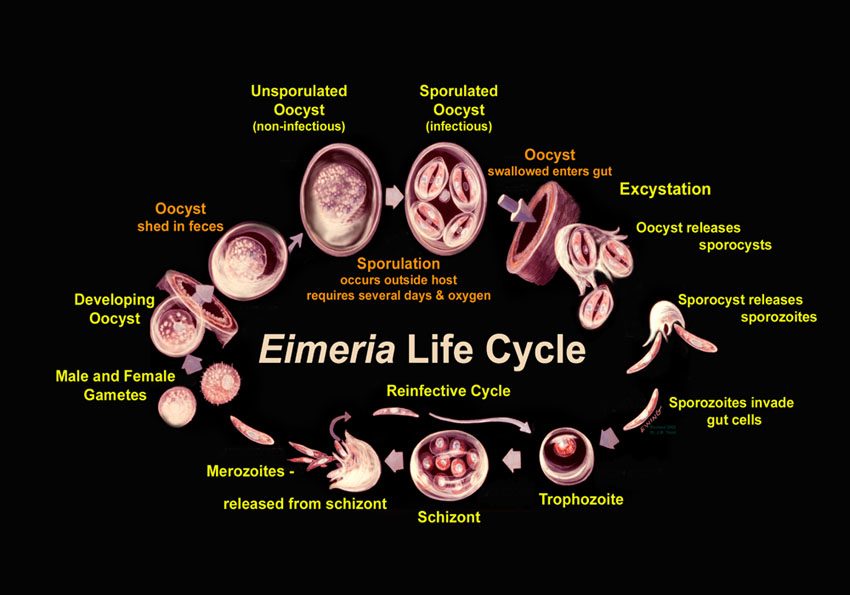
Coccidiosis is caused by single-celled parasites called coccidia, mostly Eimeria species. Birds swallow the parasite’s eggs (oocysts) from contaminated litter, feed or water. The parasites multiply in the gut lining and damage it.
Key facts from the Merck Veterinary Manual:
- In most poultry each Eimeria species attacks one part of the gut, but in game birds, including quail, coccidia may infect the entire intestinal tract.
- Fresh oocysts in droppings are not infective until they sporulate, which takes 1 to 2 days at 70–90°F with moisture and oxygen. Warm, damp litter is the perfect incubator.
- The prepatent period (time from swallowing oocysts to shedding new ones) is 4 to 7 days, so an outbreak can build in about a week.
- Oocysts survive a long time, resist some common disinfectants, and spread on shoes, equipment, flies and rodents. They are killed by freezing or high heat.
- Disease happens when birds swallow large numbers of sporulated oocysts, especially stressed or young birds.
Which coccidia infect coturnix?
Coccidia are host-specific. Japanese quail have their own species. Ruff, Fagan and Dick (Poultry Science, 1984) studied an outbreak in Japanese quail in South Carolina: about 65% of oocysts were Eimeria uzura, 33% E. tsunodai and 2% E. taldykurganica. These coccidia did not infect bobwhite quail, chukars, pheasants, chickens or turkeys in their tests, and weight gain fell with as few as 500 oocysts.
Two practical points follow. Chickens are an unlikely source of coturnix coccidiosis, because coccidia are host-specific, and the drug labels written for bobwhite coccidia (E. lettyae, E. dispersa) do not name the species that infect coturnix.
Signs of coccidiosis
| Sign | What it looks like | Notes |
|---|---|---|
| Fluffed, hunched birds | Sitting apart, eyes half closed | Often the first sign |
| Diarrhea | Watery, mucus-streaked or bloody droppings | Blood is not always present |
| Weight loss | Keel bone feels sharp | Growth stalls in young birds |
| Less eating and drinking | Feeder and waterer last longer | Merck lists reduced feed and water intake |
| Fewer eggs | Laying drops in adult hens | Merck lists decreased egg production |
| Deaths | One or several birds a day | Survivors usually recover in 10–14 days (Merck) |
Young birds on litter, damp brooders and crowded pens are the highest risk. Merck notes that birds kept at all times on wire floors, which separate them from droppings, rarely get clinical coccidiosis.
Coccidiosis or something else?
Several quail diseases look alike from the outside. That is why a diagnosis matters before you treat.
| Disease | Key clues | What usually helps |
|---|---|---|
| Coccidiosis | Gradual, damp litter, young birds, watery or bloody droppings | Anticoccidial (amprolium), dry litter |
| Ulcerative enteritis (“quail disease”) | Sudden deaths, watery white droppings, ulcers in the gut at necropsy | Vet-prescribed antibiotic; see our quail diseases guide |
| Respiratory infection | Sneezing, rattly breathing, eye discharge; droppings may be loose | Diagnosis and supportive care; see quail respiratory infection |
| Worms | Slow weight loss in older birds on soil | Dewormer after a fecal test |
| Heat stress, bad water | Many birds at once on a hot day or after a waterer failed | Fix the environment |
For sudden multiple deaths, see why are my quail dying and call your state veterinary diagnostic lab.
How coccidiosis is diagnosed
Merck lists two methods:
- Fecal flotation. A vet or lab looks for oocysts in fresh droppings. Merck warns that oocyst counts relate poorly to how sick birds are, so a few oocysts in a healthy bird mean little.
- Necropsy. A lab examines a fresh dead bird, scrapes the gut lining and looks for parasites and lesions. This is the most reliable way to separate coccidiosis from ulcerative enteritis.
State veterinary diagnostic labs often charge backyard owners modest fees for a necropsy. Chill (do not freeze) a dead bird in a sealed bag and call the lab the same day.
Treatment: what is legal and what works
Drug rules matter with quail, because very few products are labeled for coturnix and many keepers eat the eggs and meat.
| Drug | Type | What the label or Extension says | Prescription needed? |
|---|---|---|---|
| Amprolium | Anticoccidial | Mississippi State Extension lists it as FDA-approved for game bird feeds; usually given in water for outbreaks | No; anticoccidials were not moved to prescription |
| Monensin (Coban, Coxidin) | Ionophore anticoccidial in feed | Coxidin 90 label: prevention in growing bobwhite quail at 73 g per ton; not for laying chickens | Feed additive; use only in labeled feeds |
| Sulfa drugs | Antibacterial with anticoccidial action | Medically important antibiotic | Yes, since June 2023 (FDA GFI #263) |
| Toltrazuril and others | Anticoccidial | Not approved for poultry in the US | Do not use without a vet |
What that means in practice:
- Amprolium is the usual first choice. It is sold over the counter as a water additive for chickens and other livestock. Use on coturnix is extra-label, so ask a vet or Extension poultry specialist for a dose and an egg and meat withdrawal time.
- Monensin feed is labeled for growing bobwhite quail. The Coxidin label warns that monensin has been fatal to horses and guinea fowl, so never let those animals near it.
- Sulfa drugs and antibiotics now require a veterinarian’s prescription. The Indiana Board of Animal Health’s GFI #263 FAQ lists sulfa drugs among the products that moved from over-the-counter to prescription by June 11, 2023, and says some coccidiostats are not affected.
- Merck notes that treatment for coccidiosis is usually given in water, because sick birds drink when they will not eat, and that antibiotics and supportive care may be needed to limit dehydration and secondary infection.
Step-by-step outbreak plan
- Separate sick birds into a warm, clean hospital cage.
- Get a diagnosis. Send a fresh dead bird or droppings to a lab, or call a vet.
- Start the vet-advised treatment in the drinking water for the whole affected group, not only the sick birds. Remove other water sources during treatment.
- Change all litter and scrub feeders and waterers. Dry the pen fully.
- Support the birds. Keep chicks warm; offer plain electrolytes only if your vet agrees, and do not mix them into medicated water unless told to.
- Stop vitamin supplements with high thiamine during amprolium treatment if your vet advises, since amprolium works by blocking the parasite’s thiamine uptake.
- Follow the withdrawal time before eating eggs or meat.
- Watch for 2 weeks. Survivors usually recover in 10 to 14 days.
Prevention plan
Merck says practical management cannot prevent infection completely. The aim is to keep the dose low while birds build immunity.
- Keep litter dry. Fix leaking waterers, add fresh bedding often, and replace wet patches daily. Our quail bedding guide compares materials.
- Use wire floors or raised cages for adult birds where practical, with a solid resting area to protect feet.
- Feed a medicated game bird starter to chicks if your keeping system is litter-based. Mississippi State Extension recommends a coccidiostat in feed for growing birds from hatch until a week before processing, and for breeder replacements until about 16 weeks.
- Clean waterers daily. Raised drinkers or nipples keep droppings out.
- Do not crowd. See how many quail per square foot.
- Brood clean. Start each hatch in a cleaned, dry brooder; see our brooder setup guide.
- Practice biosecurity. Use dedicated shoes, quarantine new birds, and control rodents and flies.
- Use heat on equipment. Because oocysts resist some disinfectants, a thorough scrub followed by drying, sun or hot water is more reliable than disinfectant alone.
Should you use medicated feed?
| Situation | Medicated starter? | Why |
|---|---|---|
| Chicks on litter or in floor brooders | Yes, usually | Highest coccidiosis risk |
| Chicks on wire or in very clean, dry brooders | Optional | Low exposure |
| Meat birds | Yes, but switch to unmedicated feed for the last week | Mississippi State Extension advice for residues |
| Laying hens | Usually no | Let adults rely on immunity; check any label for laying restrictions |
| Vaccinated chicks | No, unless the vaccine maker says so | Anticoccidials can block vaccine strains; few vaccines exist for quail |
Troubleshooting
| Problem | Likely reason | What to do |
|---|---|---|
| Outbreak returns every hatch | Oocysts building up in the brooder | Deep clean, dry and heat-treat the brooder between hatches |
| Birds sick despite medicated feed | Wet litter overwhelms the drug; resistance; wrong diagnosis | Fix moisture; get a lab diagnosis |
| Treatment not working in 3 days | Ulcerative enteritis or another disease | Send a bird for necropsy now |
| Bloody droppings in one bird only | Normal cecal droppings or minor issue | Watch the bird; act if it fluffs up or stops eating |
| Losses only in adults | Less likely coccidiosis | Look at worms, laying problems, predators |
Frequently asked questions
What are the first signs of coccidiosis in quail?
Fluffed, hunched birds that eat and drink less, followed by watery or bloody droppings.
Can quail get coccidiosis from chickens?
Coccidia are host-specific. The species found in a Japanese quail outbreak did not infect chickens, and chicken species are not expected to infect quail.
Is amprolium safe for quail?
Amprolium is widely used in game birds, but coturnix use is extra-label. Ask a vet for the dose and egg and meat withdrawal time.
Can I eat eggs during treatment?
Only after the withdrawal time a vet gives you. Labels for chickens do not automatically apply to quail.
Does medicated feed stop coccidiosis completely?
No. It keeps numbers down. Dry litter and clean water still matter most.
How long does coccidiosis last in quail?
Merck notes surviving birds usually recover in 10 to 14 days.
Sources
- Gerhold, R. W. Merck Veterinary Manual. Coccidiosis in Poultry.
- Ruff, M. D., Fagan, J. M. and Dick, J. W. 1984. Pathogenicity of coccidia in Japanese quail (Coturnix coturnix japonica). Poultry Science 63:55–60.
- Mississippi State University Extension. Quail Feed Medications.
- DailyMed, US National Library of Medicine. Coxidin 90 (monensin) label.
- Indiana Board of Animal Health. Frequently Asked Questions About GFI #263.
- US Food and Drug Administration. GFI #263: Frequently Asked Questions for Farmers and Ranchers.