
Quick answer: Can quail be raised on the ground? Yes, coturnix can live in a covered ground pen, but a raised hutch is usually easier to keep dry, predator-proof and clean for a backyard egg flock. Ground pens offer more natural scratching and can work if the run is roofed, dry, well drained and wrapped with hardware cloth, including a buried apron. The trade-offs are mud, hidden eggs, parasites such as coccidia, and digging predators. If you cannot keep the soil or litter dry, choose a raised floor.
Can quail be raised on the ground vs in a raised hutch is a housing choice, not a moral one. Both can be done well, and both fail in specific ways. Poultry Extension notes that Japanese quail in community pens hide eggs in the litter instead of using nests, which is the everyday headache of ground housing. Raised wire or slat floors keep birds off wet manure and make eggs easier to collect, but they need comfortable mesh and a solid place to rest so feet do not suffer. This comparison covers hygiene, predators, parasites, winter and summer, and which setup fits eggs, meat or a pet flock.
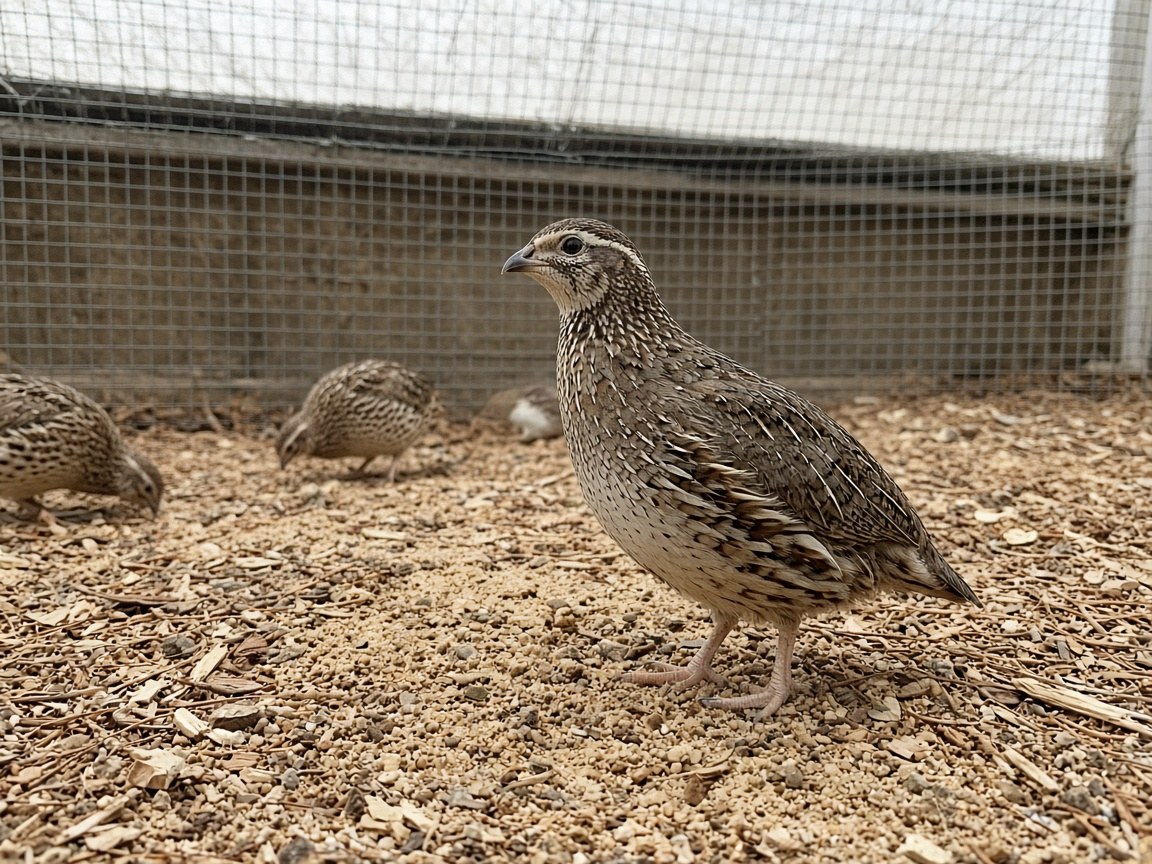
Ground pen vs raised hutch at a glance
| Issue | Ground pen or colony coop | Raised hutch or wire-cage |
|---|---|---|
| Dryness | Harder; soil and deep litter stay wet after rain or drinker spills | Easier; droppings fall through or sit in a tray you dump |
| Eggs | Often hidden in litter; dirtier shells | Easier to see and collect; roll-out trays possible |
| Predators | Must stop diggers (rats, weasels, dogs) and anything that can tear a weak floor | Height helps, but legs and doors still need hardware cloth |
| Parasites | Higher contact with coccidia and worms if the patch stays dirty | Lower contact with soil; still clean trays or you will have flies and ammonia |
| Feet and legs | Soft ground is comfortable if it is dry; mud and manure cake feet | Wire must be the right mesh; add a rest mat to lower bumblefoot risk |
| Work | Litter changes, mud, egg hunts | Daily tray dumps, as in how to clean a quail cage |
| Best fit | Larger colony, aviary, or keepers who will rest and rotate ground | Most backyard egg flocks, balconies, small yards |
A “raised hutch” here means a stand-alone cage or rabbit-hutch-style box with the floor off the ground, usually wire or slats over a tray or open droppings zone. A “ground pen” means the birds can stand on soil, sand or a deep-litter floor at ground level, including a converted shed with a dirt or litter floor and an attached run.
What a safe ground setup actually requires
Raising quail on the ground is not the same as opening a chicken tractor and walking away. The pen still needs the features in the quail housing guide and the predator-proof coop checklist:
- A roof over the whole area. Hawks hunt ground flocks in open runs. Rain on uncovered soil makes the parasite and ammonia problem worse.
- ½-inch hardware cloth, not chicken wire, on sides. An apron or buried skirt (often 12 inches out and down) to stop digging.
- A tight door and no rat-sized gaps. Rats kill chicks and small adults on the floor at night.
- Dry, drained ground. A low spot that puddles is a poor quail yard.
- About 1 square foot per adult, and more in a colony if birds are nervous or you keep jumbo lines. See how many quail per square foot.
- A dry dust bath, hides, and a low or netted ceiling so birds that flush do not scalp themselves.
Deep litter can work in a dry shed: a thick carbon bedding that you add to and eventually compost. It fails when it becomes a wet, packed mat. If a squeezed handful drips, you are no longer managing litter; you are holding a manure sponge.
Parasites and disease on dirt
Coccidia leave oocysts in droppings. On wet ground, birds keep pecking in the same contamination. The risk is real for chicks and for crowded adult pens, which is why the coccidiosis in quail guide stresses dryness and sanitation. Worms and some bacteria follow the same pattern: soil contact is not automatically “more natural and therefore healthier.”
A raised floor does not make disease impossible. Dirty trays under a hutch still attract flies, and a wet litter box inside a hutch is just a raised puddle. The advantage is that you can remove manure on a schedule instead of mixing it into mud.
If you use a ground pen:
- Keep drinkers from dripping onto the floor.
- Pick a well-drained site, or use a thick sand or gravel base with bedding on top in the shelter.
- Rest or rotate runs rather than stocking the same bare patch all year.
- Brood chicks off the old adult ground. Young birds are the most vulnerable.
Feet, wire and the “wire is cruel” argument
Wire floors are often criticized, and badly chosen wire deserves it: large mesh can trap toes, and bare, high-density wire is a classic setup for bumblefoot. A good raised design uses mesh that supports the foot (many keepers use a tight welded mesh in the 7 mm / about ¼-inch range for young birds, and a slightly larger but still supportive mesh for adults, along the lines of NSW DPI’s 7 mm recommendation for cage construction), plus a solid rest pad or piece of wood where birds can stand off the wire.
Ground floors are comfortable until they are wet. Standing in manure and mud is not kind either, and it dirties vents and eggs. The humane choice is the floor you can keep dry and supportive, not a category on a forum.
Weather: summer heat and winter wet
On the ground, heat radiates up from bare dirt in the sun, and cold wet soil chills birds in winter. A raised hutch in full sun can also overheat, but you can shade it and air can move under the floor. In humid or rainy climates, a raised floor almost always stays drier. In a hot, dry climate, a shaded ground colony with dust and cover can be comfortable if predators are locked out. For climate-specific housing, see raising quail in a hot climate and whether quail need heat in winter.
Which should you choose?
- Most people keeping birds for eggs in a small yard: start with a raised hutch or stacked cages. Eggs stay cleaner, cleaning is faster, and predator mistakes are easier to avoid.
- You want a planted aviary or a larger colony and will maintain dry litter: a ground-floor shelter plus a fully covered run can be excellent.
- Meat birds for a short grow-out: either works; a raised floor keeps harvest birds cleaner, a dry ground pen can reduce equipment cost if already built.
- You already have a rabbit hutch: raising it, tightening the mesh, adding a tray and a better roof is usually smarter than cutting the floor out and setting it on the dirt.
You can also mix the two: a raised night coop that opens into a covered ground run by day, as long as the run is roofed and dug-in. That is closer to a secure yard than to free range; coturnix should not be let out unsupervised.
Troubleshooting
| Problem | More common in | Fix |
|---|---|---|
| Filthy or missing eggs | Ground pens | Collect more often; add nest corners you can actually search; consider roll-out cages for layers |
| Muddy vents and bad smell | Ground pens after rain | Improve drainage, thicken dry bedding, or move to a raised floor |
| Birds lost under the floor or at night | Both, if there are gaps | Hardware cloth under and around; no open dirt tunnel |
| Sore, scabbed feet | Wire hutches without a rest area | Add a solid pad; check mesh size; treat bumblefoot early |
| Chicks dying after you put them on old dirt | Ground | Brood separately on clean, dry bedding; do not start day-olds on used adult ground |
Frequently asked questions
Is a colony on the floor better for “happy” quail?
It can be, if the space is large, dry, covered and full of hides and a dust bath. A dirty, crowded dirt floor is worse than a roomy, clean raised hutch. Behavior depends on space and cover more than on touching soil.
Can I put a rabbit hutch directly on the ground?
Only if you protect the floor against diggers and rot, keep bedding dry, and close every gap. Many rabbit hutches have weak floors and wide wire. Fix those first. Some keepers convert the hutch to a raised quail cage instead.
Do I still need bedding in a raised hutch?
You need a droppings tray or a way to catch manure, and a comfortable rest surface. A thin liner on a tray is for your cleaning, not for the birds to live in wet.
What about sand floors?
Dry sand in a well-drained, covered pen can work and is easy to spot-clean. Wet sand packed with droppings is heavy and smelly. Treat it like litter: if it stays wet, change it.
Sources
- Raising Japanese Quail in Small and Backyard Flocks, Jacob and McCrea, Poultry Extension (cages vs community pens; hidden eggs).
- Randall, M. and Bolla, G. Raising Japanese quail. NSW DPI, via The Poultry Site (7 mm mesh, sanitation, solid roofs).
- Housing, parasite and foot-health details also draw on the same extension principles used in the site’s guides to coccidiosis and bumblefoot.